
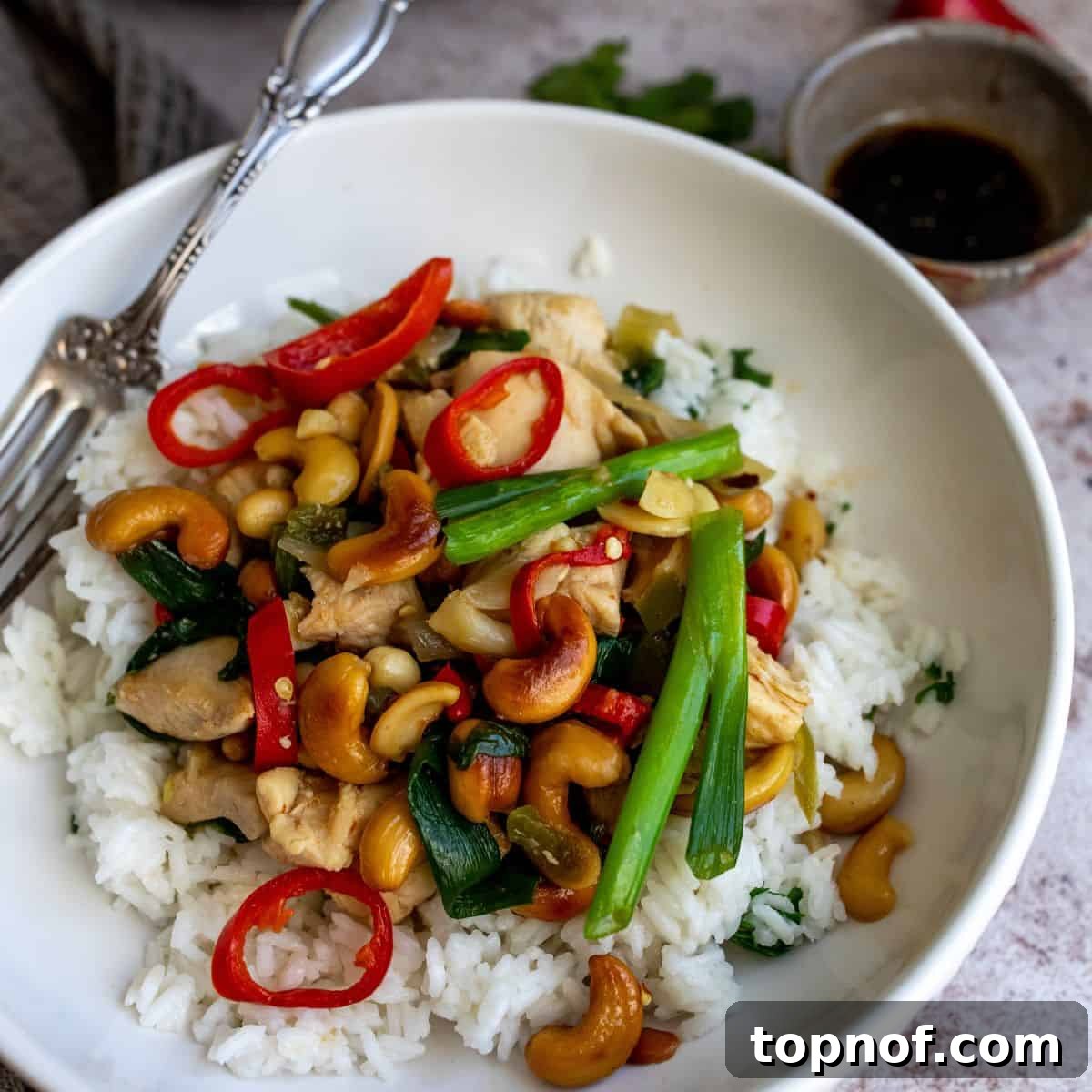
Thai Cashew Chicken is more than just a meal; it’s a culinary journey that brings the vibrant flavors of Thailand right into your kitchen. Renowned for its tantalizing blend of spicy, sweet, savory, and nutty notes, this dish has become a beloved “fake-away” favorite for busy weeknights. Imagine tender chicken pieces, crisp-tender vegetables, and the irresistible crunch of toasted cashews, all generously coated in a rich, umami-packed sauce, served over a bed of fluffy rice. It’s a dish that promises to delight your senses and leave you completely satisfied, making it a staple you’ll be hooked on from the very first bite.
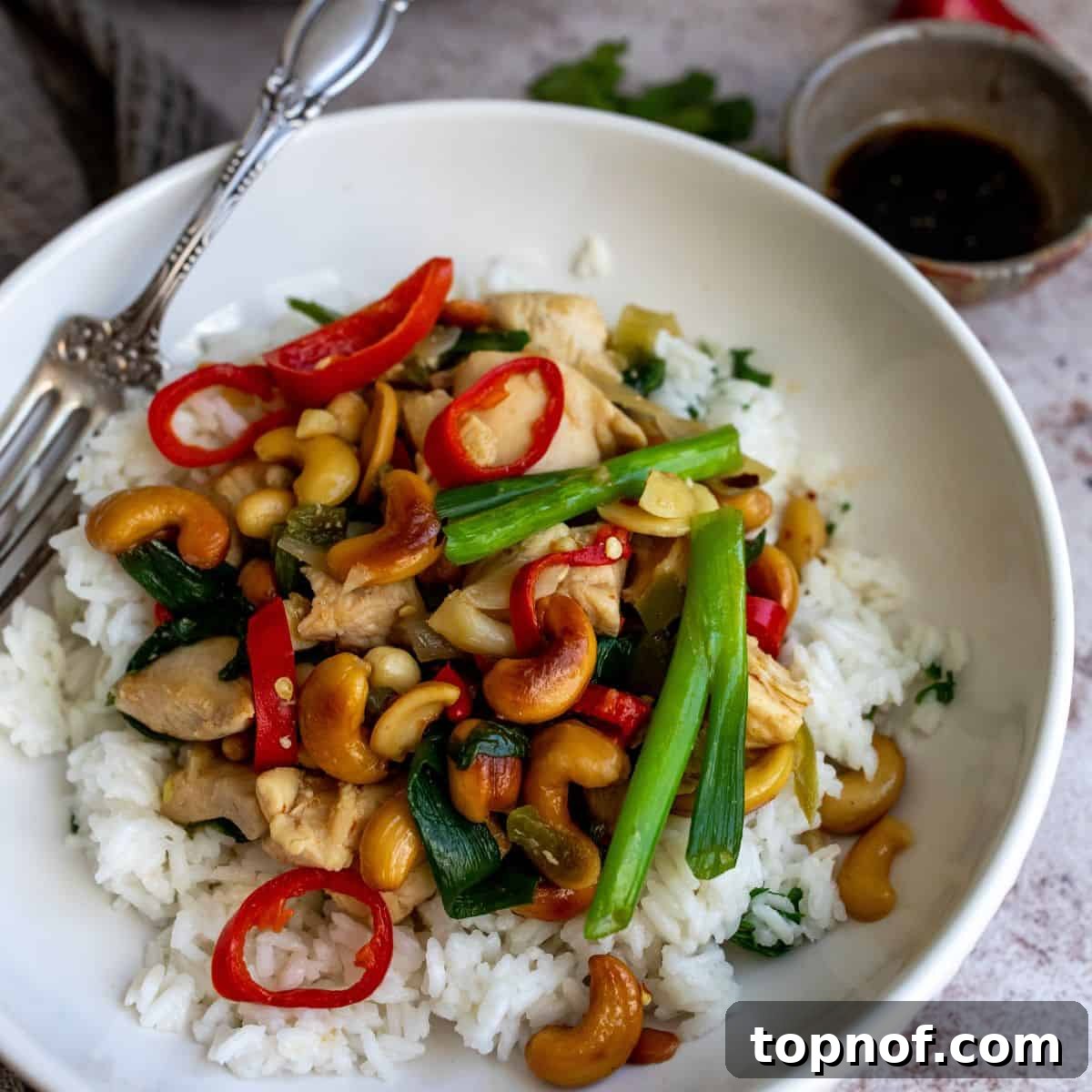
Why This Thai Cashew Chicken Recipe Will Become Your Favorite
There are countless reasons why this homemade Thai Cashew Chicken will quickly replace your takeout cravings. Firstly, the unparalleled freshness: by preparing it yourself, you control every ingredient, ensuring a meal bursting with vibrant flavors and wholesome goodness. This recipe truly brings the umami experience to the forefront, perfectly balancing the complex sweet, salty, and savory notes that define authentic Thai cuisine.
One of the star features of this dish is the addition of perfectly toasted cashews. Their rich, buttery flavor and satisfying crunch provide an essential textural contrast that elevates the entire meal. Forget soggy, bland cashews from pre-packaged meals; here, they’re the crispy highlight. Moreover, this recipe offers incredible versatility when it comes to spice levels. Whether you prefer a mild hint of warmth or a fiery kick, you can easily adjust the amount of chili to suit your palate. I personally love it hot, and this recipe allows for that perfect customizable heat.
Beyond its delicious taste, this Thai Cashew Chicken is incredibly practical. It’s designed to be a simple, straightforward weeknight meal that comes together quickly, making it ideal for busy schedules. Served over a simple bed of fluffy rice, it’s a deeply satisfying and complete meal. Plus, it reheats beautifully, with flavors often deepening overnight, making it an excellent choice for meal prep throughout the week. Once you experience the depth of flavor and ease of preparation, you’ll find yourself reaching for this recipe again and again.
Essential Ingredients for Authentic Thai Cashew Chicken
Crafting the perfect Thai Cashew Chicken starts with selecting fresh, high-quality ingredients. Each component plays a crucial role in building the dish’s distinct flavor profile and texture. Here’s a detailed look at what you’ll need:
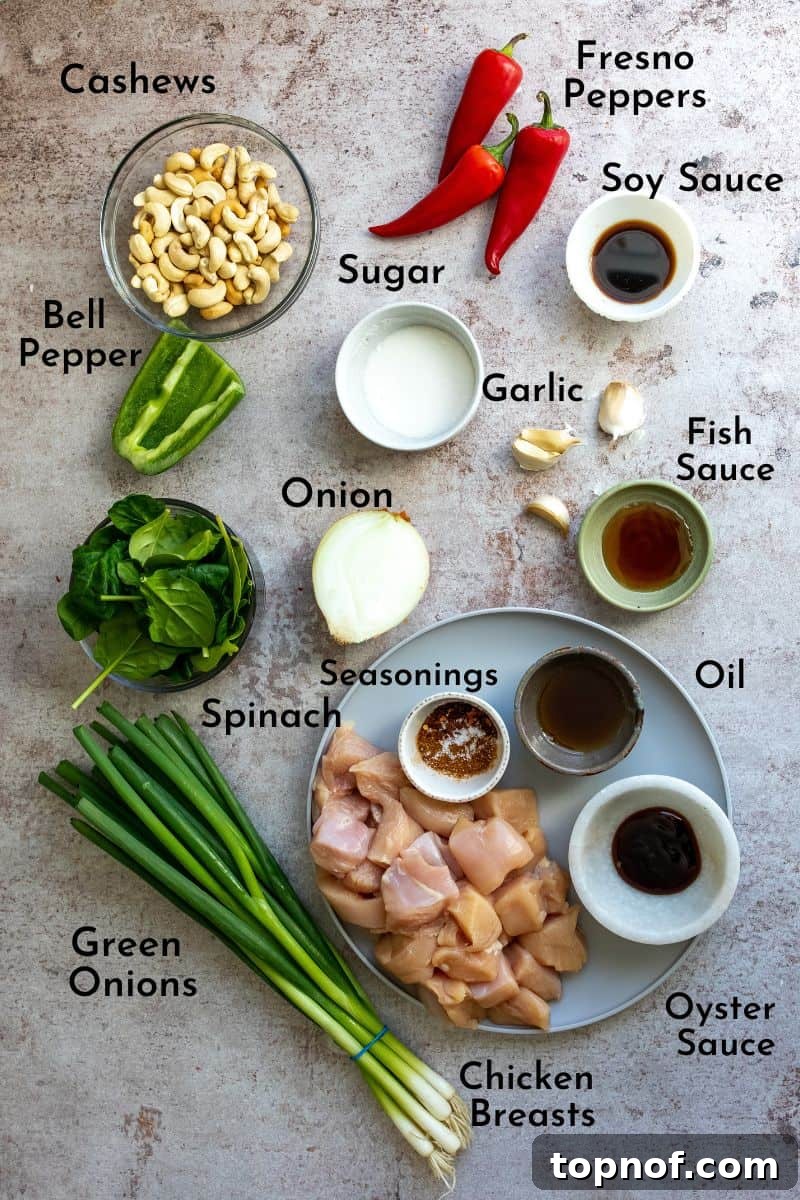
- Chicken Breasts: Boneless, skinless chicken breasts are preferred for their lean texture and ease of preparation. Trimmed and cut into uniform 1-inch pieces, they cook quickly and evenly, ensuring every bite is tender and succulent. You can also opt for chicken thighs for a richer flavor.
- Cashews: Whole, raw cashews are essential. We’ll be toasting them in a pan to unlock their full buttery flavor and achieve that signature crunch, which is a hallmark of this dish. Avoid pre-roasted or salted cashews for best results, as you control the seasoning.
- Oil: Sesame oil is highly recommended for its distinctive nutty aroma and flavor, which complements the Thai profile beautifully. If unavailable, any neutral oil like canola, vegetable, or grapeseed oil will work well. Look for sesame oil in the international aisle of your grocery store, usually near soy sauces.
- Garlic: Fresh garlic cloves are non-negotiable for their pungent aromatics. Minced garlic creates a foundational flavor base that is crucial for the dish’s depth.
- Seasonings: A simple yet effective blend of salt, black pepper, red pepper flakes, and cayenne pepper provides the essential seasoning and allows you to customize the spice level. These spices awaken the palate and enhance the overall taste.
- Onion: Yellow onion is a great choice for its affordability and mild, sweet flavor when sautéed. It adds essential aromatic depth without overpowering the other ingredients.
- Green Bell Pepper: Adds a delightful pop of color, a refreshing crunch, and a subtle sweetness. It also contributes valuable nutrients to the dish.
- Fresno Pepper: These peppers provide a medium-hot kick, depending on their seasonal ripeness. You can find them in the produce aisle. Adjust the quantity based on your desired level of spice, or substitute with jalapeños for a different heat profile.
- Spinach: Fresh spinach wilts beautifully into the sauce, adding a boost of nutrients and a lovely green color without significantly altering the flavor profile. It’s a fantastic way to incorporate more greens.
- Green Onions: Used in two parts for layered flavor. The white parts are sautéed for a pungent aromatic base, while the green tops are added at the end for fresh, sharp flavor and garnish.
Crafting the Perfect Umami-Rich Sauce
The sauce is the heart of this Thai Cashew Chicken, bringing all the diverse flavors together into a harmonious blend. It’s a symphony of sweet, salty, and umami, creating that authentic Thai taste:
- Low Sodium Soy Sauce: Forms the salty, savory base of the sauce. Using low-sodium allows you to control the overall saltiness and prevent the dish from becoming overly salty. Feel free to use your preferred brand or variety of soy sauce.
- Sugar: Whether white or brown, sugar is crucial for balancing the savory and pungent notes from the other sauces. It adds a subtle sweetness that rounds out the flavors and provides a beautiful gloss to the finished dish.
- Fish Sauce: This is a cornerstone of Thai and Southeast Asian cuisine, providing an incredible depth of umami. Despite its “fishy” aroma, it doesn’t make the dish taste fishy but instead imparts a rich, savory complexity that is irreplaceable. You’ll find it in the international aisle.
- Oyster Sauce: Another essential ingredient, oyster sauce is a thick, syrupy condiment with a distinctive savory-sweet flavor. Like fish sauce, it adds significant umami and body to the sauce. While it has a strong odor on its own, it blends seamlessly with the other ingredients, creating a luxurious and complex flavor profile. This is a widely used brand that consistently delivers great results. Rest assured, the “fishy” notes from both fish sauce and oyster sauce will transform into a delightful sweet and salty umami experience when combined with the sugar and soy sauce.
- Water: Used to thin the sauce slightly and ensure it coats all the ingredients beautifully during cooking.
Step-by-Step Guide to Making Thai Cashew Chicken
Follow these detailed steps to create a delicious and authentic Thai Cashew Chicken in your own kitchen. Precision and timing are key to achieving the best results.
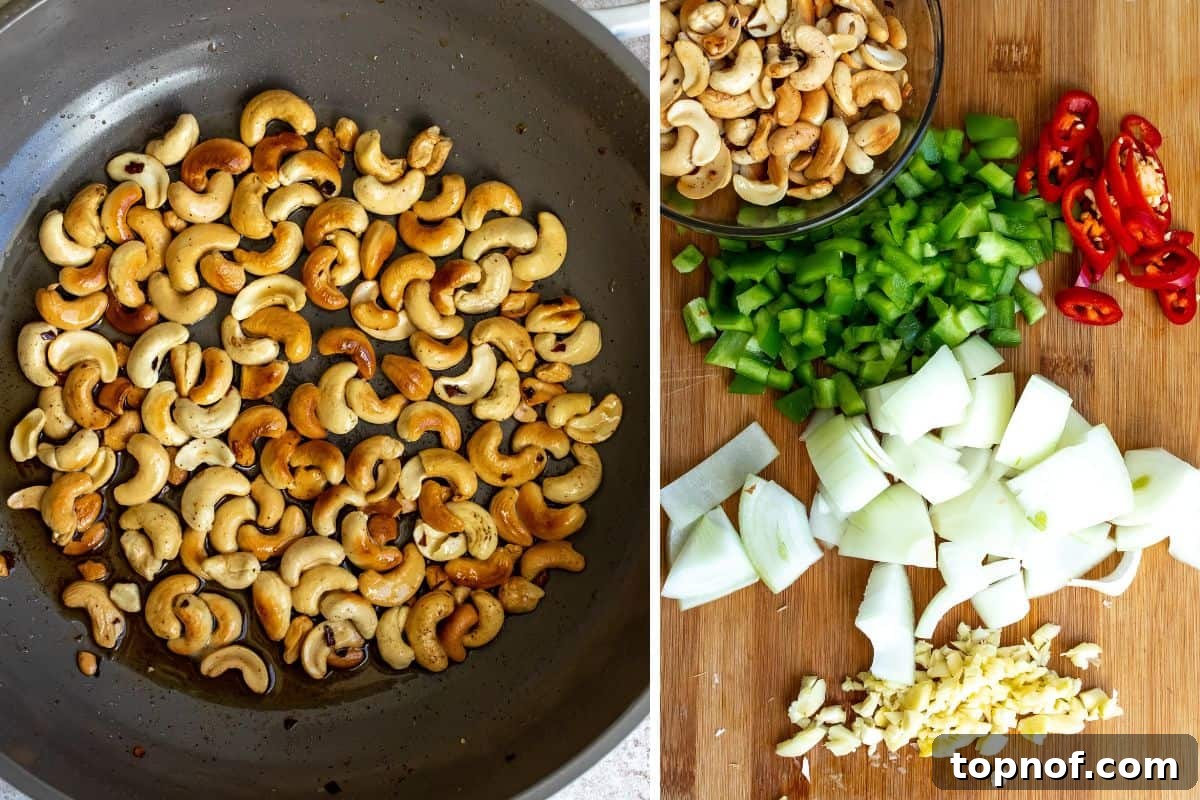
Step One: Toast the Cashews and Prepare Rice. Begin by heating 1 tablespoon of sesame oil (or your chosen neutral oil) in a wok or large skillet over medium heat. Add the raw cashews and cook for approximately 5 minutes, stirring frequently, until they turn a beautiful dark golden color and become wonderfully crunchy. Be vigilant, as cashews can brown very quickly and burn easily. Once toasted, remove them immediately from the skillet with a slotted spoon and transfer to a small bowl; set aside. The remaining flavored oil in the skillet will be used for sautéing your vegetables, infusing them with nutty goodness. If you plan to serve your dish with rice, now is the ideal time to start cooking it, following the package instructions. Most rice varieties take about 20 minutes to cook.
Step Two: Sauté the Aromatics and Vegetables. Increase the heat in your skillet to medium-high. Add the minced garlic, diced fresno peppers (or jalapeños), and chopped yellow onion to the hot oil. Sauté for about 2 minutes, stirring constantly, until the vegetables begin to soften and “sweat,” releasing their aromatic compounds. This step builds the foundational flavor of your dish.
Step Three: Cook the Chicken and Prepare the Sauce. Add the cubed chicken pieces to the skillet. Ensure the chicken is spread out in a single layer, avoiding overcrowding the pan, which can lead to steaming rather than searing. Cook for approximately 4 minutes per side, or until the chicken is thoroughly cooked through and reaches an internal temperature of 165ºF (74ºC). While the chicken is cooking, seize this opportunity to prepare your sauce. In a separate small saucepan, combine all the sauce ingredients: low sodium soy sauce, oyster sauce, fish sauce, sugar, and water. Bring this mixture to a light simmer over medium heat and allow it to gently cook for about 5 minutes, or until the sauce slightly thickens and coats the back of a metal spoon. Simultaneously, finely chop the white parts of the green onions into small slices for additional aromatics, and then make 1-inch cuts in the leafy green tops for later incorporation.
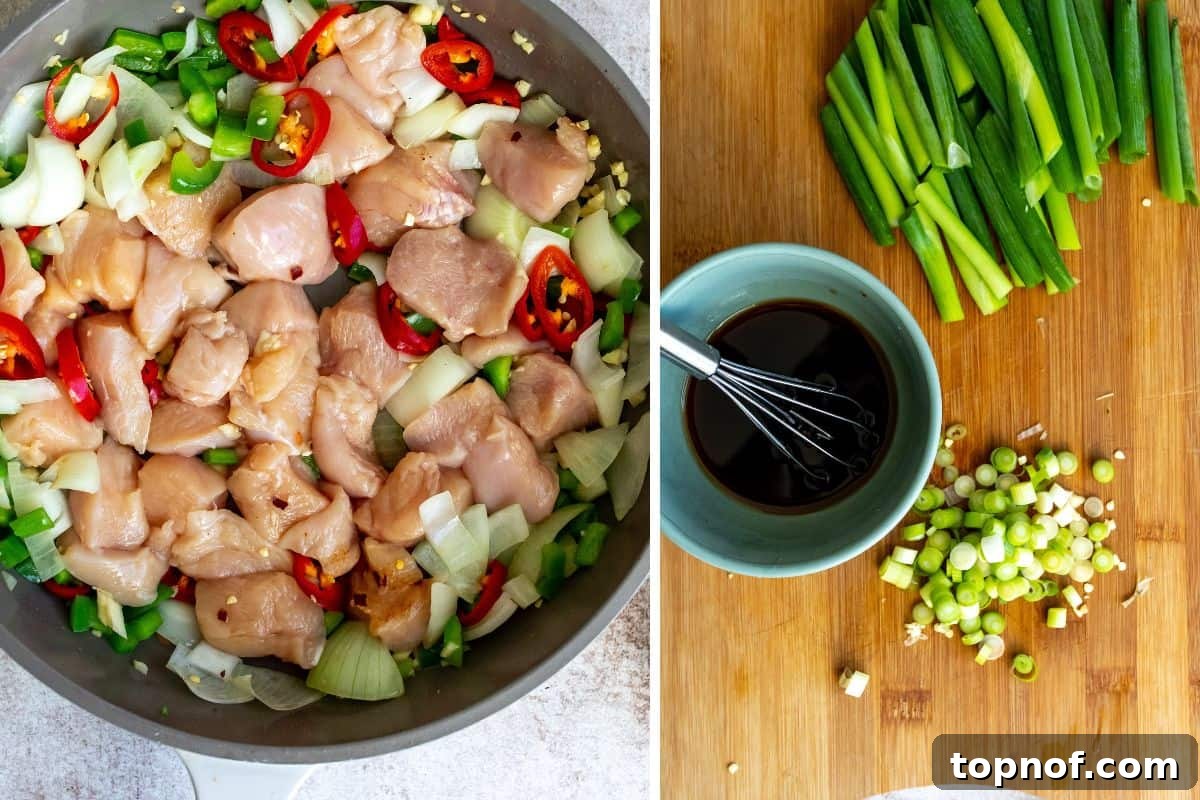
Step Four: Combine and Simmer. Once the chicken is nearly cooked through, pour the prepared sauce over the chicken and vegetables in the skillet. Stir well to ensure everything is evenly coated. Immediately add the chopped green onions (both white and green parts) and the fresh spinach. Allow the mixture to simmer for a few minutes, stirring occasionally, until the spinach wilts and the sauce thickens to your desired consistency. The flavors will meld beautifully during this stage.
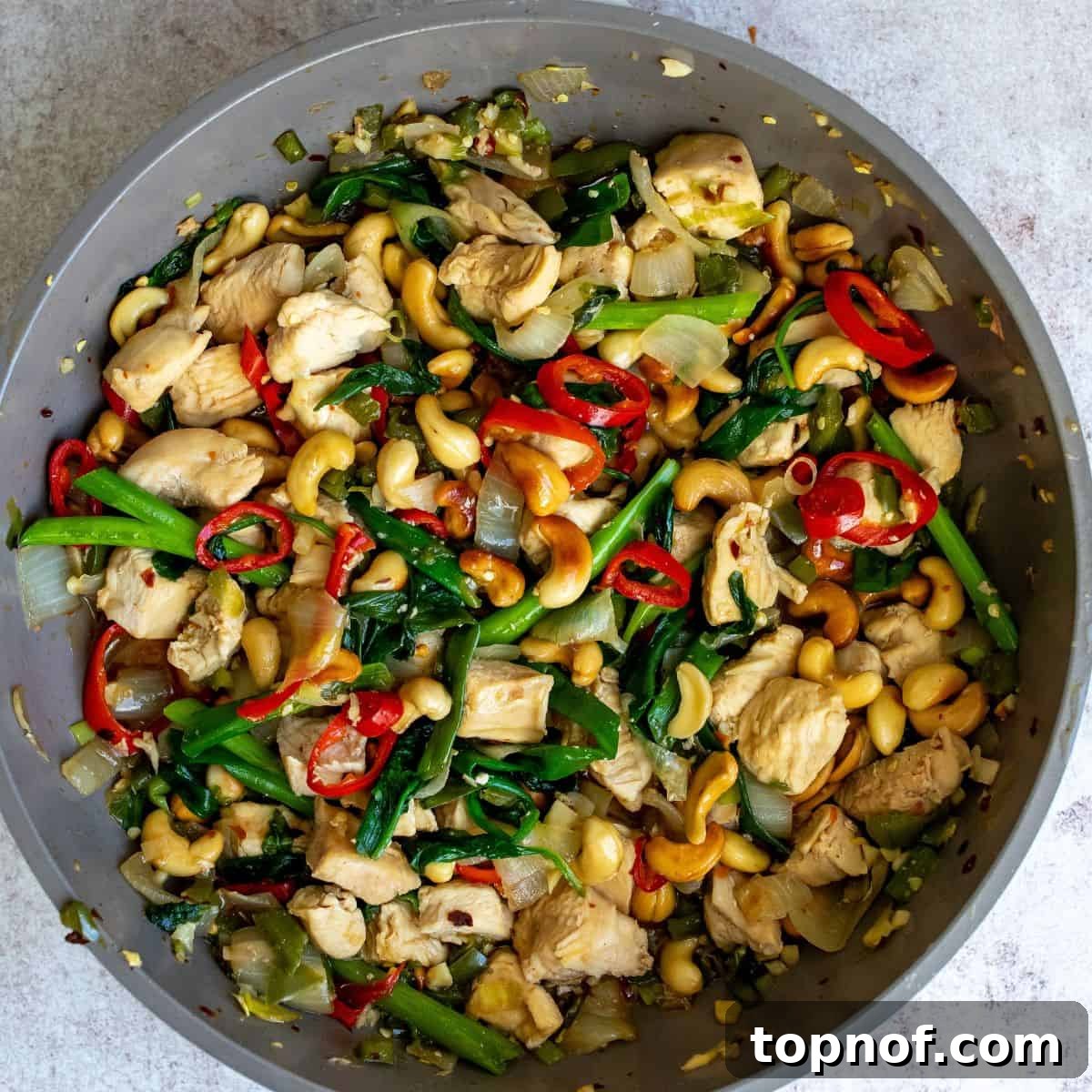
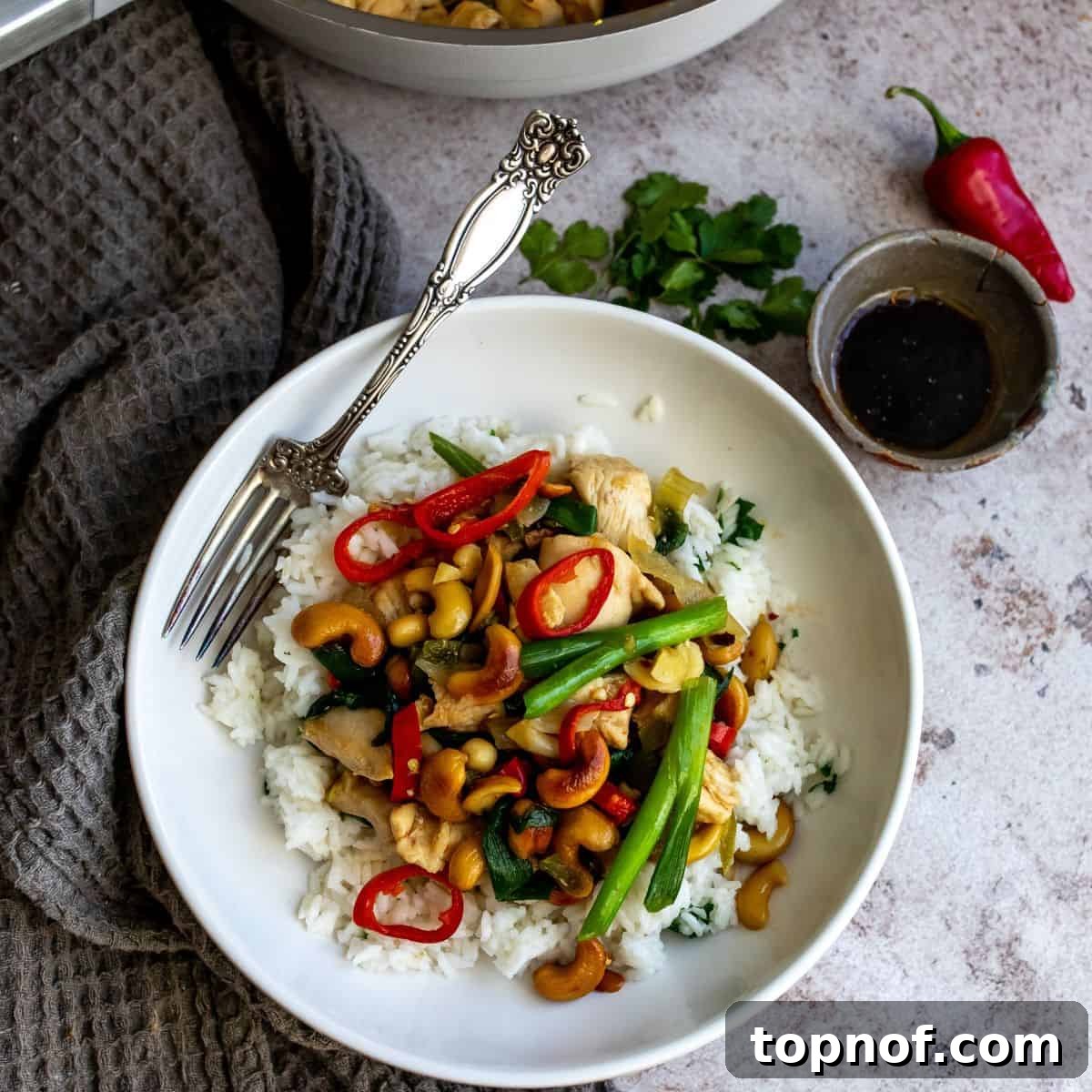
Step Five: Final Assembly and Serve. When your rice is perfectly cooked and fluffy, it’s time to assemble your meal. Spoon the saucy Thai Cashew Chicken generously over a bed of the hot rice. Garnish with the reserved toasted cashews for an extra layer of crunch and flavor. Serve immediately and savor every delicious bite of this homemade Thai delight!
FAQs & Expert Recipe Tips for Thai Cashew Chicken
Here are some frequently asked questions and valuable tips to help you master this delicious Thai Cashew Chicken recipe:
How spicy is Thai Cashew Chicken?
The spice level of this Thai cashew chicken is entirely customizable, ranging from medium to hot, primarily depending on the quantity and heat intensity of the Fresno peppers you use. Fresno peppers can vary significantly in heat seasonally, so always taste a small piece if you’re unsure. If you prefer a milder dish, you can use fewer peppers, remove the seeds and membranes, or omit them altogether. For an extra kick, feel free to add more cayenne pepper or a dash of your favorite chili oil at the end.
Do I need a wok for Thai Cashew Chicken recipe?
While Thai cashew chicken is traditionally prepared in a wok, you absolutely do not need one to achieve excellent results. A regular large non-stick sauté pan or a deep skillet with high sides will work perfectly. The key is to ensure your pan is large enough to prevent overcrowding, which can steam the ingredients instead of searing them, affecting texture and flavor.
Is this similar to a stir-fry?
Yes, this recipe shares many similarities with a classic stir-fry! Both involve quickly cooking ingredients over high heat in a pan. However, Thai Cashew Chicken typically features a more distinctive sweet-savory-umami sauce profile, often utilizing ingredients like fish sauce and oyster sauce, which differentiate it from a standard Chinese-American stir-fry. The star addition of toasted cashews also gives it a unique crunch and richness that sets it apart.
Additional Recipe Tips for Success:
- Prep Everything Ahead: Stir-fries cook quickly, so have all your ingredients chopped, measured, and ready before you start cooking. This is known as “mise en place” and will make the cooking process much smoother.
- Don’t Overcrowd the Pan: Cook chicken and vegetables in batches if necessary to ensure they sear beautifully rather than steam. Overcrowding lowers the pan’s temperature.
- High Heat is Key: For that perfect stir-fry texture, ensure your pan is hot. This helps achieve a slight char on the vegetables and chicken.
- Adjust Sweetness: Taste the sauce before adding it to the pan. If you prefer it sweeter, add a tiny bit more sugar; if you like it tangier, a splash of rice vinegar can work wonders.
Creative Recipe Variations for Thai Cashew Chicken
This Thai Cashew Chicken recipe is wonderfully adaptable, allowing you to customize it based on your preferences or what you have on hand. Don’t hesitate to experiment with these delicious variations:
Chicken: While chicken breasts are specified, boneless, skinless chicken thighs can be used for an even juicier and richer flavor profile. Their slightly higher fat content helps them stay tender during high-heat cooking. You could also try shrimp or firm tofu for a seafood or vegetarian twist.
Peppers: If Fresno peppers are hard to find, jalapeños make an excellent substitute, offering a similar level of heat. For a milder dish, simply omit the spicy peppers entirely or replace them with more green bell pepper. Feel free to use any color of bell pepper (red, yellow, or orange) to add more visual appeal and varied sweetness to your dish. Other vegetables like broccoli florets, snap peas, or carrots can also be incorporated.
Soy Sauce: For those looking for gluten-free alternatives, tamari, liquid aminos, or coconut aminos can be used in place of traditional soy sauce without compromising the savory depth of the sauce.
Rice: While fluffy white rice is classic, this dish pairs beautifully with a variety of bases. Serve it over brown rice for added fiber, cauliflower rice for a low-carb option, or even ramen noodles for a hearty noodle dish. Quinoa would also be a delicious and nutritious alternative.
Make Ahead and Storage Tips
One of the many benefits of this Thai Cashew Chicken recipe is its excellent suitability for meal prepping and making ahead. The flavors tend to deepen and meld even further after a day in the fridge, making leftovers incredibly delicious!
You can absolutely make this recipe ahead of time. Just cook as directed, allow it to cool completely, and then store. When you’re ready to enjoy, simply reheat gently on the stovetop or in the microwave. It’s worth noting that the dish tends to get a little spicier as it sits in the fridge, so keep that in mind when adjusting your initial chili levels.
To store, transfer the cooled Thai Cashew Chicken into an airtight container. It will keep fresh in the refrigerator for up to 4 days, making it perfect for weekday lunches or quick dinners. For longer storage, you can freeze it for up to 3 months. Thaw overnight in the refrigerator before reheating.
Explore More Delicious Asian-Inspired Meals
More Asian-Inspired Favorites
Dinner
Korean Ground Turkey
Dinner
Beef Fried Rice
Dinner
Thai Salmon
Dinner
Teriyaki Chicken Bowl
We hope you thoroughly enjoyed preparing and tasting this delightful Thai Cashew Chicken recipe! If you loved it as much as we do, please let us know by leaving a comment below. Don’t forget to follow me on Instagram and Pinterest for even more inspiring recipes that are designed to make you feel good, inside and out. Thank you for visiting and happy cooking!
Thai Cashew Chicken
Bailey Rhatigan
Thai cashew chicken is one of our favorite “fake-away” meals. It’s spicy, nutty and full of veggies. A simple weeknight meal you will be hooked on. Served over a bed of fluffy rice and toasted cashews in each bite.
10 mins
20 mins
4
Pin Recipe
Rate Recipe
Print Recipe
Equipment
-
1 large skillet or fry pan
-
small sauce pan
Ingredients
- 1 cup white rice
- 1-1½ lb chicken breast, cubed
- 1 tbsp sesame oil
- ⅓ cup whole cashews, raw, *see notes
- 2 garlic cloves, minced
- ¼ cup chopped yellow onion
- ¼ tsp dried cayenne pepper, *use more if you want extra spice, omit if you want mild
- ½ tsp salt
- ½ tsp black pepper
- ½ tsp red pepper flakes
- 1 bunch of green onions
- 1 cup fresh spinach, chopped
- ½ cup green bell pepper, diced
- 2-3 red fresno peppers, *see notes
Sauce
- 2 tsp soy sauce, low sodium
- 2 tbsp oyster sauce
- 3 tsp fish sauce
- 2 tsp sugar
- 3 tbsp water
Instructions
-
Heat oil over medium heat in a wok or large skillet. Add cashews and cook for 5 minutes until they become a dark golden color and crunchy, careful not to burn them, they brown quick. Remove from skillet with a slotted spoon and place in a small bowl. Use the leftover oil to sauté your veggies. Start the rice now if making any, follow instructions on the packet, this usually takes about 20 minutes.
-
Turn heat up to medium/high. Add garlic, peppers and yellow onion. Cook for 2 minutes until everything is sweating.
-
Add in the chicken, make sure it isn’t over lapping at all. Cook for about 4 minutes on each side until chicken is cooked all the way through (165º internally). While chicken is cooking, make the sauce.
-
In a small sauce pan, add all the sauce ingredients together. Bring to a light simmer and simmer for about 5 minutes or until the sauce thicken just a bit and starts to coat to a metal spoon. Chop the green onions, chop the white part into small slices and then make 1 inch cuts in the leafy greens.
-
When the chicken is close to being cooked through all the way, add in the sauce, green onions, including the green tops and spinach. Let everything simmer and wilt a bit.
-
Once rice is cooked, serve with saucy Thai cashew chicken over it. and enjoy.
Notes
*Roasted cashews will also work, but you will need to keep an eye on them so you don’t over toast them.
*Use less if you are sensitive to heat.
Nutrition
Nutrition information is automatically calculated, so should only be used as an approximation.
Additional Info
Bailey Rhatigan
10 minutes
20 minutes
Main Course
Chinese
4
483
30 minute, Asian Inspired, Chicken
Like this recipe? Leave a comment below!