

This Butternut Squash Gnocchi recipe is the epitome of fall comfort food, transforming humble ingredients into a gourmet experience. Imagine tender, pillowy gnocchi crafted from scratch, each delicate dumpling infused with the sweet, earthy notes of roasted butternut squash. These delectable morsels are then lovingly tossed in a luscious, aromatic brown butter sauce, fragrant with fresh sage and complemented by the satisfying crunch of toasted walnuts, all finished with a generous dusting of savory Parmesan cheese. It’s a remarkably cozy and flavorful dish that feels wonderfully indulgent, yet is straightforward enough to prepare during bustling weeknights. Get ready to impress your family and friends with this seasonal showstopper that truly celebrates the flavors of autumn.
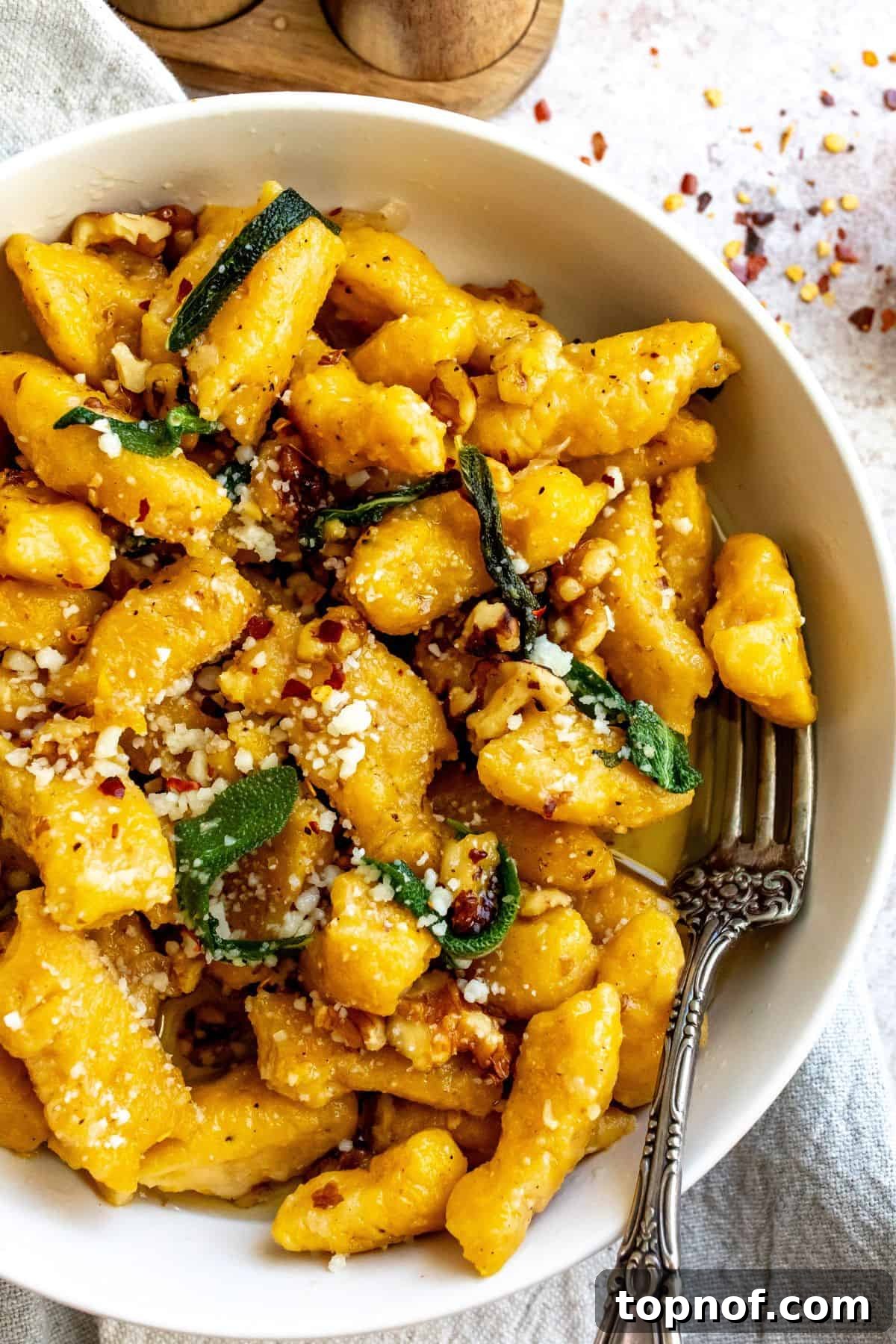
Why This Homemade Butternut Squash Gnocchi is a Must-Try
This easy-to-follow recipe is an absolute culinary delight! It guides you through creating tender, pillowy gnocchi from scratch, bursting with all the delicious, heartwarming fall flavors we crave. Forget about dense, lackluster store-bought alternatives; once you experience the superior texture and taste of homemade, you’ll never look back.
- The Ultimate Fall and Winter Comfort. As the days grow shorter and the air turns crisp, our palates yearn for dishes that warm us from the inside out. This gnocchi, with its rich squash base and savory butter sauce, delivers unparalleled comfort, making it the perfect meal for chilly days and cozy evenings by the fire.
- Unrivaled Homemade Gnocchi. While the idea of making gnocchi from scratch might seem daunting, our recipe simplifies the process, ensuring a light and ethereal texture that far surpasses any traditional store-bought version. The satisfaction of creating these delicate dumplings yourself is incredibly rewarding, and the fresh flavors truly sing.
- A Symphony of Seasonal Flavors. Butternut squash is a quintessential autumn ingredient, offering a naturally sweet and nutty profile that is beautifully enhanced by warm spices like nutmeg and the earthy notes of fresh sage. This dish is a true celebration of the season’s bounty.
- Surprisingly Versatile. While the brown butter and sage sauce is a classic pairing, the inherent sweetness of the butternut squash gnocchi makes it incredibly adaptable. It can be tossed with a variety of other sauces, from a creamy tomato sauce to a vibrant pesto, allowing for endless culinary creativity.
- Impress Your Guests. This elegant dish looks and tastes incredibly sophisticated, yet its preparation is surprisingly accessible. It’s perfect for impressing dinner guests or simply elevating a regular weeknight meal into something special.
Essential Ingredients for Perfect Butternut Squash Gnocchi
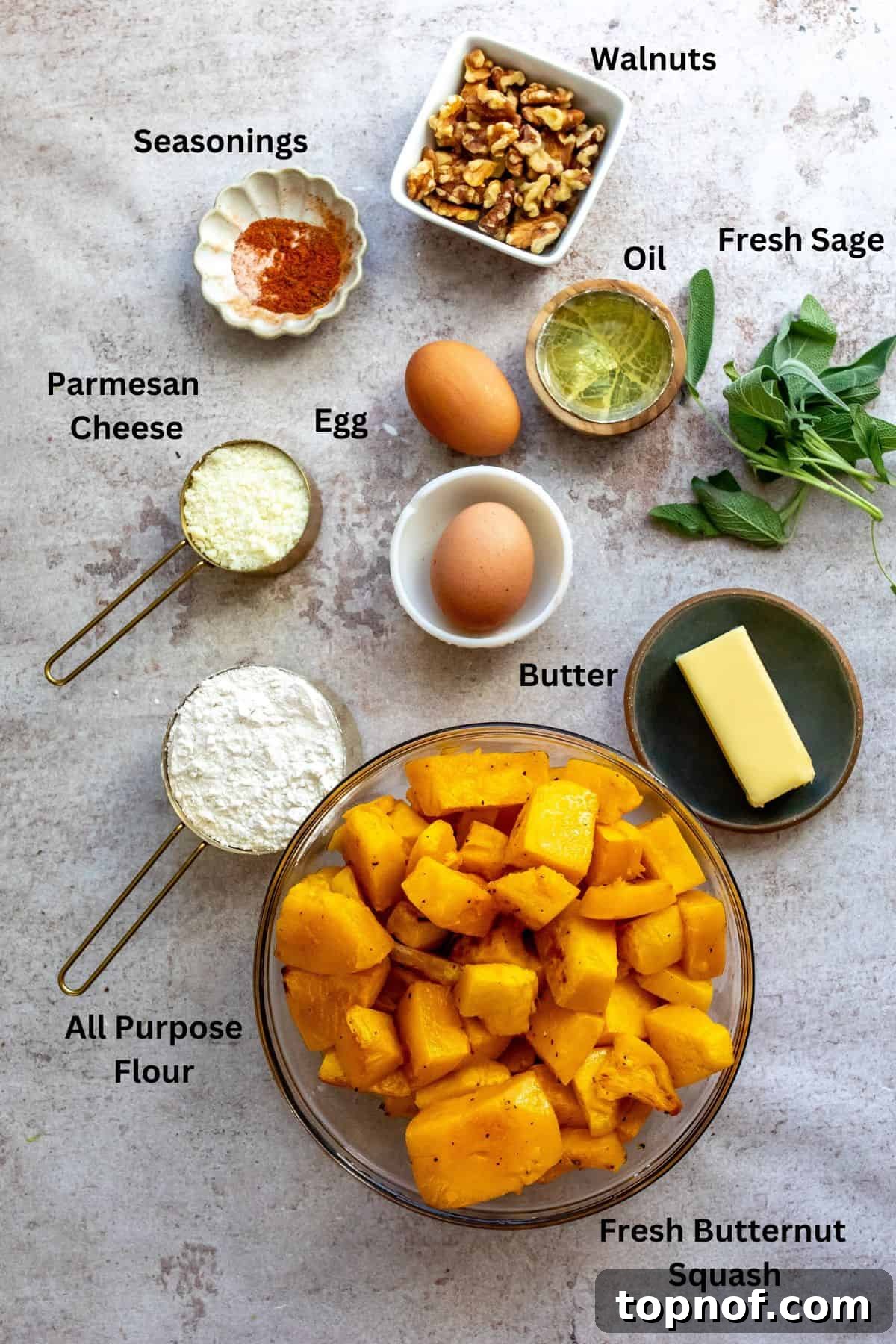
The magic of this dish begins with selecting the right ingredients. Each component plays a vital role in achieving that perfect texture and unforgettable flavor.
- Butternut Squash: The Golden Heart. For the best results, always opt for fresh butternut squash. Look for one that is firm, heavy for its size, and has a dull, unblemished skin. Fresh squash offers the ideal moisture content and a richer flavor profile. While pre-cut fresh butternut squash can be a time-saver, avoid frozen as it often contains too much water, which can make your gnocchi dough sticky and tough. If butternut squash isn’t available, kabocha squash makes an excellent alternative, providing a similar sweetness and texture.
- Unsalted Butter: The Foundation of Flavor. Using unsalted butter is crucial, as it gives you complete control over the saltiness of your dish. We’ll be browning the butter, a technique that coaxes out a deep, nutty aroma and rich flavor that is simply irresistible. For a dairy-free or vegan option, a high-quality vegan butter substitute can be used effectively.
- All-Purpose Flour: The Structural Base. All-purpose flour is essential for binding the gnocchi dough and giving it its characteristic tender chew. The key is to add just enough flour to make the dough manageable without overworking it, which can lead to tough gnocchi. If you’re looking for a gluten-free alternative, a good quality 1:1 gluten-free flour blend can be used, though you might need to adjust the quantity slightly.
- Eggs: The Binder and Tenderizer. You’ll need one whole egg and one egg yolk for this recipe. The whole egg acts as a primary binder, holding the dough together, while the extra egg yolk contributes to a richer flavor and a more tender, delicate texture, ensuring your gnocchi are perfectly pillowy.
- Walnuts: The Crunchy Counterpoint. Toasted and chopped walnuts add a wonderful textural contrast and a complementary earthy, nutty flavor to the dish. Toasting them briefly in a dry pan beforehand enhances their aroma and crunch. If walnuts aren’t your preference, pecans or even roasted pumpkin seeds (pepitas) can be delightful substitutes.
- Fresh Sage: The Aromatic Star. We highly recommend using fresh sage leaves. Their pungent, earthy, and slightly peppery flavor is absolutely essential for the brown butter sauce, creating a classic pairing with butternut squash that defines this dish. Dried sage simply won’t offer the same vibrant aroma or crisp texture when fried.
- Seasonings: Enhancing the Profile. We carefully selected nutmeg for its warm, sweet notes that complement the squash beautifully, a pinch of cayenne pepper for a subtle, warming kick, and of course, essential black pepper and salt to elevate and balance all the flavors. These seasonings are not just an afterthought; they are integral to the dish’s overall deliciousness.
- Parmesan Cheese: The Umami Finish. Freshly grated Parmesan cheese adds a salty, savory, umami depth that truly rounds out the flavors. Don’t forget to set aside extra for sprinkling generously over your finished plates. To make this dish dairy-free, a high-quality vegan Parmesan substitute can be used with excellent results.
- Olive Oil & Shallots (Optional but Recommended): A touch of olive oil helps in the browning process of the butter and for crisping the sage leaves. Minced shallots, while optional, add a subtle, sweet oniony base to the brown butter sauce, enhancing its complexity.
Crafting Your Culinary Masterpiece: Steps to Make Butternut Squash Gnocchi From Scratch
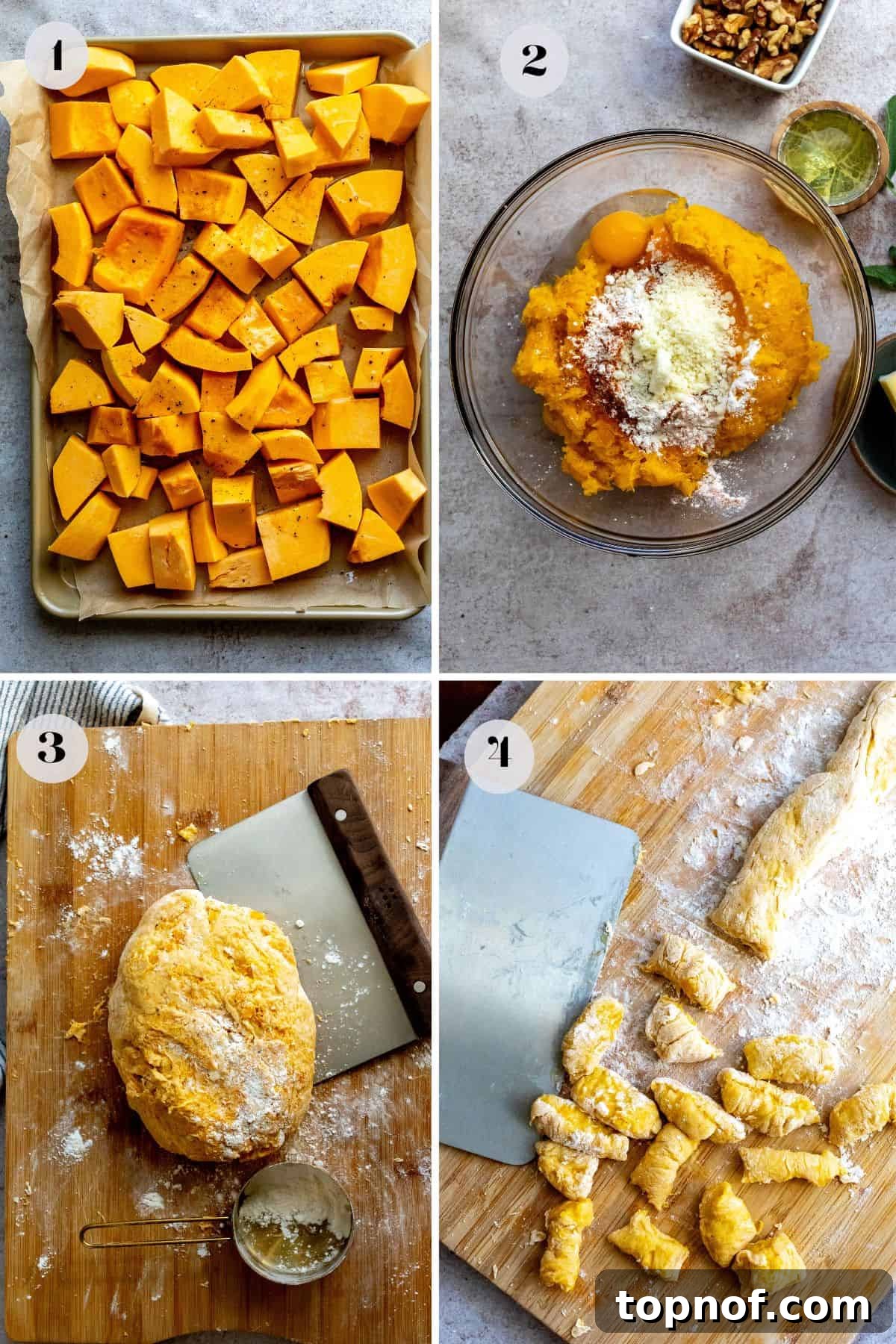
Making gnocchi from scratch is a rewarding process that allows you to control the texture and flavor, resulting in a dish that’s far superior to any store-bought alternative. Follow these detailed steps to create tender, delicious butternut squash gnocchi.
- Step One: Roasting the Butternut Squash to Perfection. Begin by preheating your oven to 350°F (175°C). Carefully peel the skin off the butternut squash, then cut it lengthwise, scooping out and discarding the seeds and stringy fibrous bits. Cut the squash into manageable 1-2 inch cubes or squares and arrange them in a single layer on a parchment-lined baking sheet. Roast the squash for approximately 50 minutes to 1 hour, or until it is incredibly tender when pierced with a fork and beautifully browned and slightly caramelized in spots. This roasting process intensifies the squash’s sweetness and reduces its moisture, which is crucial for perfect gnocchi. Once roasted, transfer the warm squash to a bowl and mash it thoroughly using a potato masher or a fork until you achieve a smooth, lump-free purée. Alternatively, for a silky-smooth texture, you can use a food processor. Measure out 1.5 cups of this purée for your gnocchi dough. Any leftover purée can be enjoyed as a delightful side dish with a pat of melted butter. Allow the measured purée to cool completely before proceeding, as warm purée will make the dough too sticky.
- Step Two: Assembling the Gnocchi Dough. In a large mixing bowl, combine the cooled butternut squash purée with the all-purpose flour, freshly grated Parmesan cheese, the whole egg, and the extra egg yolk. Add your chosen seasonings: nutmeg, cayenne pepper, salt, and black pepper. Using a sturdy spoon or a flexible spatula, mix the ingredients gently until they come together to form a cohesive dough. The key here is to mix until just combined, avoiding overworking the dough, which can lead to a tough gnocchi texture. The dough should be soft but not excessively sticky. If it feels too wet or sticky to handle, add more flour, a quarter cup at a time, incorporating it until the dough is just firm enough to roll without sticking to your hands or the work surface. The ideal consistency is pliable and soft.
- Step Three: Shaping the Gnocchi Ropes. Transfer the gnocchi dough to a lightly floured surface. Divide the dough into four equal parts. Take one portion and gently roll it out with your hands into a long, uniform “rope” shape, aiming for about 1 inch (2.5 cm) in thickness. Ensure your hands and the work surface remain lightly floured to prevent sticking. Continue this process with the remaining dough portions.
- Step Four: Cutting the Gnocchi. Once you have your dough ropes, use a sharp knife or a pastry cutter to slice the “rope” vertically into small, individual gnocchi pieces, each about 0.5 to 0.75 inches (1.25 to 2 cm) long. For a traditional look, you can gently roll each piece over the tines of a fork or a gnocchi board to create ridges. These ridges aren’t just for aesthetics; they help the sauce cling beautifully to each gnocchi. Arrange the cut gnocchi pieces in a single layer on a parchment-lined baking sheet to prevent them from sticking together. Repeat with the remaining dough. Place the baking sheet with the gnocchi in the refrigerator while you prepare your cooking water; this helps them firm up and maintain their shape during cooking.
- Step Five: Cooking the Gnocchi. Bring a large pot (4-6 quart capacity) of generously salted water to a rolling boil. Working in batches to avoid overcrowding the pot, carefully drop the prepared gnocchi into the boiling water. The gnocchi will sink to the bottom initially. Let them cook for 3-5 minutes. They are ready when they float to the surface, indicating they are cooked through. Once they float, use a slotted spoon or a spider strainer to gently transfer the cooked gnocchi to a plate. Ensure they are well-drained. Continue cooking the remaining batches.
- Step Six: Crafting the Brown Butter Sage Sauce. While the gnocchi are cooking or immediately after, prepare your sauce. In a heavy, large skillet, melt the butter over medium heat. Cook the butter, stirring frequently, for about 3-4 minutes, watching carefully as it transforms. The butter will foam, then gradually turn a beautiful golden-brown color, and emit a wonderfully nutty aroma. This is brown butter perfection! Immediately add the olive oil to stop the browning process slightly. Next, add the fresh sage leaves and the minced shallot (if using) to the skillet. Cook for about 2 minutes, stirring gently, until the sage leaves become wonderfully crisp and the shallots soften and become translucent. Finally, add the cooked gnocchi and the chopped walnuts to the skillet. Toss everything gently to ensure the gnocchi and walnuts are thoroughly coated with the rich brown butter and sage sauce. Cook for another 5 minutes, allowing the gnocchi to heat through and absorb the incredible flavors of the sauce. Season with additional salt and pepper to taste, adjusting until the flavors are perfectly balanced.
- Step Seven: Serve and Savor. Serve your homemade butternut squash gnocchi warm, directly from the skillet. For an extra flourish, garnish each serving with additional freshly grated Parmesan cheese, a sprinkle of toasted walnuts, and a few crispy fried sage leaves. Enjoy immediately and relish the harmonious blend of flavors and textures.


Recipe Pairings and Serving Suggestions
The sage brown butter sauce is an absolute dream with this gnocchi, but the versatility of butternut squash gnocchi allows for other delicious sauce explorations. Consider tossing it with a rich creamy garlic sauce, a bright and herby pesto, or even a light lemon-butter sauce for a different flavor profile.
This exquisite butternut squash gnocchi is wonderfully satisfying on its own, but it pairs beautifully with a variety of side dishes to complete your meal. For a light and refreshing contrast, serve it alongside a Simple Green Salad with a tangy vinaigrette, or provide a rustic accompaniment like a slice of Crusty Bread to soak up every last drop of that incredible sauce.
If you’re aiming for a more substantial and hearty meal, this gnocchi works incredibly well with a protein component. We highly recommend serving it alongside tender Parmesan Chicken Thighs for a robust pairing, or for a lighter yet equally flavorful option, try Lemon Pepper Salmon with Sheet Pan Veggies. The balance of flavors will create a memorable dining experience.
Expert Tips for Gnocchi Perfection
- Achieving a Smooth Purée: Mash the roasted squash while it’s still warm (but not scalding hot) to achieve the smoothest possible purée. Any lumps can affect the gnocchi’s texture. Always ensure the purée has cooled completely before mixing it into the dough. Warm purée will cause the flour to absorb too much moisture, leading to a sticky dough that requires excessive flour, making your gnocchi tough.
- Mind the Dough Consistency: The gnocchi dough should be soft, pliable, and slightly sticky, but manageable. Avoid the temptation to add too much flour, as this is the most common reason for tough gnocchi. If the dough feels too soft or sticky to roll into ropes, don’t hesitate to chill it in the refrigerator for 15-30 minutes. This helps to firm it up and makes it much easier to handle.
- The “Test Gnocchi” Method: Before boiling all your gnocchi, cook a single piece in boiling water. This allows you to check its texture. If it falls apart, you might need to knead a tiny bit more flour into your dough. If it’s too tough, your dough might have too much flour, or you’ve overworked it. Adjust accordingly before cooking the rest.
- Don’t Overcrowd the Pot: When boiling the gnocchi, cook them in small batches. Overcrowding the pot will lower the water temperature, leading to uneven cooking and potentially sticky gnocchi. Give them space to float freely.
- Thinning the Sauce: If your creamy brown butter sauce appears too thick after tossing with the gnocchi, you can easily thin it out to your desired consistency by adding a splash of vegetable broth, pasta water, or even plain water, a tablespoon at a time, until perfect.
- Toasted Walnuts for Enhanced Flavor: Don’t skip toasting the walnuts! A quick toast in a dry pan (or the oven while the squash roasts) brings out their natural oils and deepens their nutty flavor, adding an extra dimension to your finished dish.
Make Ahead and Storage Solutions
Planning ahead makes this delicious meal even more convenient. Here’s how to prepare and store your butternut squash gnocchi:
To make this recipe ahead: You can prepare the gnocchi dough, roll it into ropes, and cut the individual gnocchi pieces, but do not cook them. Arrange the uncooked gnocchi in a single layer on a parchment-lined baking sheet, ensuring they don’t touch. You can store them uncovered in the refrigerator for 1-2 days. Alternatively, for longer storage, flash freeze the gnocchi by placing the baking sheet directly into the freezer until the gnocchi are solid (about 1-2 hours). Once frozen solid, transfer them to an airtight freezer-safe container or bag. Frozen gnocchi can be stored for up to two months. When you’re ready to cook, there’s no need to thaw if cooking from frozen; simply drop them directly into boiling water and cook until they float to the surface, potentially adding an extra minute or two to the cooking time. If you refrigerated them, allow them to come closer to room temperature for about 15 minutes before cooking as instructed.
To store leftover butternut squash gnocchi: Place any cooked and sauced gnocchi in an airtight container and store it in the refrigerator for up to two days. When reheating, gently warm the gnocchi in a skillet over low-medium heat with a splash of water or vegetable broth to prevent drying out and help the sauce re-emulsify. You can also microwave them, stirring occasionally, until heated through.
Frequently Asked Questions About Butternut Squash Gnocchi
The most crucial step is to let the roasted butternut squash purée cool completely before mixing it with the other dough ingredients. Warm purée will make your dough overly sticky and require excessive flour. Additionally, add flour gradually, mixing until the dough is just cohesive and soft, but not wet. If the dough is still very sticky after adding the initial amount of flour, refrigerate it for 15-30 minutes before shaping; chilling often helps to firm it up and makes it much easier to handle.
While technically possible, it’s generally not recommended for the best flavor and texture. Canned pumpkin purée often contains more moisture than roasted butternut squash and can have a slightly different flavor profile. If you must use it, ensure you drain it very well (perhaps pressing it through a cheesecloth) to remove as much excess liquid as possible. You may also need to adjust the amount of flour accordingly to achieve the right dough consistency.
Tough or rubbery gnocchi is usually a result of two main issues: too much flour or overworking the dough. Adding too much flour makes the gnocchi dense. Overworking the dough (excessive kneading) develops the gluten, leading to a chewy, rubbery texture. Aim for a soft, pliable dough and mix it just until the ingredients are combined. Use a light hand when adding flour and shaping.
Yes, you absolutely can! Substitute the all-purpose flour with a 1:1 gluten-free flour blend. Be aware that different gluten-free blends absorb liquid differently, so you might need to adjust the amount of flour slightly. The dough might also feel a bit different, perhaps a little more crumbly or slightly softer, but with careful handling, you can achieve delicious gluten-free gnocchi.
The best way to reheat leftover gnocchi is to gently warm it in a skillet over medium-low heat. Add a tablespoon or two of water, vegetable broth, or even a touch more butter to the pan. Cover and cook, stirring occasionally, until the gnocchi is heated through and the sauce is creamy again. This method prevents the gnocchi from drying out. Microwaving is also an option but can sometimes make the gnocchi a bit chewier; if microwaving, add a splash of liquid and stir midway.
Other Delicious Squash Recipes To Try This Season
Salads
Butternut Squash Feta Salad
Soups
Creamy Dairy Free Butternut Squash Soup
Side Dishes
Butternut Squash Quinoa Salad
Dinner
Savory Sausage Stuffed Acorn Squash
We hope you loved this homemade butternut squash gnocchi recipe as much as we do! Your feedback means the world to us, so please feel free to leave a comment below with your thoughts and experience. For even more fun and delicious recipes designed to make you feel good from the inside out, be sure to follow us on Instagram & Pinterest. Thanks for being here and happy cooking!

Butternut Squash Gnocchi
Bailey Rhatigan
5
Pin Recipe
Rate Recipe
Print Recipe
Equipment
-
Mixing Bowl
-
Cutting Board
-
Baking Sheet
-
Parchment Paper
-
Potato Masher or Food Processor
-
Large Pot
-
Slotted Spoon
-
Heavy Large Skillet
Ingredients
For the Gnocchi
- 1½ lb butternut squash, You will use 1.5 cup butternut squash puree once it’s baked and cooled.
- ½ tsp olive oil
- ¼ cup parmesan cheese, freshly grated
- 5 cups all-purpose flour, and extra for rolling the gnocchi
- 1 large egg
- 1 egg yolk
- ½ tsp salt
- ½ tsp nutmeg
- ½ tsp black pepper
- ¼ tsp cayenne pepper
For the Brown Butter Sauce
- ⅓ cup unsalted butter, more if desired
- 1 tbsp olive oil
- 6 fresh sage leaves
- 1 tbsp shallots, minced, (optional, but recommended for flavor depth)
- ⅓ cup walnuts, chopped, (toasted for best flavor)
- ½ tsp salt and pepper, to taste
- Parmesan cheese, for serving and garnish
Instructions
-
Preheat your oven to 350°F (175°C).
-
Peel the skin off the butternut squash. Cut the squash lengthwise in half; scoop out and discard the seeds and stringy insides. Cut the squash into 1-2 inch squares or cubes and lay them flat in a single layer on a parchment-lined baking sheet.
-
Roast the squash until it is very tender when pierced with a fork and browned in spots, which usually takes about 50 minutes to 1 hour.
-
Using a potato masher or a fork, hand mash the roasted squash into a smooth purée. Alternatively, you can use a food processor for a silkier texture.
-
Measure out 1.5 cups of the butternut squash purée and add it to a bowl. If you have any leftover purée, feel free to enjoy it as a side dish or save it for another recipe! Ensure the measured purée cools completely to room temperature before proceeding.
-
In a large mixing bowl, combine the cooled squash purée, all-purpose flour, Parmesan cheese, the whole egg, egg yolk, nutmeg, cayenne pepper, salt, and black pepper. Mix with a spoon or spatula until the dough just comes together and is cohesive. Be careful not to overmix. If the dough feels overly sticky and difficult to handle, add more flour, a quarter cup at a time, until it’s soft but manageable.
-
Divide the dough into 4 equal parts. On a well-floured surface, take one quarter of the dough and gently roll it out into a “rope” shape, about 1 inch (2.5 cm) thick. Ensure your hands and the surface are lightly floured to prevent sticking. Cut the “rope” vertically into small gnocchi-shaped pieces, roughly 0.5 to 0.75 inches (1.25 to 2 cm) long. For a classic look, you can roll each piece over the tines of a fork to create ridges. Add the shaped pieces to a clean parchment-lined baking sheet, making sure they don’t touch.
-
Continue this shaping process with the remaining dough until the baking sheet is full.
-
Let the shaped gnocchi rest in the fridge while you bring a large pot (4-6 quarts) of generously salted water to a rolling boil.
-
Working in batches to avoid overcrowding, gently drop the gnocchi into the boiling water. Let them cook for 3-5 minutes, or until they float to the surface. Once they float, use a slotted spoon or spider strainer to carefully transfer the cooked gnocchi to a plate.
-
To make the sauce, melt the butter in a heavy large skillet over medium heat. Cook the butter, stirring often, for about 3-4 minutes until it turns a rich golden-brown color and smells nutty (this is brown butter). Immediately add the olive oil next.
-
Add the fresh sage leaves and the minced shallot (if using) to the skillet. Cook for about 2 minutes, stirring gently, until the sage leaves become crisp and the shallots soften. Then, add the cooked gnocchi and chopped walnuts to the skillet. Toss everything to ensure the gnocchi are heated through and thoroughly coated with the delicious butter sauce, cooking for about 5 minutes. Season with salt and pepper to taste.
-
Serve the gnocchi warm immediately. Garnish with additional freshly grated Parmesan cheese, extra toasted walnuts, and a few crispy sage leaves for a beautiful presentation and enhanced flavor.
Nutrition
Nutrition information is automatically calculated, so should only be used as an approximation.
Additional Info
Bailey Rhatigan
Dinner, Main Dish, Vegetarian
Italian, American
5
753
butternut squash gnocchi, homemade gnocchi, fall comfort food, sage butter sauce
Like this recipe? Leave a comment below!