
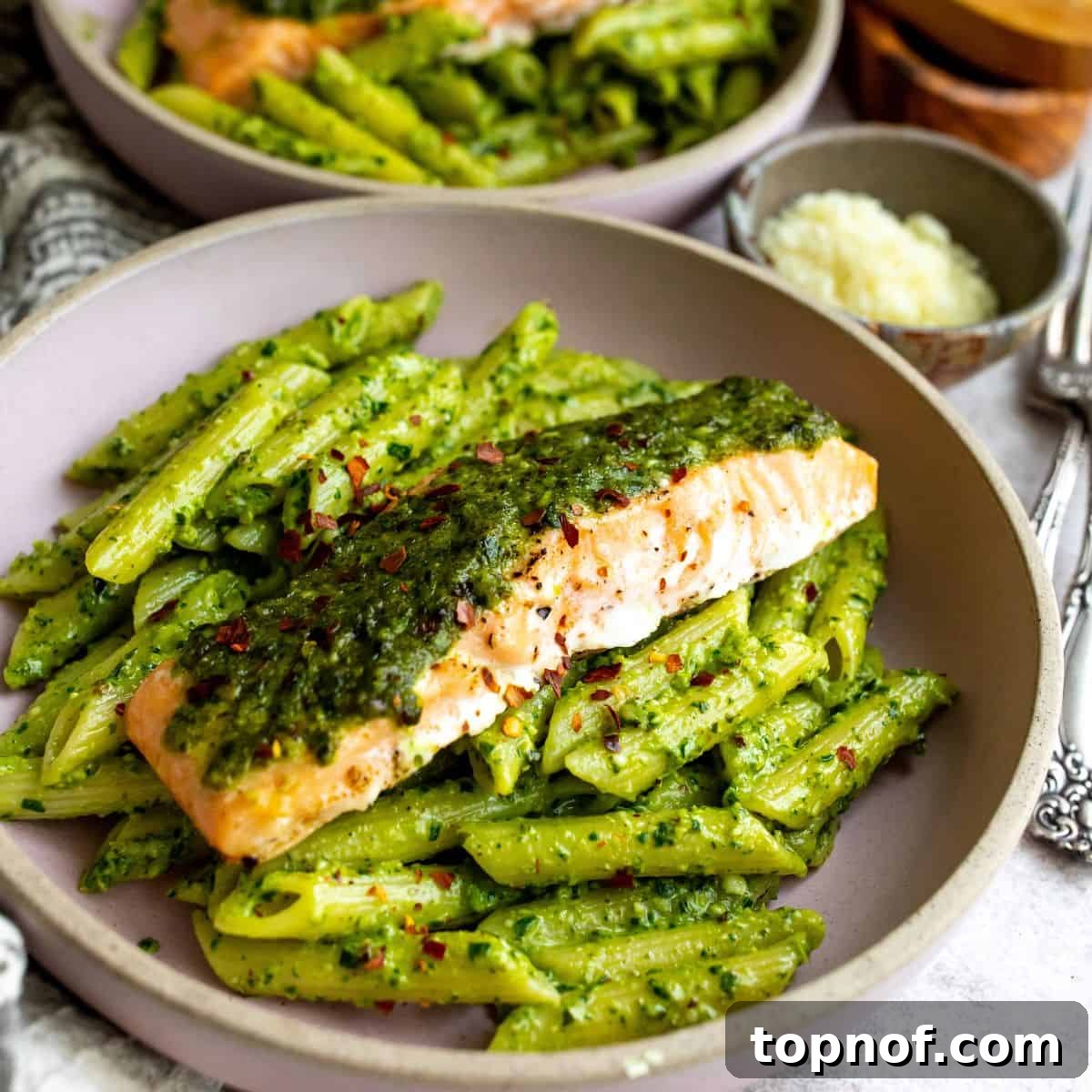
Salmon Pesto Pasta is the ultimate answer to your weeknight dinner dilemmas, offering an elevated meal that’s both quick and incredibly flavorful. In under 30 minutes, you can transform simple ingredients into a vibrant culinary masterpiece. The star of this dish is a beautifully herbaceous green pesto, which brings a burst of freshness that perfectly complements the rich, flaky salmon and comforting pasta. This isn’t just a meal; it’s an experience that lights up your senses and leaves you feeling nourished and satisfied.
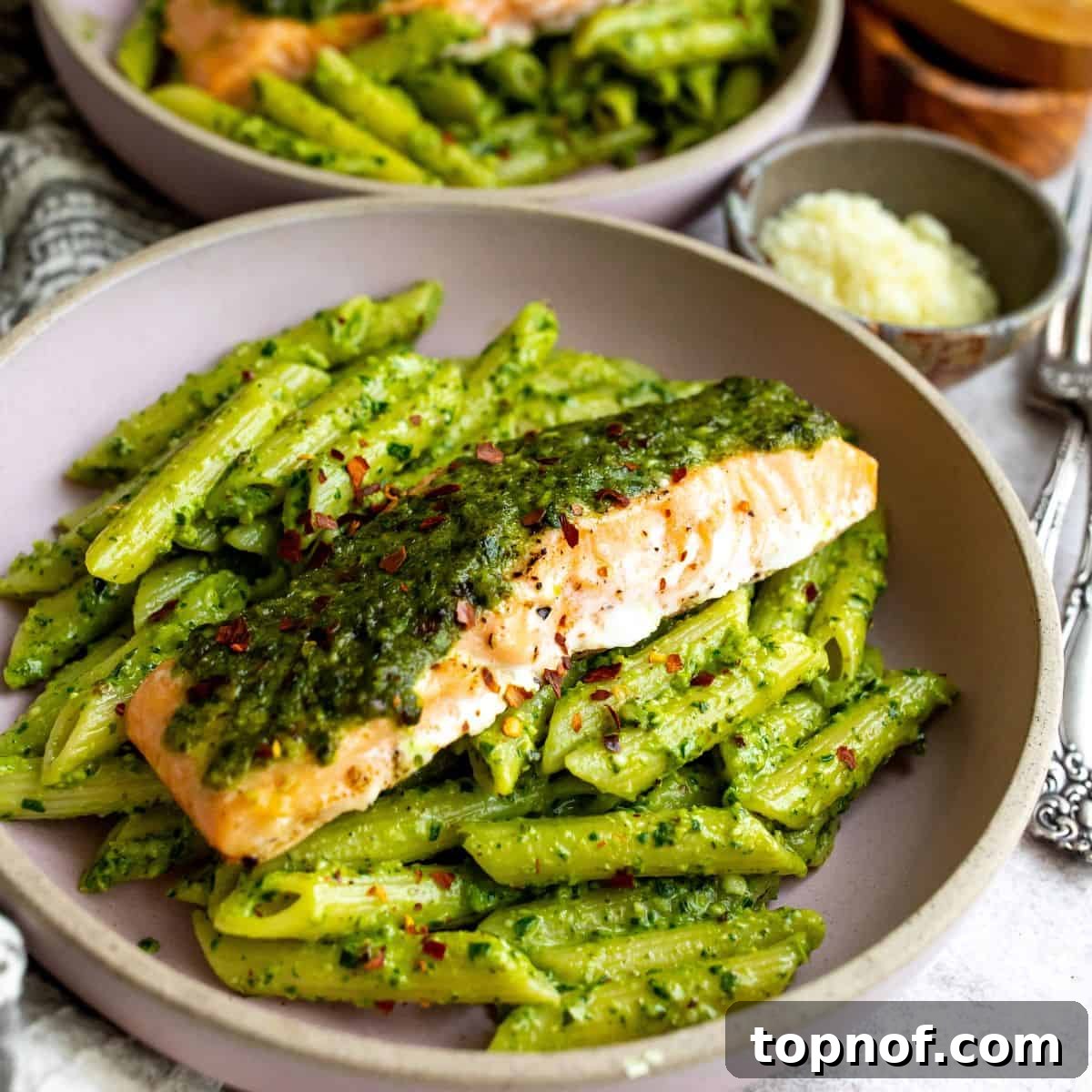
Why You’ll Love This Salmon Pesto Pasta
This Salmon Pesto Pasta recipe isn’t just another dish; it’s a culinary hack for anyone seeking a balance of speed, elegance, and nutrition. Here’s why this recipe will quickly become a household favorite:
- Effortlessly Simple & Quick: Life gets busy, but delicious meals don’t have to be complicated. This recipe comes together in under 30 minutes, making it ideal for busy weeknights when you crave something extraordinary without spending hours in the kitchen.
- Elevated & Visually Stunning: With its vibrant green pesto and perfectly cooked salmon, this dish is as beautiful to look at as it is delicious to eat. It brings a touch of gourmet sophistication to your dining table, perfect for impressing guests or simply treating yourself.
- Packed with Superfoods: Our homemade spinach-walnut pesto is a powerhouse of nutrition. Spinach is rich in vitamins K, A, and C, while walnuts provide healthy omega-3 fatty acids, antioxidants, and essential minerals. This pesto is a delicious way to sneak in extra greens and boost your nutrient intake.
- Incredibly Filling & Satisfying: The combination of protein-rich salmon, wholesome pasta, and nutrient-dense pesto creates a meal that truly satisfies. It’s hearty enough to fuel your day or wind down your evening, ensuring you feel full and content.
- Excellent for Meal Prep: Planning your meals ahead is a breeze with this recipe. The components hold up beautifully, and salmon can be easily reheated without compromising its texture or flavor, making it a perfect option for lunches or dinners throughout the week.
- Family Favorite: My husband is a huge fan, and it’s quickly become a frequently requested dish in our home. Its universally appealing flavors make it a hit with both adults and children, offering a healthy and delicious alternative to standard weeknight fare.
- Versatile & Customizable: Whether you prefer a creamier texture (try our Baked Salmon Pasta) or want to explore other protein options (like our Tuna Pesto Pasta), this recipe provides a flexible foundation for your culinary creativity.
Essential Ingredient Notes for Perfect Pesto Pasta
The secret to a truly outstanding salmon pesto pasta lies in the quality and freshness of your ingredients. Here’s a closer look at what makes each component shine:
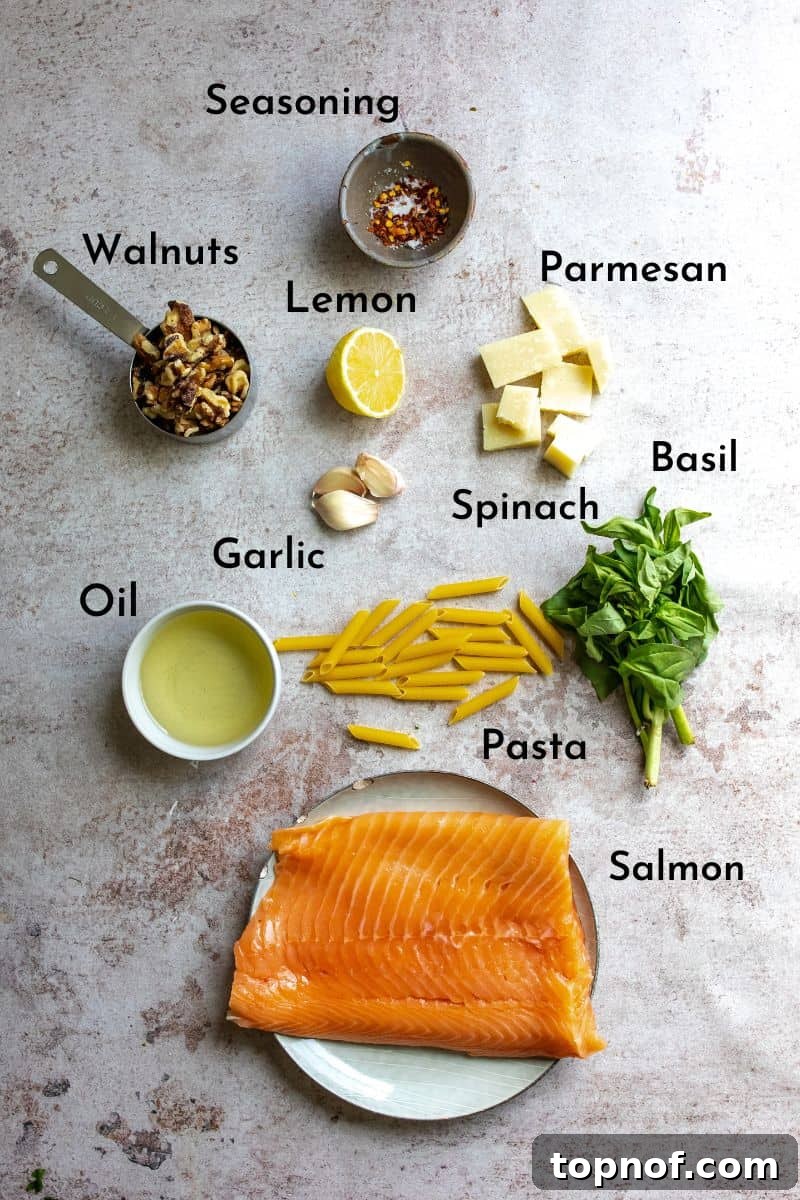
- Basil: For an unparalleled aroma and flavor, fresh basil leaves are absolutely essential. They are the heart of any good pesto, providing that classic bright, peppery, and slightly sweet note that truly distinguishes the sauce.
- Spinach: Fresh spinach not only contributes a beautiful, vibrant green hue to the pesto but also significantly boosts its nutritional profile. You won’t detect a strong spinach flavor, but it subtly adds earthy notes and a wealth of antioxidants and vitamins.
- Walnuts: We opt for walnuts over traditional pine nuts for several reasons: they are more budget-friendly, widely available, and add a wonderful earthy, slightly bitter depth that perfectly complements the other pesto ingredients. They also offer a different nutritional punch with their healthy fats.
- Parmesan Cheese: Freshly grated Parmesan cheese is crucial for adding a complex, nutty, and salty umami flavor to your pesto. Its sharp notes enhance the overall richness and balance the herbaceous basil.
- Lemon Juice: A squeeze of fresh lemon juice is a game-changer. It brightens the entire pesto, cutting through the richness and adding a zesty tang that elevates every bite. Always opt for fresh over bottled for the best results.
- Garlic: A staple in Italian cooking, fresh garlic cloves infuse the pesto with an aromatic pungency and a subtle bite that rounds out the flavor profile beautifully.
- Olive Oil: Choose a high-quality extra virgin olive oil with a smooth, neutral flavor. It’s not just a binder; it contributes to the pesto’s luxurious texture and carries the flavors of the herbs and nuts.
- Seasoning (Red Pepper Flakes & Salt): Red pepper flakes add a gentle warmth and subtle kick, which you can adjust to your preference. Salt is vital for seasoning the pesto and bringing out all the individual flavors, ensuring a well-balanced taste.
- Pasta: The beauty of this dish is its versatility with pasta. Any shape will work! Consider how the pesto will cling to the pasta; twisted or ridged shapes often hold sauce wonderfully. From spaghetti to penne, choose your favorite.
- Salmon: While boneless and skinless salmon fillets are often preferred for convenience, feel free to use any cut of salmon you enjoy. Look for wild-caught, sustainably sourced salmon for the best flavor and environmental choice. Salmon is rich in omega-3s and protein, making it a fantastic healthy choice. For another nutty salmon idea, try my Pistachio Crusted Salmon.
- Chicken Breast (Optional): If salmon isn’t available or you prefer poultry, boneless, skinless chicken breast makes an excellent substitute. Detailed instructions for cooking chicken are provided in the recipe card below.
Exciting Recipe Variations to Explore
One of the best aspects of this salmon pesto pasta is its adaptability. Feel free to get creative and tailor it to your dietary needs or preferences:
- Nuts: While walnuts are fantastic, you can certainly use traditional pine nuts if you prefer their classic flavor and buttery texture. Toasted almonds or cashews can also offer a delightful twist, adding their unique crunch and flavor notes.
- Herbs: Basil is classic, but don’t limit yourself! Try swapping some or all of the basil for fresh cilantro for a more vibrant, citrusy pesto, or even parsley for a peppery, green flavor. A mix of herbs can also be wonderfully complex.
- Cheese: Pecorino Romano is an excellent alternative to Parmesan, offering a sharper, saltier flavor. For a dairy-free version, simply replace Parmesan with nutritional yeast. Remember to adjust the salt to taste, as nutritional yeast doesn’t have the inherent saltiness of cheese.
- Protein Alternatives: If salmon isn’t on hand, there are many delicious swaps. Canned tuna, flaked and mixed into the pasta, offers a quick and affordable option. Other white fish, like cod or halibut, can be baked similarly to the salmon. As mentioned, chicken breast is a robust alternative, offering a different texture and flavor profile.
- Pasta Alternatives: Any pasta shape works, but for those looking to reduce carbs, consider zucchini noodles (zoodles) or riced cauliflower. Both absorb the pesto beautifully and offer a lighter, vegetable-forward meal. Whole wheat or gluten-free pasta options also integrate seamlessly.
Step-by-Step Guide to Crafting This Delicious Recipe
Follow these simple steps to bring your Salmon Pesto Pasta to life:
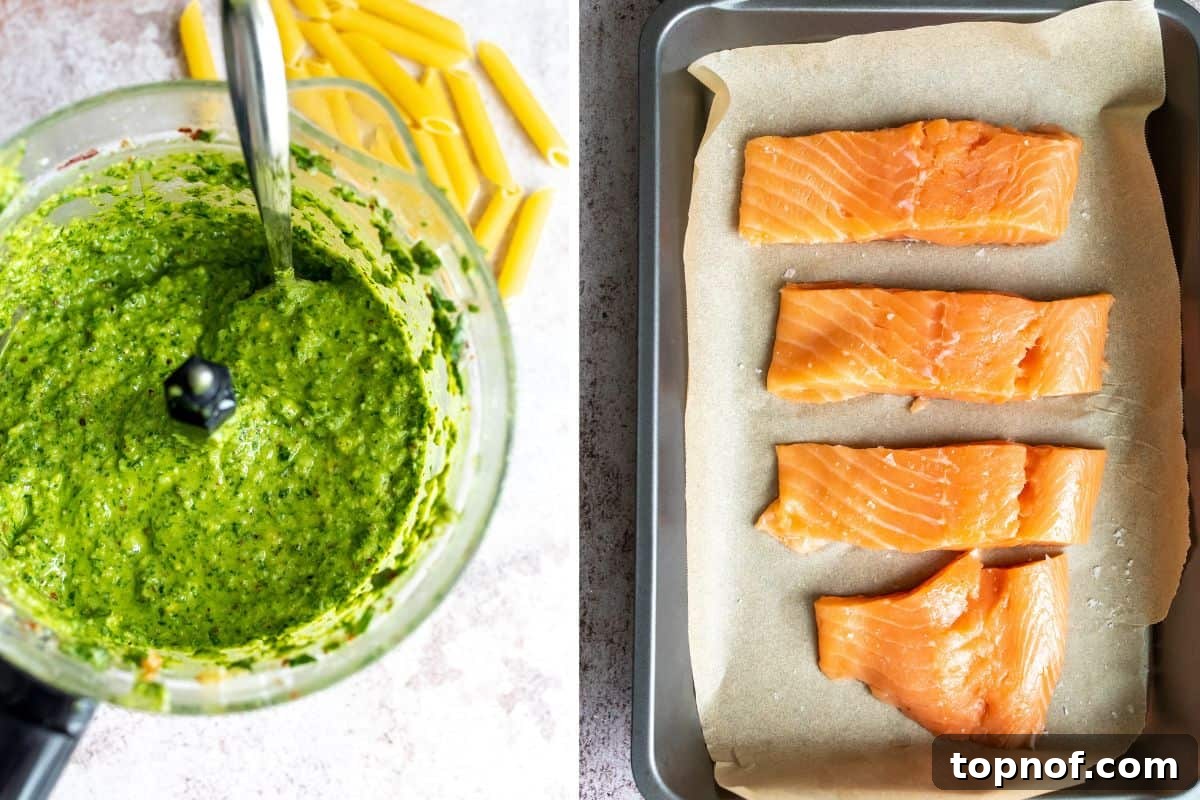
- Prepare Your Pesto: Begin by heating a large pot of water for your pasta. While the water comes to a boil, combine all your pesto ingredients (walnuts, olive oil, lemon juice, Parmesan, red pepper flakes, salt, spinach, basil, and garlic cloves) in a food processor or high-speed blender. Blitz until the mixture is well-blended and the walnuts are finely broken down, achieving a smooth, vibrant green paste. If the pesto appears too thick or isn’t blending easily, add a little more olive oil, a tablespoon at a time, until you reach your desired consistency. Set this beautiful pesto aside.
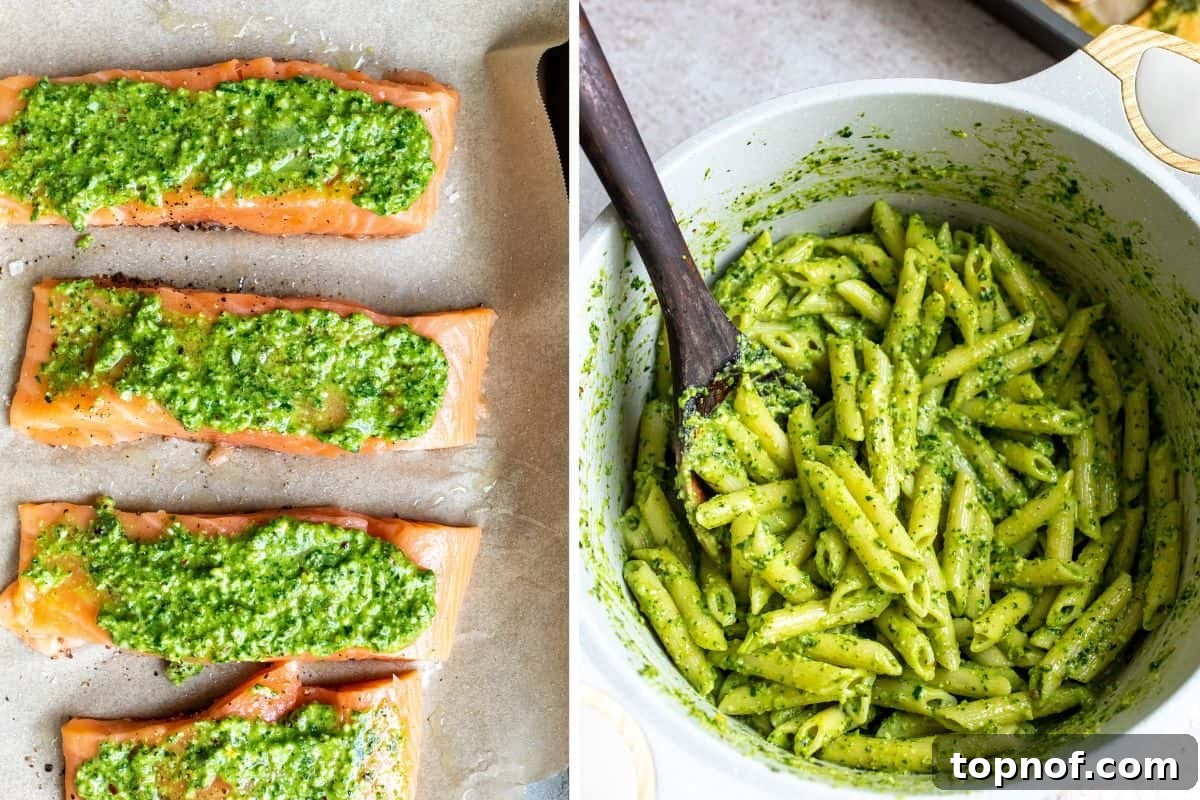
- Bake the Salmon: Preheat your oven to 375°F (190°C). Line a baking sheet with parchment paper for easy cleanup. Place your salmon fillets on the prepared baking sheet and dollop about 1 to 1.5 tablespoons of the freshly made pesto over the top of each salmon fillet, spreading it gently. The remaining pesto will be used later for coating the pasta. Bake the salmon for 12-15 minutes, or until it’s cooked through and flakes easily with a fork. Be careful not to overcook it!
- Cook the Pasta & Reserve Water: As your pasta water begins to boil, add a generous pinch of salt (this seasons the pasta from within). Cook the pasta according to package directions until it’s al dente – firm to the bite but not hard. This is crucial for texture. Before draining the pasta, make sure to reserve about 1.5 cups of the starchy pasta water. This liquid gold will be your secret ingredient for achieving a silky-smooth, well-emulsified pesto sauce.
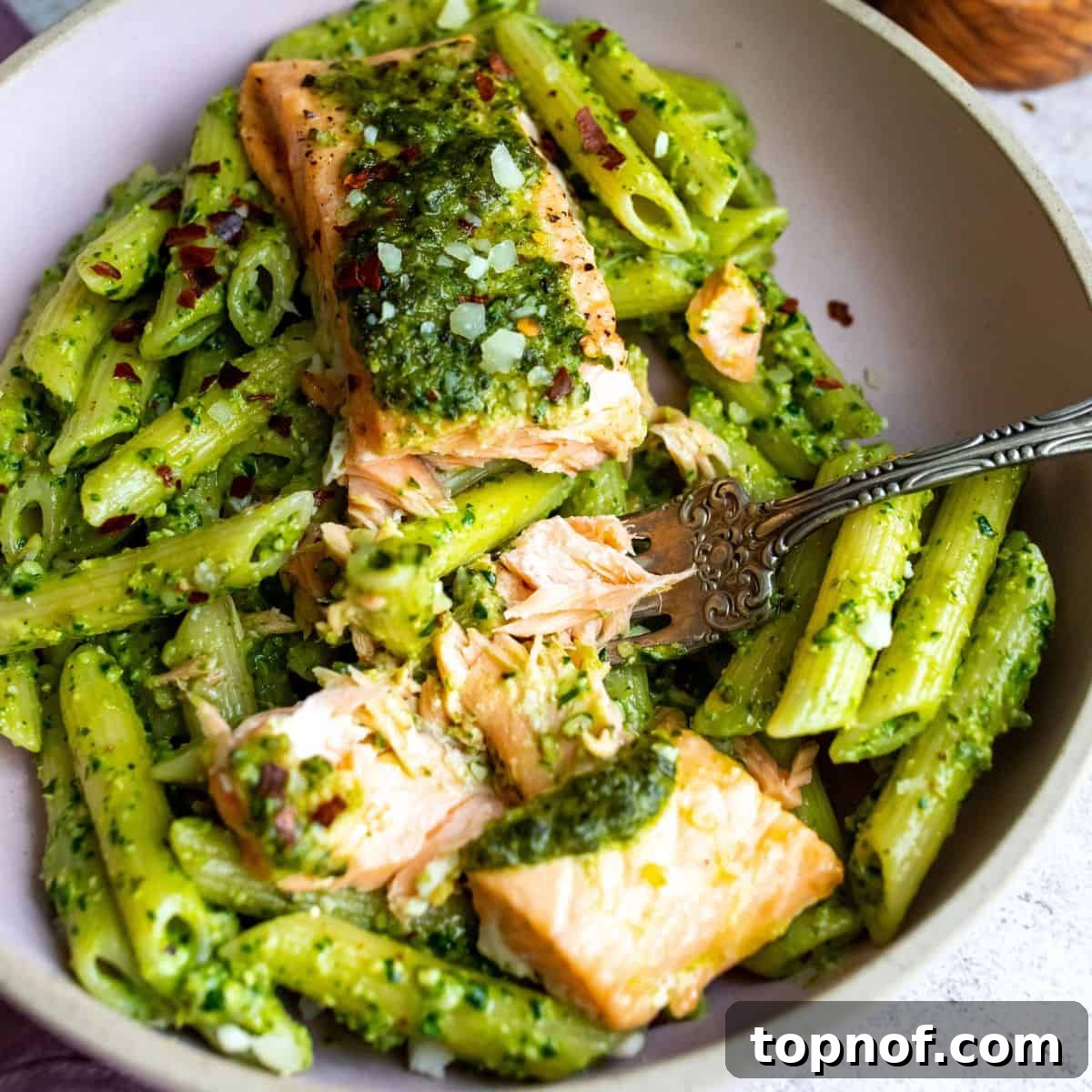
- Combine & Serve: Once the pasta is al dente, drain it thoroughly and return it to the hot pot. Add the reserved pesto to the pasta. Begin incorporating the reserved pasta water, adding about 1/2 cup at a time, stirring continuously until the pesto evenly coats the pasta and forms a luscious sauce. You might not need all the pasta water, so add it gradually until you reach your preferred sauce consistency. Plate the pesto pasta and gently place a baked salmon fillet on top of each serving. For an extra touch of indulgence, sprinkle with additional grated Parmesan cheese if desired. Serve immediately and enjoy!
Pro Chef Tips for Success
- Don’t Overcook Your Protein: Whether you’re using salmon or chicken, timing is key to tender, juicy protein. Use a meat thermometer to ensure your salmon reaches an internal temperature of 145°F (63°C) and chicken reaches 165°F (74°C). Checking throughout the cooking process prevents dry, rubbery results.
- The Magic of Pasta Water: Never skip reserving pasta water! Its starch content helps emulsify the pesto, creating a rich, glossy sauce that clings beautifully to the pasta. Add it gradually to achieve your desired consistency.
- Customize Your Pesto: Taste your pesto before adding it to the pasta. Adjust seasoning (salt, pepper, lemon juice) to your liking. If you prefer a milder flavor, reduce the garlic. For extra heat, add more red pepper flakes.
- Cooking Chicken Breast (If Substituting Salmon): If you opt for chicken, start by browning the seasoned chicken breasts (salt and pepper) in an oven-safe skillet over medium-high heat for about 6 minutes per side. This develops a delicious crust. Then, brush each browned chicken breast generously with about 1 tablespoon of pesto. Transfer the skillet to the preheated 350°F (175°C) oven and bake for another 12-14 minutes, or until the internal temperature reaches 165°F (74°C). This two-step process ensures flavorful, juicy chicken.
- Freshness is Key: While convenience items are tempting, using fresh basil, spinach, and lemon juice will truly make your homemade pesto sing. The difference in flavor is undeniable.
Frequently Asked Questions (FAQs) About Salmon Pesto Pasta
For the best flavor and quality, we always recommend trying to source wild-caught, sustainable salmon. Varieties like Sockeye or King salmon are excellent choices for their rich flavor and firm texture. However, any salmon you can find on sale or that is fresh and looks appealing will work wonderfully. The key is to ensure it’s fresh for optimal taste.
Absolutely! To make this recipe completely dairy-free, simply substitute the Parmesan cheese with an equal amount of nutritional yeast. Nutritional yeast provides a savory, cheesy flavor without any dairy. Remember to taste and adjust the salt content, as nutritional yeast doesn’t contribute the same saltiness as Parmesan.
This recipe can easily be made gluten-free by using your favorite gluten-free pasta. The pesto and salmon components are naturally gluten-free, so the only adjustment needed is your pasta choice.
While homemade pesto offers superior freshness and flavor, you can certainly use a good quality store-bought pesto to save time. Just ensure it’s a brand you enjoy, and you might want to enhance it with a little fresh lemon juice or extra garlic to brighten the flavors.
Salmon is perfectly cooked when it reaches an internal temperature of 145°F (63°C) and flakes easily with a fork at its thickest part. The flesh should still be moist and opaque throughout. Avoid overcooking, as this can lead to dry salmon.
Make Ahead & Storage Tips for Ultimate Convenience
This recipe is incredibly convenient for meal planning and enjoying delicious leftovers:
- Pesto Ahead of Time: The homemade pesto is fantastic for making in advance. Prepare it up to 3 days ahead and store it in an airtight container in the refrigerator. To prevent browning, you can pour a thin layer of olive oil over the surface of the pesto before sealing. This simple trick keeps it vibrant and fresh.
- Freezing Pesto: For longer storage, pesto freezes beautifully. Portion it into ice cube trays or small freezer-safe containers and freeze for up to 3 months. Thaw in the refrigerator overnight or use directly in sauces.
- Storing Leftovers: Any leftover salmon pesto pasta should be stored in an airtight container in the refrigerator for up to 4 days. This makes it perfect for delicious lunches or quick dinners throughout the week.
- Reheating Leftovers: To reheat, gently warm the pasta in a skillet over low heat, adding a splash of water or chicken broth to loosen the sauce. For the salmon, reheating it briefly in the oven or microwave at a lower power setting can help retain its moisture. Be cautious not to overcook the salmon during reheating.
Other Irresistible Salmon Recipes to Enjoy
If you’re a fan of salmon, you’ll love these other fantastic recipes that celebrate this versatile fish:
Dinner
Blackened Salmon Tacos
Dinner
Miso Salmon Bowl
Dinner
Easy Firecracker Salmon
Dinner
Teriyaki Salmon Noodles
We hope you thoroughly enjoyed this Salmon Pesto Pasta recipe! If you loved making (and eating) this dish, please let us know by leaving a comment below. Your feedback means the world to us and helps other home cooks discover amazing new meals. For more exciting and feel-good recipes, be sure to follow us on Instagram and Pinterest. Thank you for joining us on this delicious culinary journey!
Salmon Pesto Pasta
Bailey Rhatigan
10 minutes
20 minutes
4
Equipment
- Food processor or high speed blender
- Large pot
- Baking sheet
- Parchment paper
Ingredients
For the Pesto
- ½ cup walnuts
- ½ cup olive oil
- 2½ Tbsp lemon juice (freshly squeezed)
- ¼ cup Parmesan cheese, freshly grated (*see notes for dairy-free option)
- ½ tsp red pepper flakes (*optional, skip if sensitive to heat)
- ½ tsp salt (or to taste)
- 4 cups fresh spinach, packed
- ¼ cup fresh basil leaves, packed
- 2 garlic cloves, peeled
For the Salmon Pesto Pasta
- 5 cups pasta (any shape)
- 1-1½ cup pasta water (reserved from cooking)
- 0.75 lb salmon fillets (approx. 4 individual fillets)
- 4 Tbsp Parmesan cheese, optional for topping
Instructions
-
Begin by setting a large pot of water to boil for the pasta. While the water heats, combine all the pesto ingredients (walnuts, olive oil, lemon juice, Parmesan, red pepper flakes, salt, spinach, basil leaves, and garlic cloves) in a food processor or high-speed blender. Blend until a smooth and well-combined pesto forms, ensuring the walnuts are fully broken down. If the pesto is too thick or difficult to blend, add a touch more olive oil gradually until you reach your desired consistency. Set aside.
-
Preheat your oven to 375°F (190°C). Line a baking sheet with parchment paper. Place the salmon fillets on the parchment-lined sheet. Spoon about 1 to 1.5 tablespoons of the prepared pesto over the top of each salmon fillet. The remaining pesto will be used for the pasta. Bake the salmon for 12-15 minutes, or until it is cooked through and flakes easily with a fork.
-
Once the pasta water is boiling, add your chosen pasta and cook according to package directions until it is al dente. IMPORTANT: Before draining the pasta, carefully scoop out and reserve about 1.5 cups of the starchy pasta water. This water is key to achieving a creamy sauce!
-
After reserving the pasta water, drain the cooked pasta and return it to the pot. Add the remaining pesto to the pasta. Begin adding the reserved pasta water, about 1/2 cup at a time, stirring continuously until the pesto evenly coats the pasta and forms a smooth, emulsified sauce. You may not need all the water; add it incrementally until you reach your desired sauce thickness. Plate the pesto pasta and gently place a baked salmon fillet on top of each serving. If desired, sprinkle with extra Parmesan cheese before serving. Enjoy immediately!
-
If you are using chicken breast instead of salmon: First, season the chicken breasts with salt and pepper. In an oven-safe skillet, brown the chicken for about 6 minutes on each side over medium-high heat. Once browned, brush the chicken with approximately 1 tablespoon of pesto per breast. Transfer the skillet to a preheated 350°F (175°C) oven and bake for about 12-14 minutes, or until the internal temperature reaches 165°F (74°C).
Notes
- Don’t Overcook Your Protein: Always monitor your salmon or chicken. Using a meat thermometer can help ensure it reaches the correct internal temperature without drying out.
- Red Pepper Flakes: The red pepper flakes add a subtle warmth. If you are sensitive to heat or prefer a milder flavor, feel free to reduce the amount or omit them entirely.
- Dairy-Free Option: To make this pesto dairy-free, simply substitute the Parmesan cheese with an equal amount of nutritional yeast. Remember to adjust salt to taste, as nutritional yeast doesn’t have the same inherent saltiness.
- Salt to Taste: Always taste your pesto and final dish before serving. Adjust salt and pepper as needed to enhance all the flavors.
- Pasta Water is Key: The starchy pasta water is essential for creating a smooth, luscious sauce that coats the pasta beautifully. Don’t skip this step!
Nutrition
Calories: 585kcal |
Carbohydrates: 21g |
Protein: 28g |
Fat: 46g |
Saturated Fat: 7g |
Polyunsaturated Fat: 12g |
Monounsaturated Fat: 24g |
Cholesterol: 54mg |
Sodium: 1993mg |
Potassium: 1589mg |
Fiber: 6g |
Sugar: 12g |
Vitamin A: 4339IU |
Vitamin C: 34mg |
Calcium: 238mg |
Iron: 5mg
Nutrition information is automatically calculated, so should only be used as an approximation.
Additional Info
Bailey Rhatigan
10 minutes
20 minutes
Main Course
American
4
585
30 minute, Salmon, Pesto Pasta
Like this recipe? We’d love to hear from you! Please leave a comment and rating below.