
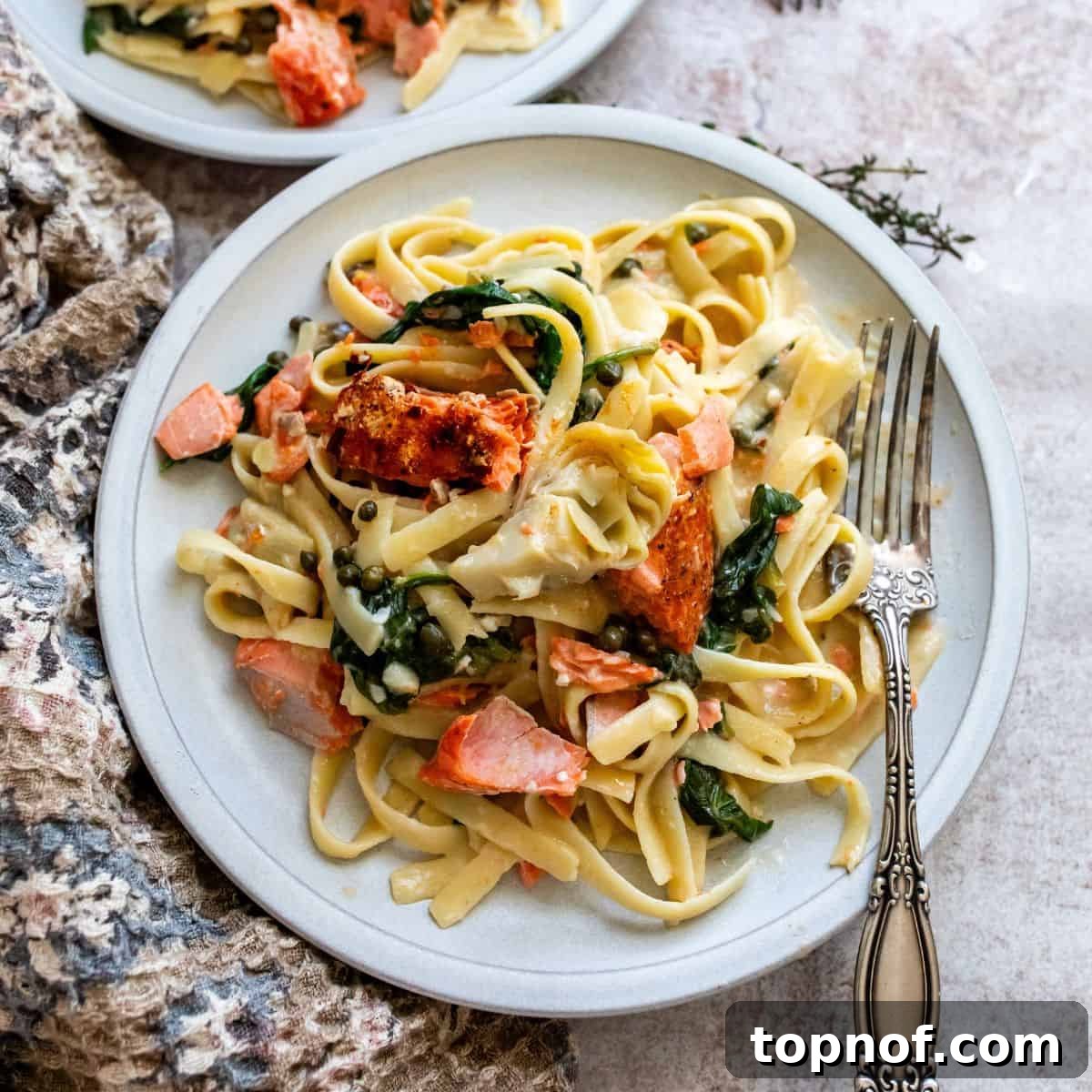
Creamy Baked Salmon Pasta with Capers and Spinach
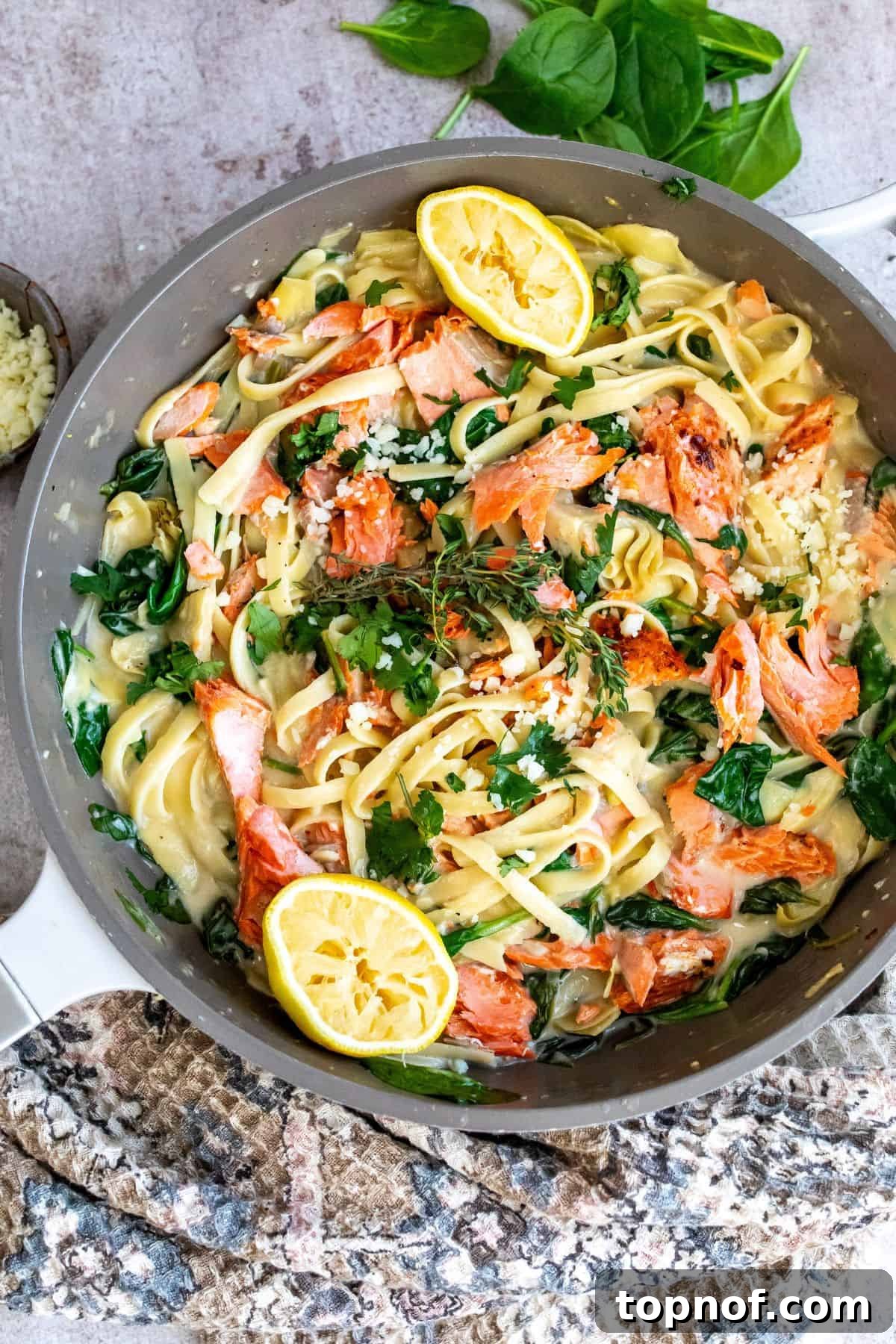
Indulge in a truly exquisite and comforting meal with this recipe for Oven Baked Salmon Pasta. This dish effortlessly combines flaky, tender salmon with perfectly cooked pasta, all bathed in a luscious, creamy sauce. The bright tang of capers and the fresh earthiness of spinach elevate this meal, making it an irresistible comfort food for you and your entire family. Ready in about 30 minutes, it’s perfect for a busy weeknight or a special weekend treat!
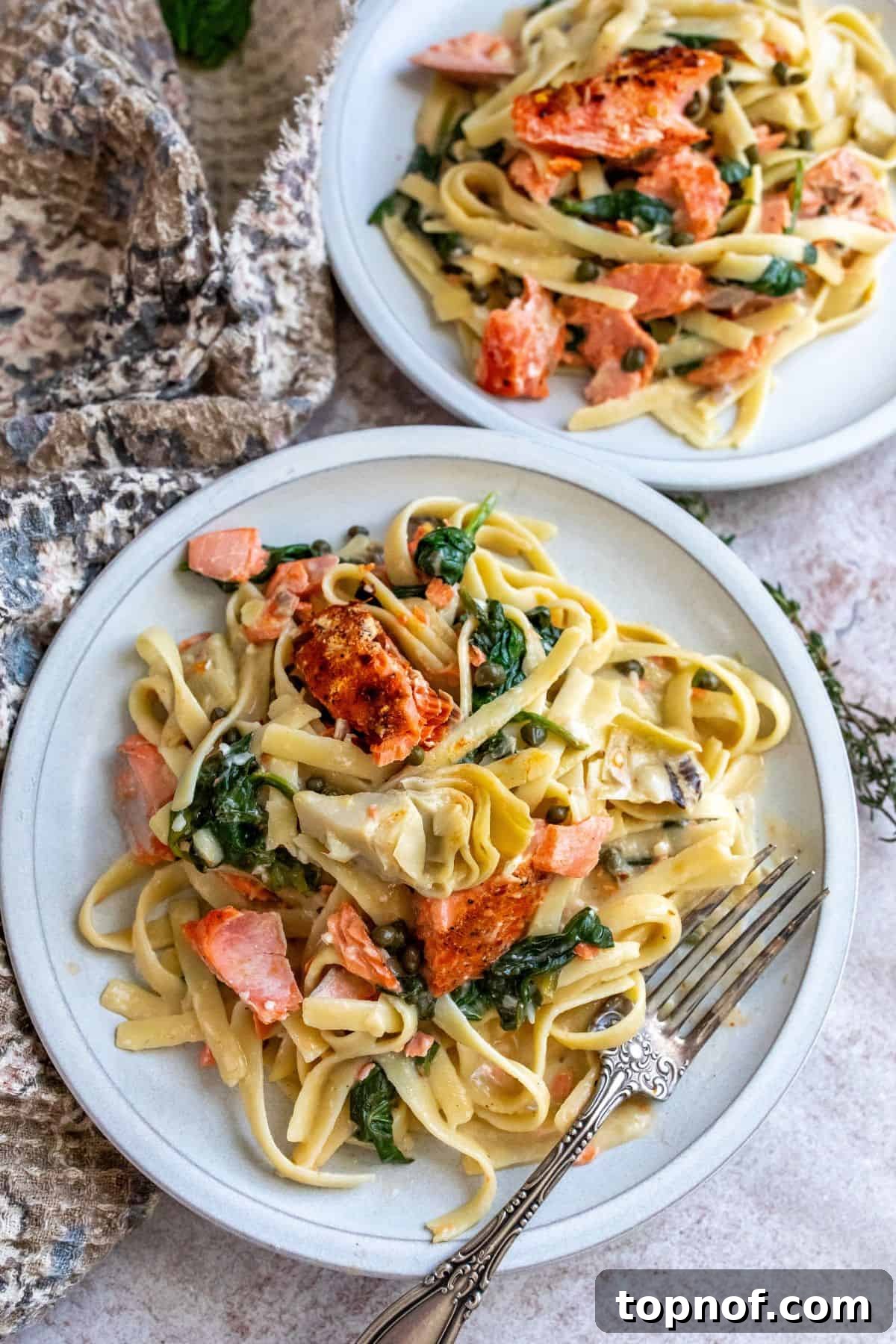
Table of Contents
- Why This Baked Salmon Pasta is a Must-Try
- Essential Ingredients for Your Salmon Pasta
- Easy Recipe Variations and Substitutions
- Step-by-Step Guide to Making This Delicious Dish
- Frequently Asked Questions About Baked Salmon Pasta
- Expert Tips for Perfect Baked Salmon Pasta
- Serving Suggestions and Recipe Pairings
- Other Irresistible Salmon Recipes
- Baked Salmon Pasta Recipe Card
Why This Baked Salmon Pasta is a Must-Try
This baked salmon pasta isn’t just a meal; it’s an experience. It brings together a symphony of flavors in a dish that feels both gourmet and incredibly comforting. Here’s why you’ll absolutely love making this cozy, creamy salmon pasta:
Unbeatable Comfort and Flavor
There’s something inherently satisfying about a warm bowl of pasta, and when it’s combined with perfectly cooked salmon and a rich, creamy sauce, it reaches new heights of comfort. The salmon, seasoned and baked to flaky perfection, adds a delightful depth and healthy protein to the creamy caper and spinach pasta. The capers introduce a briny, tangy pop that cuts through the richness of the cream, while fresh spinach adds a touch of vibrant color and essential nutrients. It’s a harmonious blend that’s both hearty and surprisingly balanced.
Effortless Preparation for Any Occasion
Despite its luxurious taste, this dish is remarkably straightforward to prepare, making it an excellent choice for busy weeknights. With minimal fuss, you can create a meal that looks and tastes like it took hours. It’s quick enough for a casual family dinner but elegant enough to impress guests or serve as a special date night meal. You’ll spend less time in the kitchen and more time enjoying the company and the incredible food.
Versatility at Its Best
One of the greatest strengths of this baked salmon pasta is its adaptability. Feel free to customize it to your liking: add extra vegetables like cherry tomatoes, mushrooms, or peas for added color and nutrition. If you’re looking to lighten the meal, you can easily make this dish low-carb by swapping traditional fettuccine noodles for spaghetti squash or zucchini zoodles. To elevate the flavors even further, a drizzle of a homemade Pesto Dressing or a sprinkle of fresh herbs just before serving can transform it into an even more memorable culinary creation.
Healthy and Wholesome
Salmon is renowned for its omega-3 fatty acids, which are crucial for heart health and brain function. Coupled with the vitamins and minerals from fresh spinach and other potential vegetable additions, this pasta dish is not just delicious but also contributes to a well-rounded diet. It’s a fantastic way to incorporate more seafood into your weekly menu.
Essential Ingredients for Your Salmon Pasta
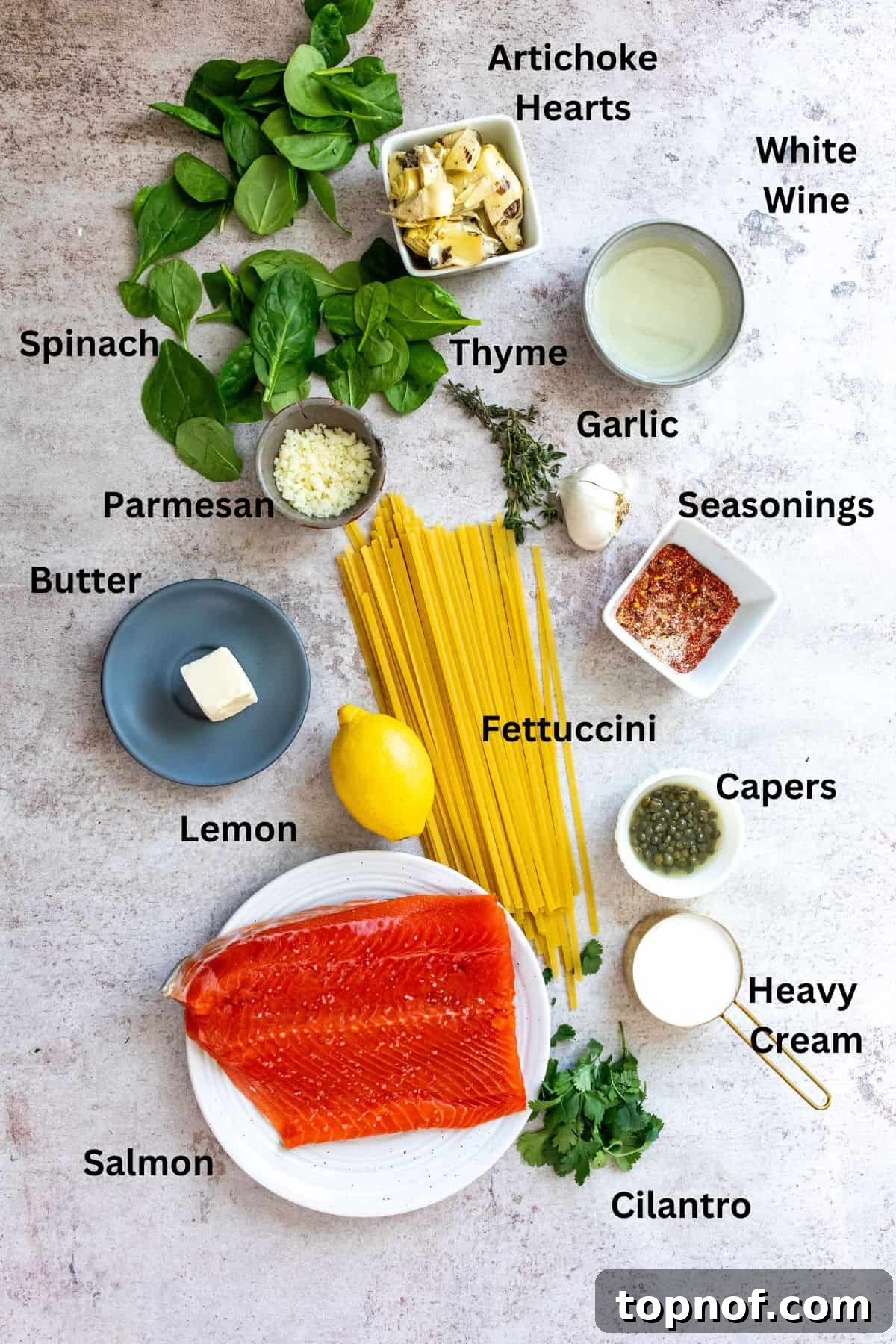
Each ingredient plays a crucial role in building the robust and satisfying flavor profile of this dish. Here’s a closer look at what you’ll need and why:
- Salmon: The star of the show! I highly recommend using wild-caught salmon for its superior flavor and texture, but any salmon that fits your budget will work wonderfully. You can opt for a large fillet, as I did, or use pre-portioned fillets for convenience. For an adventurous twist, consider preparing your salmon using my Blackened Salmon recipe to impart a smoky, spicy kick that pairs exceptionally well with the creamy pasta.
- Fettuccine Noodles: The broad, flat surface of fettuccine is perfect for clinging to the rich, creamy sauce. Other pasta shapes like linguine, tagliatelle, or even penne can also be used.
- Artichoke Hearts: I prefer grilled and marinated artichoke hearts, typically found near olives in most grocery stores. Their tangy, slightly nutty flavor adds a wonderful dimension to the sauce. Canned artichoke hearts (drained well) are a perfectly acceptable alternative if marinated ones aren’t available.
- Dry White Wine: A splash of dry white wine (like Sauvignon Blanc or Pinot Grigio) is essential for deglazing the pan and adding a bright, fresh acidity to the cream sauce, balancing its richness. Don’t worry, most of the alcohol cooks off, leaving only its delightful flavor behind.
- Capers: These tiny, pickled flower buds are a game-changer! Their distinctive salty, tangy, and slightly floral notes add an irreplaceable depth of flavor that you absolutely do not want to skip. They are a signature component of many Mediterranean-inspired dishes.
- Heavy Cream: The base for our luxurious sauce. Heavy cream provides that rich, velvety texture and mouthfeel that makes this pasta so indulgent.
- Garlic: Fresh minced garlic is fundamental for building the aromatic foundation of the sauce.
- Lemon Zest and Fresh Lemon Juice: Lemon is a fantastic complement to salmon. The zest provides aromatic oils, while fresh juice brightens the entire dish, cutting through the richness and enhancing the flavors of the capers and spinach.
- Baby Spinach: This leafy green wilts beautifully into the warm sauce, adding a lovely color, texture, and a boost of vitamins.
- Seasonings: A simple yet effective blend of salt, black pepper, red pepper flakes (for a gentle warmth), paprika (for color and mild flavor), and a touch of fresh or dried thyme creates a perfectly seasoned salmon and sauce.
- Butter and Olive Oil: Used for sautéing and baking, these fats contribute to the overall richness and flavor.
- Optional Garnish: Fresh cilantro (or parsley/dill) and grated Parmesan cheese add a final flourish of flavor and presentation.
All precise measurements for these ingredients can be found in the comprehensive recipe card located at the bottom of this article.
Easy Recipe Variations and Substitutions
One of the beauties of this creamy salmon pasta is how easily it adapts to different dietary needs or pantry staples. Don’t be afraid to get creative!
Protein Alternatives
- Trout or Shrimp: If salmon isn’t available or you’re looking for a change, trout or shrimp make excellent substitutes. Remember that cooking times will need to be adjusted significantly. Shrimp, for instance, cooks very quickly (typically 2-4 minutes), so add it towards the end of the sauce preparation.
- Chicken: Cooked and shredded chicken breast or thighs can also be used for a non-seafood option.
- Vegetarian/Vegan: For a vegetarian version, you can omit the salmon entirely and perhaps add some pan-seared mushrooms, chickpeas, or white beans for extra protein and texture.
Wine Substitutions
- Non-Alcoholic Options: If you prefer to avoid alcohol, sherry cooking wine (non-alcoholic) is a great alternative that still provides a similar depth of flavor.
- Broth: Chicken broth or vegetable broth can be used in place of white wine. Fish broth would also be an excellent choice to maintain a subtle seafood essence.
- Lemon Juice + Water: A mix of lemon juice and water can mimic the acidity, though it won’t offer the same complexity.
Caper Alternatives
- Olives: If capers aren’t your favorite or you don’t have them on hand, finely chopped Kalamata or green olives can provide a similar briny, salty punch.
- Pickles: Chopped dill pickles, while different, can offer a tangy note.
Dairy-Free Options for the Cream Sauce
- Plant-Based Creams: For a dairy-free version, use unsweetened dairy-free heavy cream (such as cashew cream, oat cream, or soy cream). Ensure it’s specifically designed for cooking to achieve the right consistency.
- Milk Alternatives: Half and half or 2% milk can be used for a lighter sauce, though they won’t be as rich as heavy cream. For dairy-free, use unsweetened almond milk or oat milk, but you might need to add a thickener like a cornstarch slurry to achieve the desired consistency.
- Plant-Based Butter: Use a good quality plant-based butter for sautéing.
Additional Vegetable Ideas
- Cherry Tomatoes: Halved cherry tomatoes added with the spinach will add a burst of color and sweetness.
- Mushrooms: Sliced cremini or button mushrooms sautéed with the garlic can add an earthy flavor.
- Peas: Frozen peas are a quick and easy addition for extra green and sweetness.
- Asparagus: Blanched and chopped asparagus spears are a lovely spring addition.
Step-by-Step Guide to Making This Delicious Dish
Creating this creamy baked salmon pasta is a straightforward process when you follow these steps. The key is to manage your time efficiently so the salmon, pasta, and sauce finish around the same time.
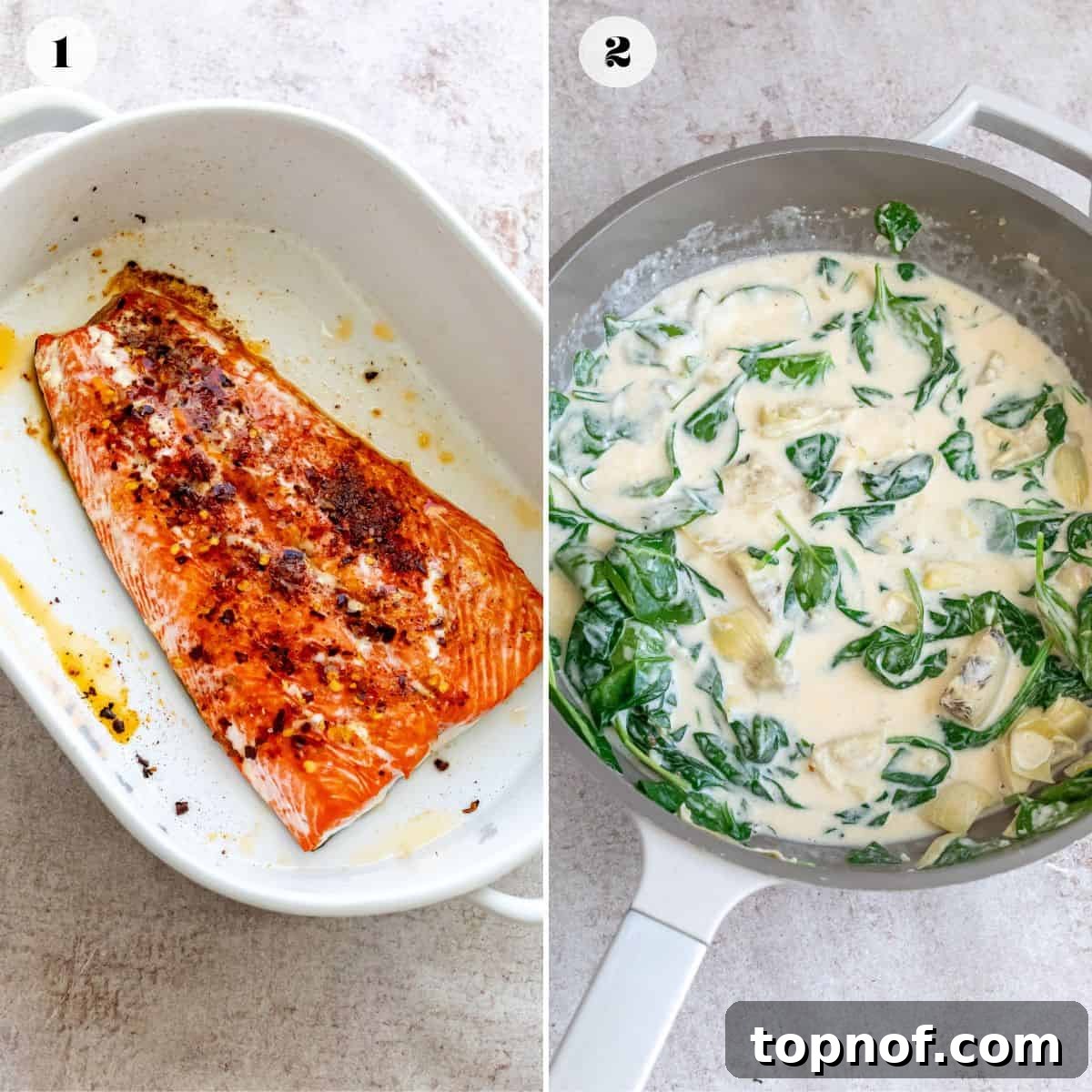
Step One: Prepare and Bake the Salmon
Begin by preheating your oven to 350°F (175°C). Simultaneously, bring a large pot of generously salted water to a rolling boil for your fettuccine. Salting the pasta water is crucial as it seasons the pasta from within, enhancing the overall flavor of your dish.
Lightly spray a baking pan or dish with olive oil or avocado spray to prevent sticking. Place your salmon fillet, skin side down, on the prepared pan. In a small bowl, whisk together all your dry seasonings (salt, pepper, red pepper flakes, paprika, thyme). Season the salmon generously with half of this mixture, reserving the other half for your creamy pasta sauce. Transfer the seasoned salmon to the preheated oven and bake for 13 to 15 minutes, or until its internal temperature reaches 145°F (63°C). The salmon should be flaky and cooked through but still moist.
Step Two: Craft the Creamy Caper and Spinach Sauce
While your salmon bakes and pasta cooks, start on the star of the pasta: the creamy sauce. In a large, heavy-bottomed skillet or Dutch oven, melt the butter over medium heat. Once shimmering, add the minced garlic and cook for about 1 minute, stirring constantly, until fragrant. Be careful not to let the garlic brown, as it can turn bitter.
Pour in the heavy cream and dry white wine, then add the lemon zest, the remaining half of your seasoning blend, capers, and chopped artichoke hearts. Bring the mixture to a gentle simmer over medium-low heat. Let it cook for 5 to 6 minutes, stirring frequently, until the sauce slightly thickens to a thin, coat-the-back-of-a-spoon consistency. The simmering allows the flavors to meld beautifully.
At this point, add the fresh baby spinach to the sauce. Stir gently and allow the spinach to wilt down, which should only take a minute or two. Finally, squeeze the fresh lemon juice into the cream sauce. Taste the sauce and adjust seasonings as needed – you might want more lemon, salt, or capers depending on your preference. Remember, everyone’s palate is different!
Pro Tip: Reserve Pasta Water! Before you drain your cooked fettuccine, scoop out about a cup of the starchy cooking water. This magical liquid is your secret weapon for adjusting the consistency of your sauce later. If the sauce becomes too thick, a splash of this starchy water will thin it out while helping it cling to the pasta beautifully, rather than making it watery.
Step Three: Combine and Serve
Once the salmon is cooked through, carefully remove it from the baking dish. If desired, you can easily remove the skin by slipping a spatula between the salmon flesh and the skin. Gently break the cooked salmon into large, succulent chunks. There’s no need for perfectly uniform pieces; rustic chunks add to the charm of the dish.
Add the drained fettuccine directly to the creamy sauce in the skillet. Toss the pasta gently with tongs until it is evenly coated in the rich sauce. If the sauce seems too thick, add a tablespoon or two of your reserved pasta water until it reaches your desired consistency. Finally, fold in the baked salmon chunks.
Serve immediately, garnished with fresh lemon wedges for an extra squeeze of brightness and a sprinkle of chopped cilantro or parsley for a pop of color and herbaceous flavor. A grating of fresh Parmesan cheese is also highly recommended for an additional layer of savory goodness. Enjoy this delightful and comforting meal!
Storing Leftovers: Any leftover baked salmon pasta can be stored in an airtight container in the refrigerator for up to 2 days. To reheat, gently warm on the stovetop over low heat, adding a splash of milk or broth if the sauce has thickened too much.
Frequently Asked Questions About Baked Salmon Pasta
While salmon is fantastic, shrimp or trout are excellent alternatives. If using shrimp, reduce the cooking time significantly – shrimp typically needs only about 2-4 minutes to cook through. Be careful not to overcook it, as it can become rubbery. Cooked and shredded chicken can also be incorporated for a different flavor profile.
Absolutely! To make this recipe dairy-free, substitute regular butter with a plant-based butter alternative and use an unsweetened dairy-free heavy cream, such as oat, cashew, or soy cream. Ensure your chosen dairy-free cream is suitable for cooking to achieve the best texture.
Yes, both frozen salmon and spinach can be used. For frozen salmon fillets, thaw them completely in the refrigerator overnight or by submerging them in cold water before seasoning and baking. Frozen spinach should be thawed and thoroughly squeezed to remove excess water before adding it to the sauce to prevent it from watering down the cream. This will ensure your sauce remains rich and flavorful.
If you enjoy a bit more heat, you can increase the amount of red pepper flakes in both the salmon seasoning and the sauce. A pinch of cayenne pepper could also be added to the sauce. Alternatively, a dash of your favorite hot sauce stirred into the finished pasta would also work beautifully.
Expert Tips for Perfect Baked Salmon Pasta
Achieving a restaurant-quality baked salmon pasta at home is easier than you think with these expert tips:
Don’t Overcook Your Salmon or Pasta
- Salmon: Overcooked salmon can become dry and tough. Aim for an internal temperature of 145°F (63°C). A meat thermometer is your best friend here. All ovens vary, so keep a close eye on your salmon starting around the 12-minute mark. It should be flaky but still moist.
- Pasta: Cook your pasta al dente. This means it should still have a slight bite or firmness when bitten into. Al dente pasta holds its shape better, absorbs sauce without becoming mushy, and contributes to a more satisfying texture in the final dish. Always follow package directions but start checking a minute or two before the suggested cooking time.
Choose the Right Pasta Shape
While fettuccine is classic for creamy sauces, other pasta shapes work wonderfully too. The key is to choose a pasta that can effectively hold the rich sauce. Fettuccine, linguine, or tagliatelle are excellent choices with their flat, broad surfaces. Penne, rigatoni, or farfalle with their grooves and curves can also capture the sauce beautifully. Avoid very thin pastas like angel hair, which might get lost in the creamy sauce.
The Magic of Reserved Pasta Water
This is a culinary secret weapon! The starchy water left over from cooking pasta contains emulsifiers that help create a silky, cohesive sauce. Before draining your pasta, always reserve at least a cup of this starchy water. If your sauce appears too thick or needs to be loosened, gradually add a tablespoon or two of this reserved water until you reach your desired consistency. It adds richness and helps the sauce cling to the pasta much better than plain water or broth would.
Maximize Flavor with Fresh Ingredients and Adjustments
Fresh lemon zest and juice are crucial for brightening the dish. Don’t skimp on the garlic! Taste your sauce before adding the pasta and adjust the salt, pepper, and lemon as needed. A final sprinkle of fresh herbs like dill or parsley can also enhance the fresh flavors. Using good quality salmon and marinated artichoke hearts will also significantly impact the final taste.
Serving Suggestions and Recipe Pairings
This creamy baked salmon pasta is a hearty and fulfilling meal all on its own, but it also pairs beautifully with a variety of side dishes to create a complete and balanced dining experience.
- Fresh Salads: A light, crisp salad is an ideal counterpoint to the richness of the pasta. My Lemon Caesar Kale salad offers a bright, tangy complement, or consider a simple Mediterranean Black Bean Salad for added texture and nutrients. A green salad with a vinaigrette dressing would also be perfect.
- Crusty Bread: Don’t forget a warm, crusty baguette or some fresh French bread to soak up every last bit of that delicious creamy sauce. Garlic bread is also a fantastic choice, adding another layer of flavor and comfort.
- Steamed or Roasted Vegetables: To add more greens and fiber, serve alongside steamed broccoli, asparagus, green beans, or roasted root vegetables. The simplicity of these sides allows the pasta to remain the star.
- Wine Pairings: A dry white wine like Sauvignon Blanc or Pinot Grigio that was used in the sauce would be an excellent pairing. The acidity in the wine will cut through the richness of the cream and complement the salmon beautifully.
Whether you’re hosting a dinner party or enjoying a quiet meal at home, these pairings will elevate your creamy baked salmon pasta experience.
Other Irresistible Salmon Recipes
If you’re a fan of salmon, you’ll love exploring these other delicious and easy-to-make recipes:
Dinner
Easy Firecracker Salmon
Dinner
Teriyaki Salmon Rice Bowls
Dinner
Teriyaki Salmon Noodles
Dinner
Salmon Pesto Pasta
Baked Salmon Pasta Recipe Card
Oven Baked Salmon Pasta is a creamy and incredibly easy-to-make dish featuring flaky salmon, tender pasta, and a rich sauce elevated by the bright tang of capers and fresh spinach. A perfect, comforting meal for the whole family, ready in just 30 minutes!
Cook Time: 20 mins
Servings: 4
★★★★★ (5.0 from 3 votes)
Print Recipe
Rate Recipe
Equipment
- Large heavy-bottomed skillet
- Baking sheet
Ingredients
- 10 oz fettuccine noodles
- 0.75-1 lb salmon fillet, *see notes
- ½ tsp salt, *more as needed
- ½ tsp paprika
- ½ tsp black pepper
- ½ tsp red pepper flakes
- 1 tsp fresh or dried thyme
- 1 Tbsp butter
- 4 garlic cloves, minced
- 1 cup heavy cream, *see notes, use more as needed
- ¼ cup dry white wine
- ½ cup marinated artichoke hearts, chopped
- 3 Tbsp capers in brine
- 4 cups baby spinach
- 2 tsp lemon zest
- 3 Tbsp fresh lemon juice
- 2 Tbsp cilantro, chopped, *just for garnish
- ¼ cup parmesan, grated, *optional
Instructions
- Preheat oven to 350ºF (175°C) and heat a large pot of generously salted water for the fettuccine. Spray a baking pan or dish with olive oil or avocado spray. Place salmon, skin side down, on the prepared pan. In a small dish, whisk together salt, paprika, black pepper, red pepper flakes, and thyme. Season the fish with half of this seasoning mixture (the other half is for the cream sauce). Transfer to the oven and bake for 13 to 15 minutes or until the salmon’s internal temperature reaches 145ºF (63°C).
- While the pasta is cooking, heat butter in a large heavy-bottomed skillet over medium heat. Add minced garlic and cook for 1 minute, stirring often, until fragrant. Pour in the heavy cream and dry white wine, then add the lemon zest, remaining seasonings, capers, and chopped artichoke hearts. Heat to a simmer over medium-low heat and cook for 5 to 6 minutes, stirring frequently, until the mixture is thickened to a thin sauce consistency.
- Note: Reserve Pasta Water. Before draining the pasta, reserve about a cup of the starchy cooking water. This can be used to adjust the consistency of your sauce later.
- Add the baby spinach to the skillet and let it wilt into the cream sauce, about 1-2 minutes. Squeeze the fresh lemon juice into the cream sauce. Taste the sauce and adjust for more lemon, salt, or capers if desired.
- Once salmon is cooked through, carefully remove the skin if desired by slipping a spatula between the salmon skin and flesh. Break the salmon into large, flaky chunks over the cooked and drained pasta. Add the pasta to the creamy sauce in the skillet and toss to combine. Fold in the salmon chunks. Serve immediately, garnished with lemon wedges and chopped cilantro or grated Parmesan, if desired.
Notes
- Individual salmon fillets will also work in place of one large fillet. Adjust baking time slightly if using thinner fillets.
- For a lighter sauce, half-and-half or 2% milk will work, though the sauce will be less rich. To make it dairy-free, substitute unsweetened dairy-free cream (like oat or cashew cream) and plant-based butter.
- Store leftovers in an airtight container in the fridge for up to 2 days. Reheat gently on the stovetop with a splash of milk or broth to loosen the sauce.
Nutrition
Serving: 1.25 cup | Calories: 697kcal | Carbohydrates: 67g | Protein: 34g | Fat: 36g | Saturated Fat: 18g | Polyunsaturated Fat: 4g | Monounsaturated Fat: 9g | Trans Fat: 0.04g | Cholesterol: 185mg | Sodium: 872mg | Potassium: 889mg | Fiber: 4g | Sugar: 4g | Vitamin A: 4235IU | Vitamin C: 22mg | Calcium: 237mg | Iron: 3mg
Nutrition information is automatically calculated and should only be used as an approximation.
Additional Info
Author: Bailey Rhatigan
Prep Time: 10 minutes
Cook Time: 20 minutes
Course: Dinner, Main Course
Cuisine: American
Servings: 4
Calories: 697
Keywords: 30 minute, Salmon
Like this recipe? Leave a comment below!
Your feedback helps us create more delicious recipes for you. Please share your thoughts and rate this recipe!