
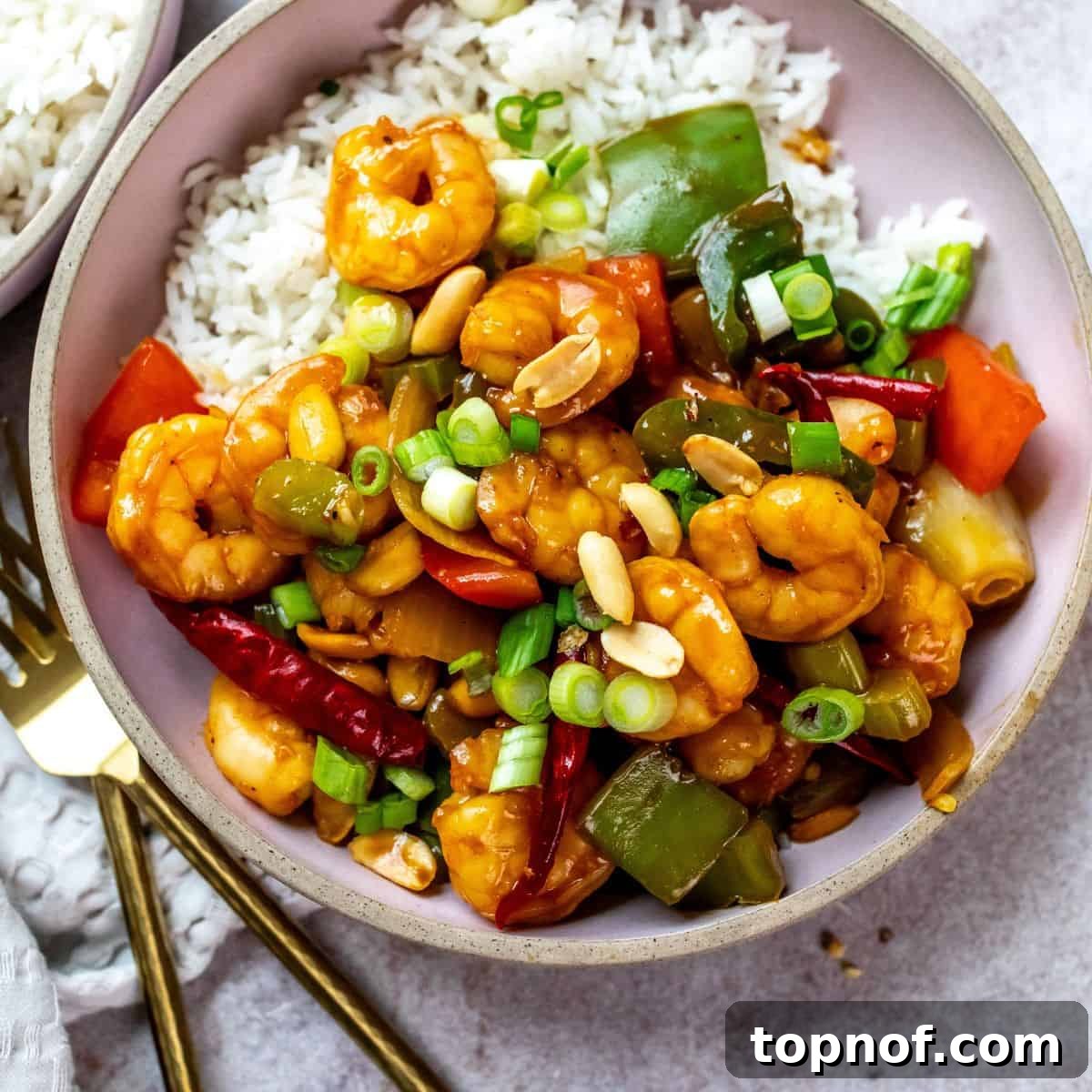
Kung Pao Shrimp is a culinary delight that perfectly balances sweet, spicy, and savory notes. This vibrant dish is not only bursting with flavor but also incredibly quick to prepare, making it an ideal choice for a satisfying weeknight meal ready in under 30 minutes. Dive into a world of rich textures and bold tastes with this beloved Asian-inspired classic.
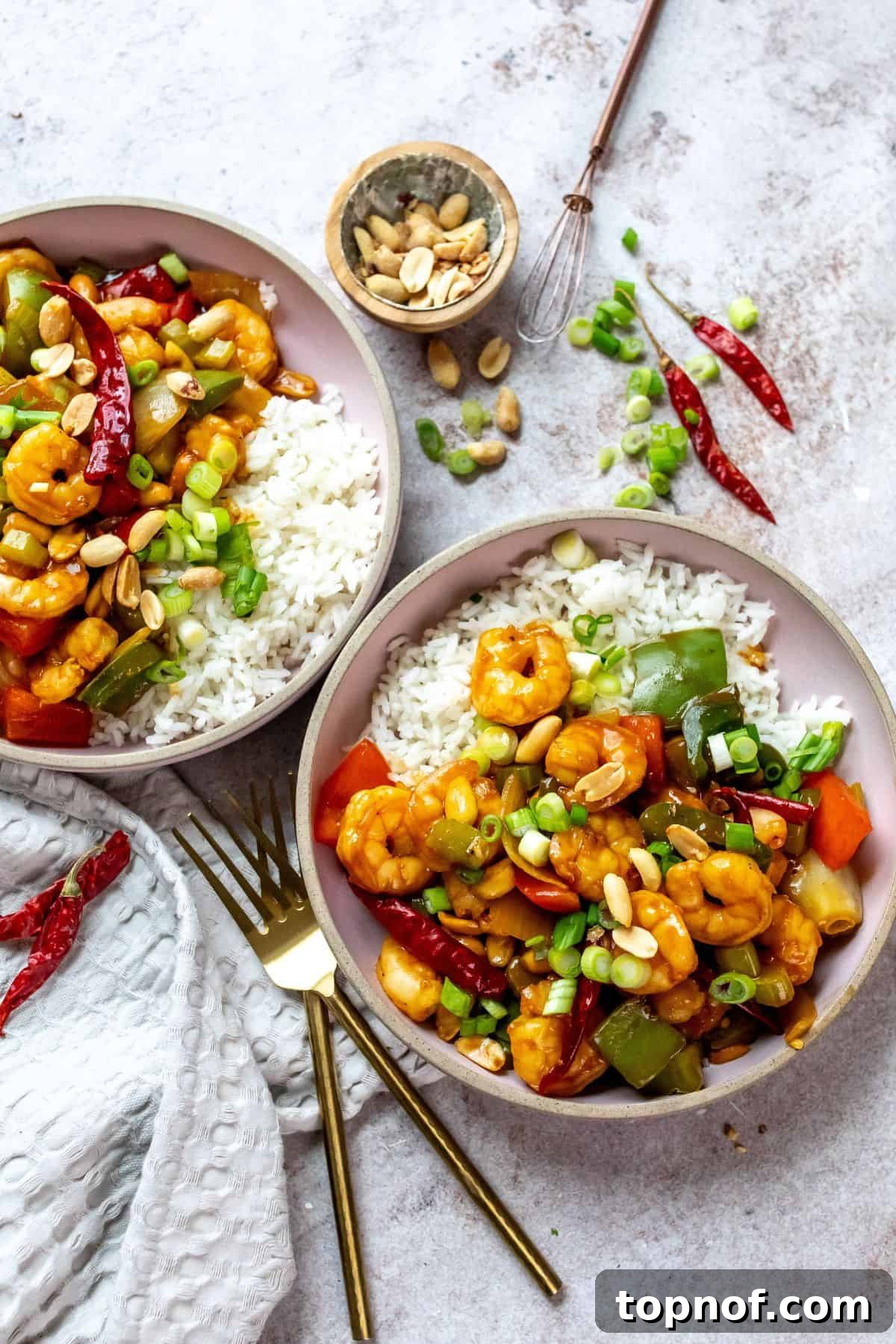
Table of Contents
- Why You’ll Love This Easy Kung Pao Shrimp Recipe
- Understanding Kung Pao Shrimp: A Culinary Classic
- Essential Ingredients for Flavorful Kung Pao Shrimp
- Elevate Your Dish: Recipe Variations & Substitutions
- Step-by-Step Guide: Crafting Your Kung Pao Shrimp
- Frequently Asked Questions (FAQs)
- Expert Tips for Perfect Kung Pao Shrimp
- Delicious Pairings & Serving Suggestions
- Explore More Easy Dinner Recipes
- Kung Pao Shrimp Full Recipe
Why You’ll Love This Easy Kung Pao Shrimp Recipe
In the expansive world of Chinese cuisine, certain dishes achieve iconic status for their perfect harmony of flavors, textures, and aromas. Kung Pao Shrimp is a prime example, offering a symphony for the senses. Here’s why this particular recipe will become a go-to in your kitchen:
- Effortless and Fast: This recipe is genuinely easy to master, even for novice cooks. Thanks to the rapid cooking time of shrimp, you can have a gourmet-quality meal on your table in approximately 30 minutes, making it ideal for busy weeknights when time is precious.
- Explosion of Flavor: Every bite of this Kung Pao Shrimp is a delightful journey through sweet, spicy, and savory notes. The dynamic sauce clings perfectly to the tender shrimp and crisp vegetables, ensuring a burst of flavor in every mouthful.
- Nutrient-Rich and Wholesome: Packed with fresh vegetables like bell peppers, onions, and celery, alongside lean protein from the shrimp, this dish is not only delicious but also a wholesome and nutritious meal. It’s a fantastic way to incorporate more vibrant produce into your diet.
- Satisfying Textures: From the succulent, perfectly cooked shrimp to the crisp-tender vegetables and the satisfying crunch of peanuts, this dish offers a delightful interplay of textures that keeps it interesting and enjoyable.
- Customizable to Your Taste: Whether you prefer a milder kick or crave intense heat, this recipe is incredibly adaptable. You can easily adjust the amount of chilies and cayenne pepper to suit your personal spice preference, ensuring everyone at your table is happy.
For more flavor-packed shrimp dishes, consider my Spicy Teriyaki Shrimp Stir Fry or the subtly sweet Sweet Chili Shrimp. If you’re a fan of bold flavors with a kick, my Jalapeño Chicken is another excellent choice to explore.
Understanding Kung Pao Shrimp: A Culinary Classic
Kung Pao Chicken, the more famous cousin, originates from the Sichuan province of China, renowned for its bold, spicy, and often numbing flavors. The dish is traditionally characterized by diced chicken, peanuts, vegetables, and chili peppers, all tossed in a glossy, complex sauce. Kung Pao Shrimp takes this classic framework and adapts it beautifully for seafood lovers, replacing chicken with tender, succulent shrimp.
The name “Kung Pao” is derived from Ding Baozhen, a late Qing Dynasty official who was known for his love of the dish. While the exact history has various legends, the core elements of the dish—the combination of savory, sweet, sour, and spicy notes—have made it a global favorite. This recipe stays true to the spirit of the original by delivering that unmistakable balance of flavors, adapted for quick home cooking with shrimp as the star.
Essential Ingredients for Flavorful Kung Pao Shrimp
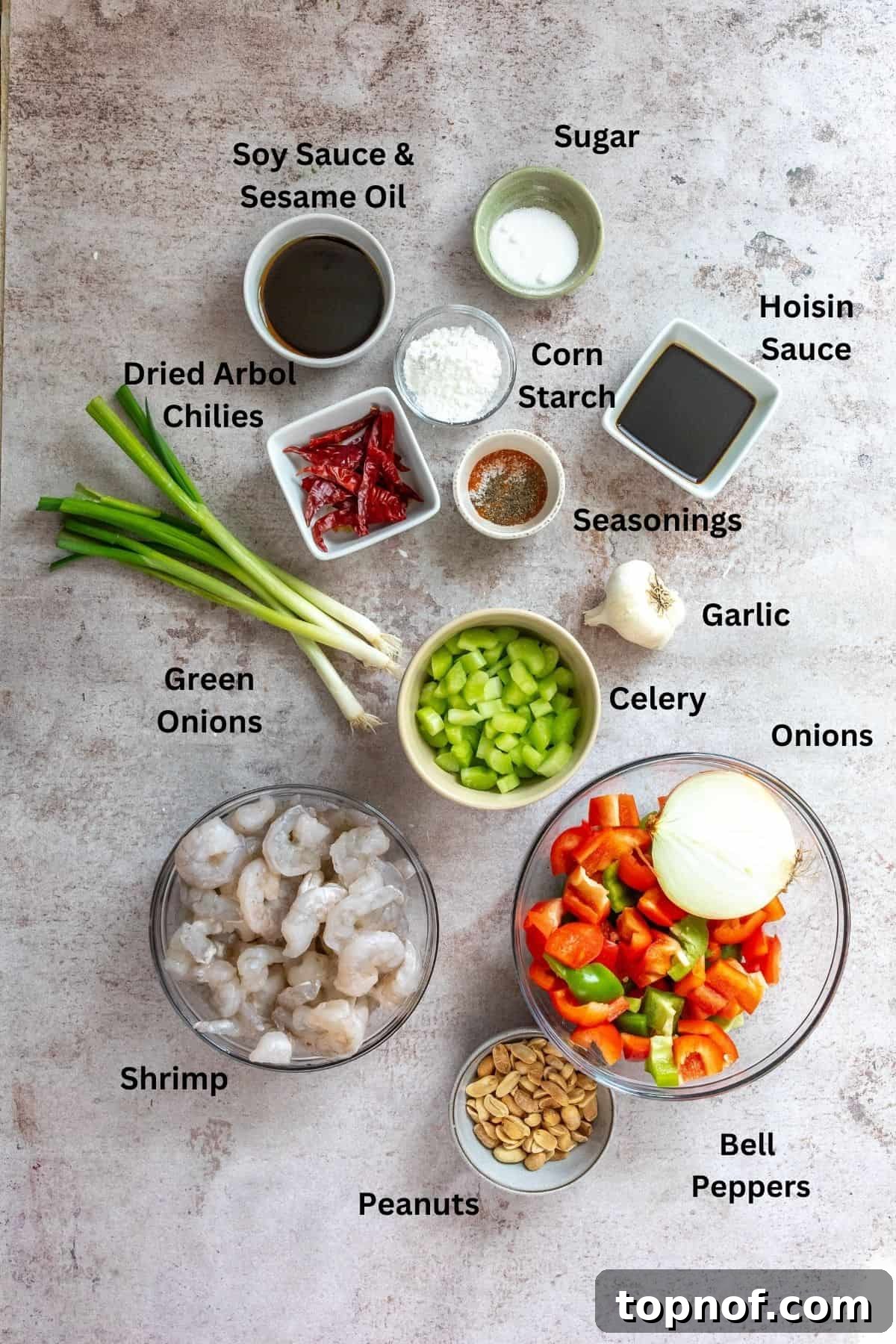
Crafting exceptional Kung Pao Shrimp starts with a selection of fresh, high-quality ingredients. Each component plays a crucial role in building the dish’s signature flavor profile and texture.
- Shrimp: The star of our show! Opt for large or jumbo shrimp, peeled and deveined. Thawed shrimp works best for even cooking and tender results. Shrimp cooks quickly, making it perfect for a fast stir-fry.
- Hoisin Sauce: This thick, fragrant, and slightly sweet sauce is a cornerstone of Cantonese cuisine. It provides a rich umami depth and a subtle sweetness to the Kung Pao sauce. Look for it in the international aisle of your grocery store, usually near soy sauce.
- Dried Arbol Chiles: These small, potent chilies are essential for the authentic spicy kick and earthy aroma of Kung Pao. They deliver a cayenne-like heat. You’ll find them in the spice aisle with other dried international spices. The number you use dictates the spice level – more for adventurous palates, fewer for a milder experience.
- Fresh Vegetables:
- Celery: Adds a fantastic, refreshing crunch and a subtle earthy note that complements the richness of the sauce and shrimp.
- Yellow Onion: Provides a foundational aromatic sweetness and texture when sautéed.
- Red & Green Bell Peppers: These add vibrant color, a pleasant sweetness, and a lovely crisp-tender texture, enhancing the visual appeal and nutritional value of the dish.
- Garlic: A foundational aromatic that provides pungent, savory depth to the stir-fry. Minced garlic quickly infuses its flavor into the oil and other ingredients.
- Seasonings: Simple salt and pepper are crucial for seasoning the shrimp and vegetables. A dash of cayenne pepper is an excellent optional addition if you desire an extra layer of fiery heat beyond what the arbol chiles provide.
- Peanuts: Unsalted, roasted peanuts are traditionally added at the end, offering a delightful nutty flavor and a satisfying crunchy contrast to the tender shrimp and vegetables.
- Kung Pao Sauce Components:
- Low Sodium Soy Sauce: Forms the salty, savory base of the sauce. Using low sodium allows for better control over the overall saltiness.
- Sesame Oil: Adds a distinctive nutty and aromatic flavor that is quintessential to Asian cuisine.
- Sugar: Balances the spicy and savory elements with a touch of sweetness, creating that signature Kung Pao profile.
- Cornstarch & Water (Slurry): This simple mixture is key to thickening the sauce, giving it that characteristic glossy finish that coats every ingredient beautifully.
For precise measurements and the full ingredient list, please refer to the recipe card located further down this page.
Elevate Your Dish: Recipe Variations & Substitutions
One of the best aspects of stir-fries like Kung Pao Shrimp is their versatility. Feel free to customize this recipe to your preferences, dietary needs, or whatever ingredients you have on hand.
- Shrimp Alternatives: While large or jumbo shrimp are ideal, you can use medium shrimp if preferred. Decide whether you want the tails on or off based on your serving preference. If you’re not a fan of shrimp, this recipe works wonderfully with cubed chicken breast or thighs (which will require a longer cooking time) or even firm tofu for a vegetarian option.
- Gluten-Free Adaptation: To make this dish entirely gluten-free, simply substitute regular soy sauce with tamari or coconut aminos. For the cornstarch, an equal amount of arrowroot powder can be used to thicken the sauce.
- Nut-Free Option: If you or your guests have a peanut allergy, chopped cashews make an excellent substitution, providing a similar crunch and nutty flavor. Sunflower seeds can also be used for a completely nut-free alternative.
- Spice Level Adjustments:
- For a milder dish, reduce the number of dried arbol chiles or omit them entirely, relying on a pinch of cayenne for minimal heat. You can also break the chilies open and remove the seeds before adding them to significantly reduce the heat while retaining some flavor.
- For an extra fiery kick, increase the number of dried arbol chiles (8-10 for serious spice lovers!) or add an extra ½ teaspoon of cayenne pepper. Fresh Fresno peppers can also be used, but be mindful of their heat levels.
- Vegetable Boost: Enhance the nutritional value and texture by adding other quick-cooking vegetables. Broccoli florets, snap peas, sliced carrots, water chestnuts, or baby corn would all be delicious additions. Add them during Step One with the other vegetables.
- Sweetness Control: Adjust the amount of sugar in the Kung Pao sauce to match your taste. If your hoisin sauce is already quite sweet, you might reduce the sugar slightly.
Step-by-Step Guide: Crafting Your Kung Pao Shrimp
Follow these simple steps to create a restaurant-quality Kung Pao Shrimp right in your own kitchen. Precision and preparation are key for a successful stir-fry!
Step One: Prepare the Aromatics and Vegetables
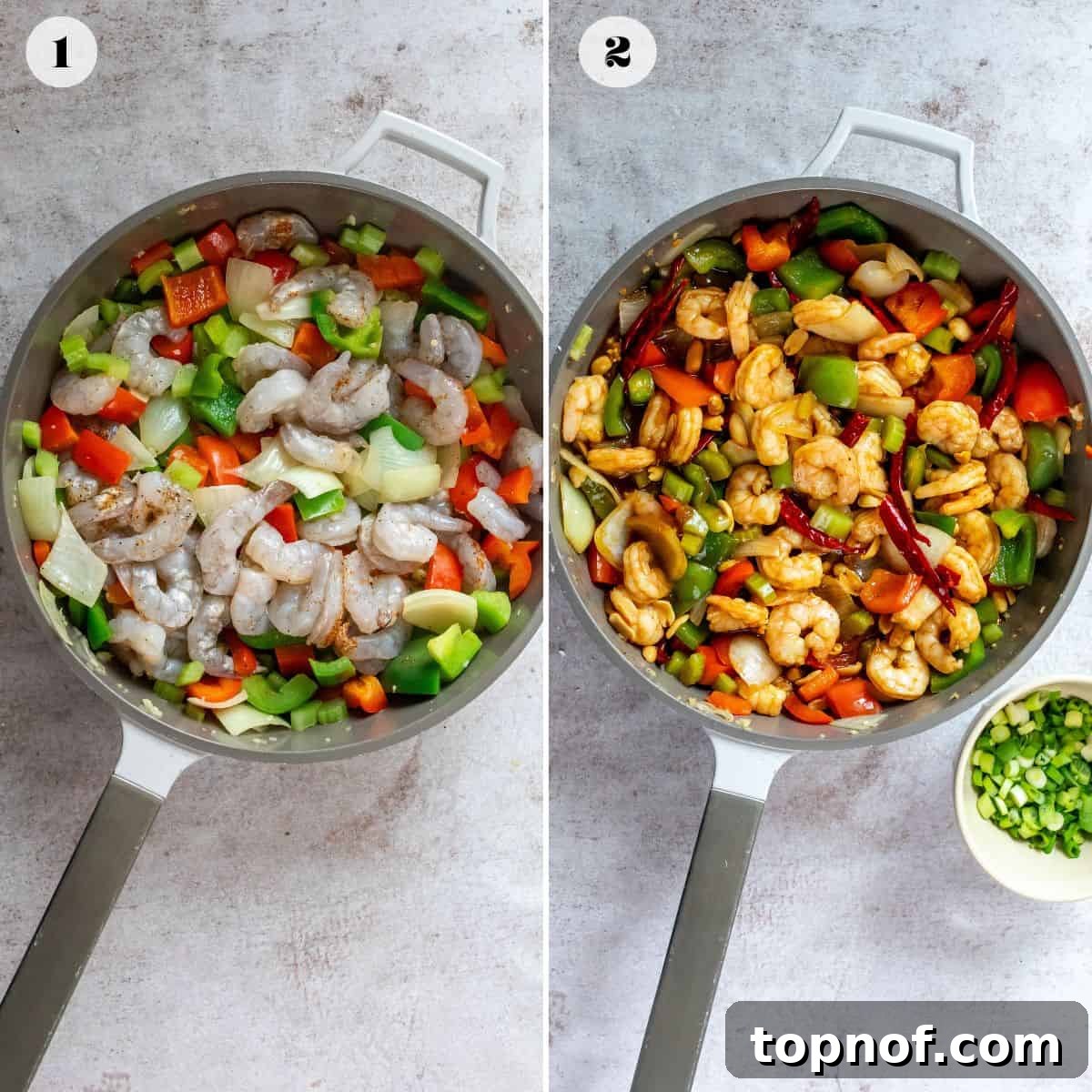
If you plan to serve your Kung Pao Shrimp with rice, begin cooking the rice now according to its package instructions. In a large, deep skillet or wok, heat 1 teaspoon of sesame oil over high heat until shimmering. Add the chopped yellow onion, red bell pepper, green bell pepper, and celery. Sauté these vegetables for 5-6 minutes, stirring frequently, until they are crisp-tender. Next, add the minced garlic and cook for an additional 30 seconds until fragrant, being careful not to burn it. While the vegetables are cooking, whisk together all the ingredients for your Kung Pao Sauce in a separate bowl, ensuring the cornstarch slurry (cornstarch mixed with water) is kept to the side until the sauce is ready to be added to the hot pan.
Step Two: Cook the Shrimp and Infuse Spice
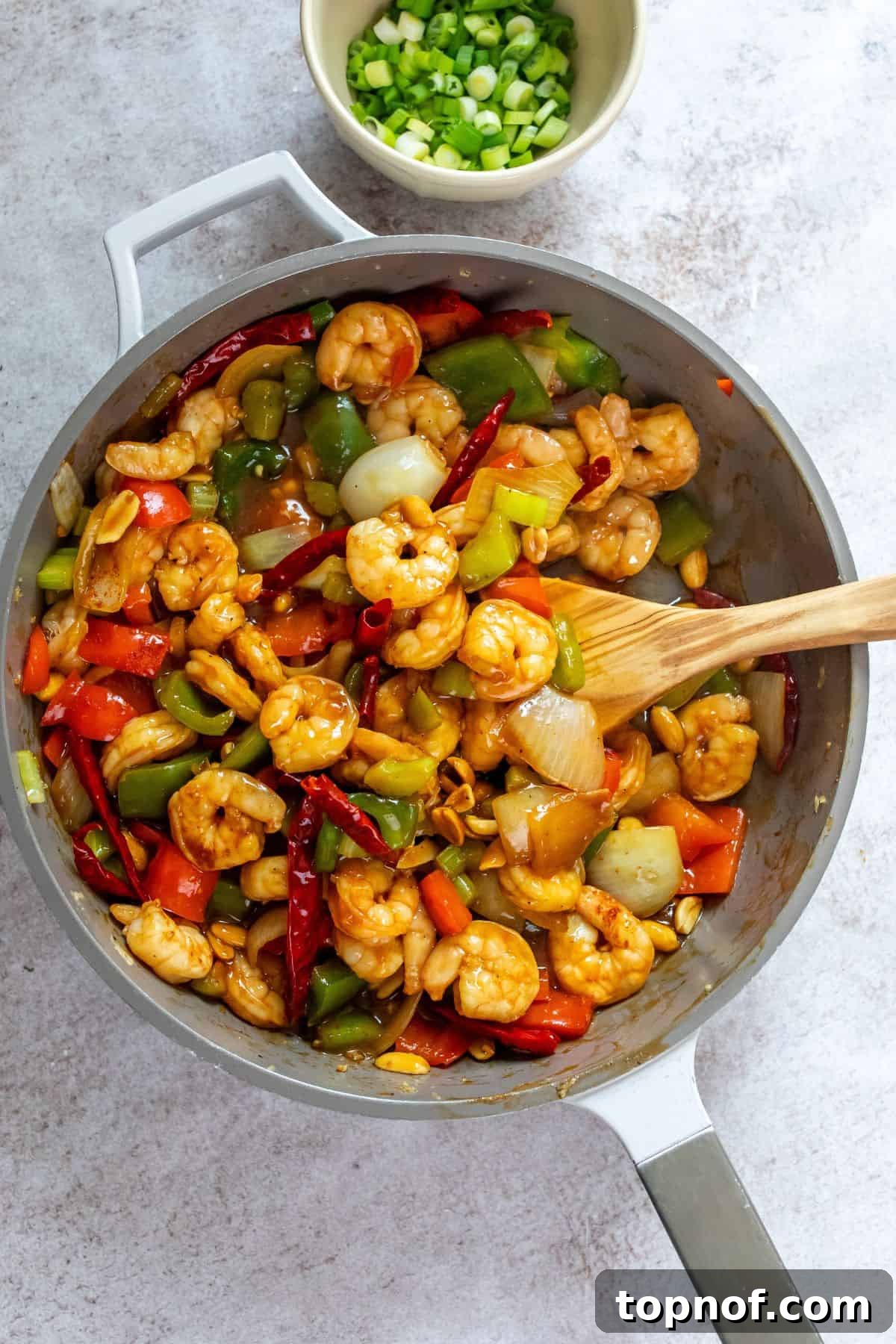
Carefully add the peeled and deveined shrimp to the pan with the sautéed vegetables. Season everything generously with salt, pepper, and an optional ½ teaspoon of cayenne pepper if you desire extra heat. Cook the shrimp for 4-6 minutes, tossing frequently, until they turn pink and opaque. Remember, shrimp cooks quickly and will continue to cook slightly when the sauce is added. Once the shrimp are mostly cooked, add the dried arbol chiles and peanuts to the pan, stirring to combine and allow their flavors to release.
Step Three: Introduce and Thicken the Sauce
Pour the whisked Kung Pao sauce mixture into the shrimp and vegetable mixture in the pan. Bring the sauce to a gentle boil, stirring constantly. Allow it to cook for 30 seconds to 1 minute to heat through and meld the flavors. Now, stir in the cornstarch slurry (which is 1/2 teaspoon of water mixed with 1 teaspoon of cornstarch). Continue to simmer for another 1-2 minutes, stirring until the sauce visibly thickens and achieves a glossy, luscious consistency that coats all the ingredients beautifully.
Step Four: Serve and Garnish
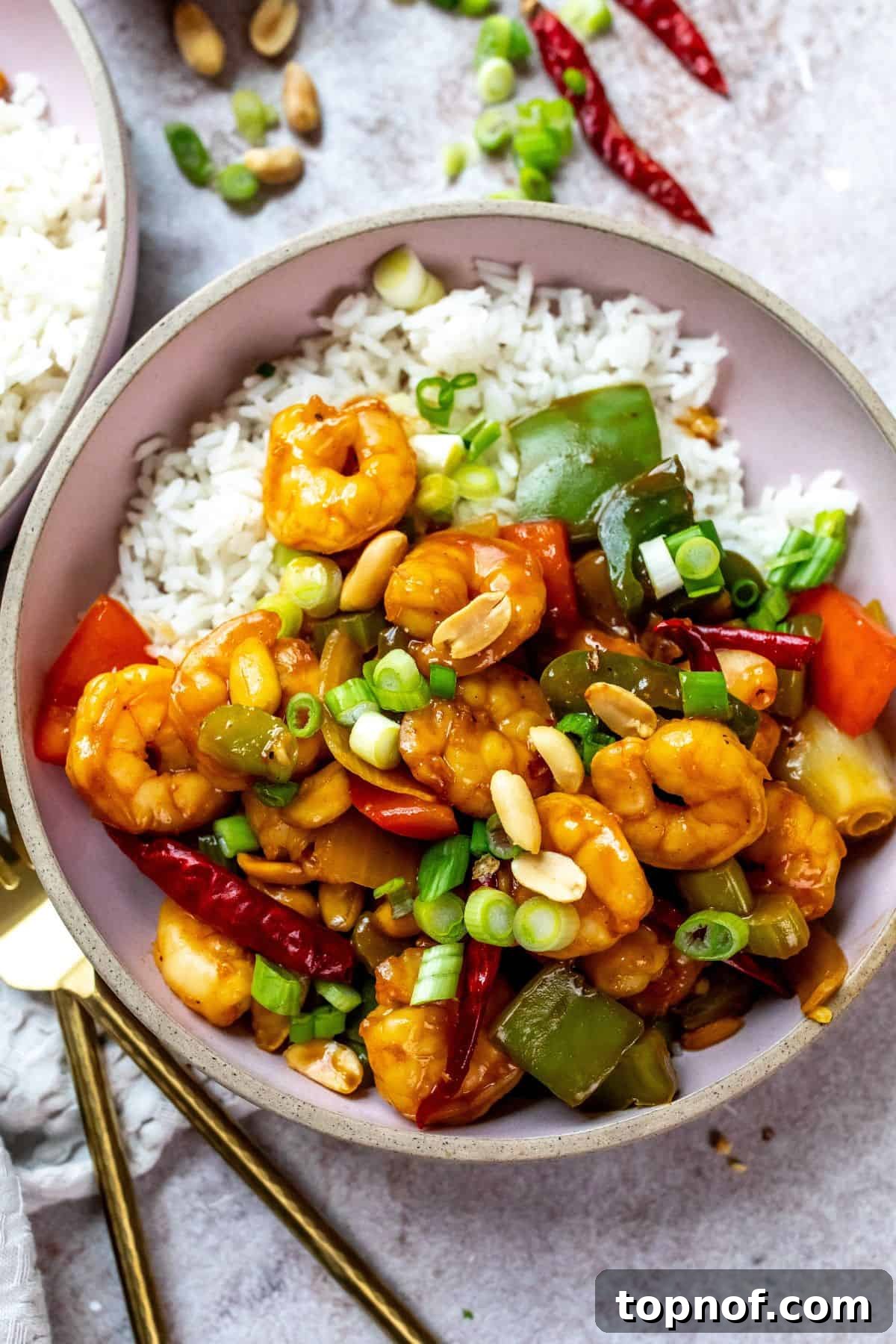
Once the sauce has thickened, your Kung Pao Shrimp is ready to be enjoyed! Serve immediately while hot over a bed of fluffy white rice, healthier cauliflower rice, or savory fried rice. For an extra touch of freshness and vibrant color, garnish generously with freshly sliced green onions before serving. Enjoy this irresistible combination of sweet, spicy, and savory flavors!
Frequently Asked Questions (FAQs)
Absolutely! This recipe adapts beautifully to chicken. If using chicken, cut it into small, uniform cubes (about 1-inch pieces) for even cooking. Keep in mind that chicken will take longer to cook than shrimp, typically 6-8 minutes, so adjust your cooking time accordingly.
Yes, making Kung Pao Shrimp gluten-free is simple! Substitute regular soy sauce with a gluten-free alternative like tamari or coconut aminos. For the cornstarch, use an equal amount of arrowroot powder to achieve the desired sauce thickness.
Kung Pao Shrimp is an excellent choice for meal prepping. It reheats wonderfully, making it perfect for lunches or quick dinners throughout the week. Store cooled leftovers in an airtight container in the refrigerator for up to 3-4 days.
For the best results, use large or jumbo shrimp (21-25 count per pound) that are peeled and deveined. You can use either fresh or frozen shrimp, just ensure frozen shrimp are fully thawed before cooking. Whether to leave the tails on or off is entirely a matter of personal preference.
Store any leftover Kung Pao Shrimp in a shallow, airtight container in the refrigerator for up to 3-4 days. While it reheats well, I generally do not recommend freezing this dish if the shrimp was already frozen, as it can affect the texture.
Expert Tips for Perfect Kung Pao Shrimp
Achieving a truly outstanding Kung Pao Shrimp dish involves a few simple tips that can elevate your cooking from good to gourmet.
- Mastering the Spice Level: For a moderate spice level that’s enjoyable for most, aim for 4-6 dried arbol chiles. If you crave a more intense heat, feel free to increase this to 8-10 chilies – it’s all about personal preference! Remember, you don’t typically eat the whole chilies; they are there to infuse flavor and heat into the oil and sauce. For those sensitive to heat, you can break the chilies open and shake out the seeds before adding them to significantly reduce the spiciness while still retaining some of their aromatic essence.
- Avoid Overcooking the Shrimp: This is arguably the most critical tip for any shrimp dish. Shrimp cooks very quickly, and overcooking can lead to a rubbery texture. Cook them just until they turn pink and opaque. If you feel they are cooking too fast with the vegetables, you can temporarily remove them from the pan before adding the sauce and then stir them back in just before serving.
- Prep Everything in Advance: Stir-fries move quickly! To ensure a smooth cooking process, have all your ingredients chopped, measured, and the sauce whisked together (mise en place) before you even turn on the heat. This way, you can add ingredients at the right time without scrambling.
- Achieving Perfect Sauce Consistency: The cornstarch slurry is your best friend here. Ensure the cornstarch is fully dissolved in cold water before adding it to the simmering sauce. This prevents lumps and helps create that signature glossy, thick sauce that beautifully coats every piece of shrimp and vegetable. If your sauce is too thick, a splash of water or broth can thin it out; if it’s too thin, a bit more slurry can be added.
- High Heat is Key: For a true stir-fry, cook your ingredients over high heat. This helps to sear the shrimp quickly, keeps the vegetables crisp-tender, and prevents them from steaming. If using a wok, ensure it’s smoking hot before adding oil. If using a large skillet, make sure it’s spacious enough not to overcrowd the pan, which can lower the temperature.
Delicious Pairings & Serving Suggestions
Kung Pao Shrimp is a wonderfully satisfying meal on its own, but it also pairs beautifully with a variety of sides to create a more comprehensive dining experience. Its robust flavors make it incredibly versatile:
- Classic Rice: Serve it over steamed white rice, brown rice, or even a flavorful fried rice for a traditional and filling meal. The rice soaks up the delicious sauce, making every bite heavenly.
- Lighter Options: For a lighter meal, opt for cauliflower rice or serve the Kung Pao Shrimp over a bed of fresh romaine lettuce or mixed greens. This provides a refreshing contrast to the rich sauce.
- Complementary Salads: Enhance your meal with a refreshing side salad. A Spicy Cucumber Salad offers a cool, crisp counterpoint to the heat of the Kung Pao. Alternatively, a Kale Crunch Salad can add another layer of texture and freshness.
- Noodle Dishes: For a heartier spread, consider serving it alongside a simple noodle dish like lo mein or chow mein.
- Additional Asian Flavors: If you’re hosting a feast or simply love variety, pair it with another Asian-inspired dish such as Beef Fried Rice or spring rolls.
Explore More Easy Dinner Recipes
If you enjoyed this quick and flavorful Kung Pao Shrimp, you’ll love these other easy dinner ideas that are perfect for any night of the week:
More Weeknight Favorites
Dinner
Baked Salmon Pasta
Dinner
Chicken Broccoli Potato Casserole
Dinner
Southwest Chicken Skillet
Dinner
Meatballs and Rice
If you try this delightful recipe, please let me know your thoughts! Connect with me on Instagram & Pinterest for more inspiring recipes designed to nourish you from the inside out. Thank you for visiting!
★★★★★
Kung Pao Shrimp
Bailey Rhatigan
10 minutes
20 minutes
30 minutes
4
Pin Recipe
Rate Recipe
Print Recipe
Equipment
-
large skillet or deep pan
-
sharp knives
Ingredients
- 1 tsp sesame oil
- 1 lb large shrimp, peeled and deveined
- ½ medium yellow onion, cubed (1 inch pieces)
- 1 small green bell pepper, seeded and cubed (1 inch pieces)
- 1 small red bell pepper, seeded and cubed (1 inch pieces)
- ¾ cup celery, chopped
- 2 cloves garlic, minced
- ½ tsp salt
- ½ tsp pepper
- ½ tsp cayenne pepper, optional for heat, read notes
- 3-5 dried arbol chilies , see notes!
- ¼ cup peanuts
- ¼ cup green onions, sliced for garnish
Kung Pao Sauce
- 3 Tbsp low sodium soy sauce
- 2 Tbsp sesame oil
- 3 Tbsp hoisin sauce
- 2 tsp sugar
- 2 tsp cornstarch , see notes
- 2 tsp water, to make a slurry with the corn starch
Instructions
-
If serving with rice, start the rice according to package. Heat 1 tsp sesame oil in a large, deep pan over high heat. Add chopped onion, red and green bell pepper, celery and cook for 5-6 minutes or until tender. Add the garlic and cook for 30 seconds. Meanwhile, whisk together Kung Pao Sauce ingredients, leaving the cornstarch slurry (cornstarch mixed with water) to the side until the sauce is in the hot pan.
-
Add the shrimp to the pan, seasoning everything with salt, pepper, and optional cayenne pepper. Cook for 4-6 minutes, tossing frequently, until shrimp are pink and opaque (they will cook more in the sauce). Add the chilies and peanuts to the pan.
-
Add the sauce to the shrimp mixture and bring to a boil; cook for 30 seconds to 1 minute. Stir in the cornstarch slurry (1/2 tsp water mixed with 1 tsp cornstarch). Let things simmer for 1-2 more minutes until the sauce thickens to a glossy consistency.
-
Serve while hot over rice, cauliflower rice, or fried rice. Garnish with fresh green onions. Enjoy!
Notes
If you cannot find dried arbol chilies, use extra cayenne or fresh Fresno peppers (adjust quantity based on desired heat).
Don’t overcook the shrimp. This is a common mistake. If you feel you may have cooked the shrimp too much with the veggies, pull them out before reducing the sauce and add them back in right before serving.
Use arrowroot powder as a substitute for cornstarch for a gluten-free option.
Nutrition facts do not include rice or other serving suggestions.
Store leftovers in an airtight container in the fridge for up to 4 days. I do not recommend freezing if the shrimp was already frozen.
Nutrition
Calories: 267kcal |
Carbohydrates: 16g |
Protein: 20g |
Fat: 14g |
Saturated Fat: 2g |
Polyunsaturated Fat: 5g |
Monounsaturated Fat: 5g |
Trans Fat: 0.01g |
Cholesterol: 143mg |
Sodium: 1564mg |
Potassium: 366mg |
Fiber: 3g |
Sugar: 7g |
Vitamin A: 1058IU |
Vitamin C: 40mg |
Calcium: 89mg |
Iron: 1mg
Nutrition information is automatically calculated, so should only be used as an approximation.
Additional Info
Bailey Rhatigan
10 minutes
20 minutes
30 minutes
Dinner, Main Course
Chinese
4
267
30 minute, Asian Inspired, shrimp
Like this recipe? Leave a comment below!