
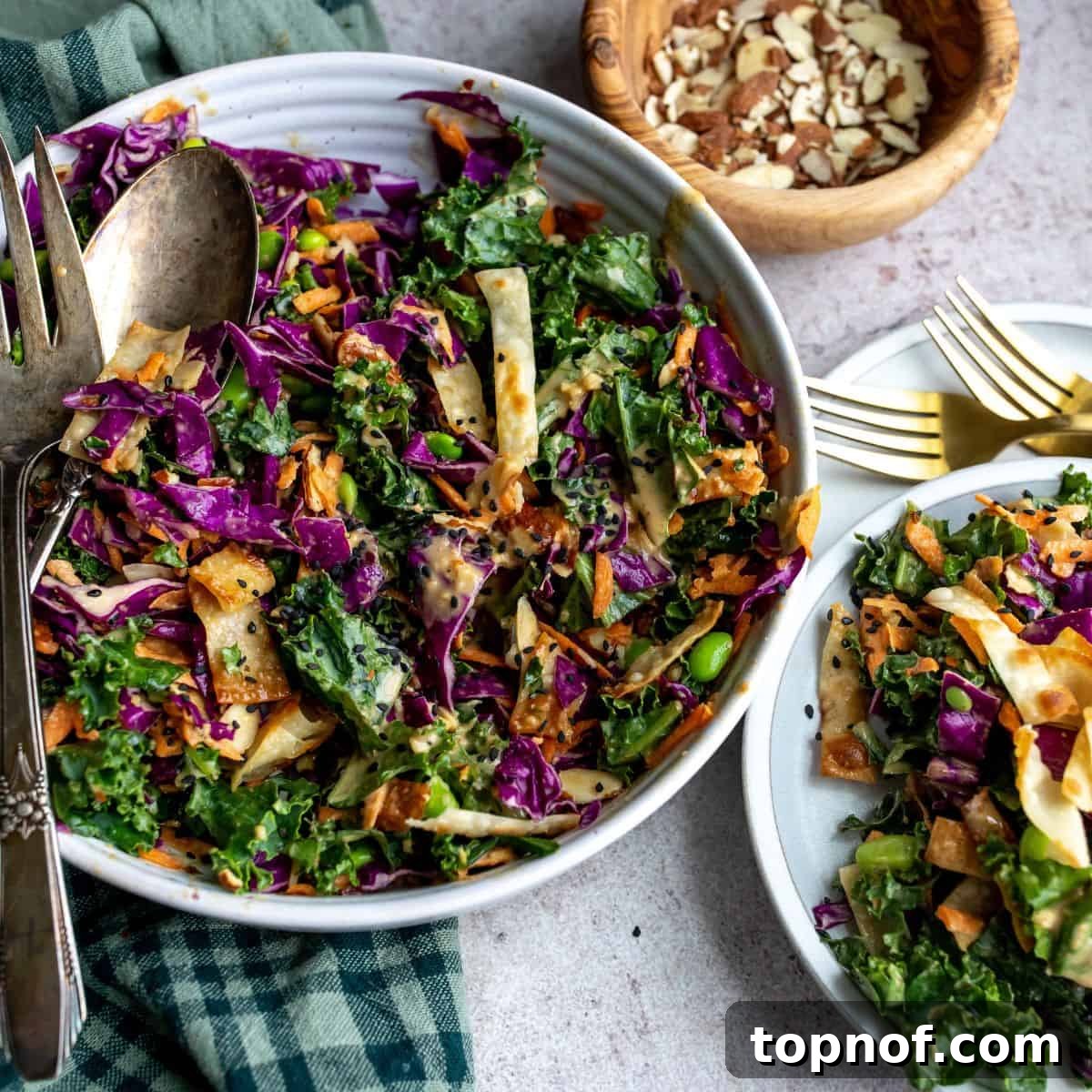
Discover the ultimate fresh, crunchy, and irresistibly flavorful Asian Cabbage Salad Recipe featuring a homemade Peanut Ginger Dressing. This vibrant salad is a guaranteed family favorite that will leave everyone craving more. Inspired by my most cherished restaurant salads, the delightful combination of crisp cabbage, fresh vegetables, and savory-sweet dressing creates an experience you’ll want to recreate weekly right in your own kitchen.
There’s something uniquely satisfying about a salad that delivers on both texture and taste. This particular recipe stands out with its gorgeous colors, fantastic crunch, and a dressing that truly ties everything together into a harmonious dish. Whether you’re a seasoned chef or a beginner in the kitchen, this easy-to-follow guide will help you master a dish that’s perfect for any occasion, from a quick healthy lunch to an impressive side for entertaining guests.
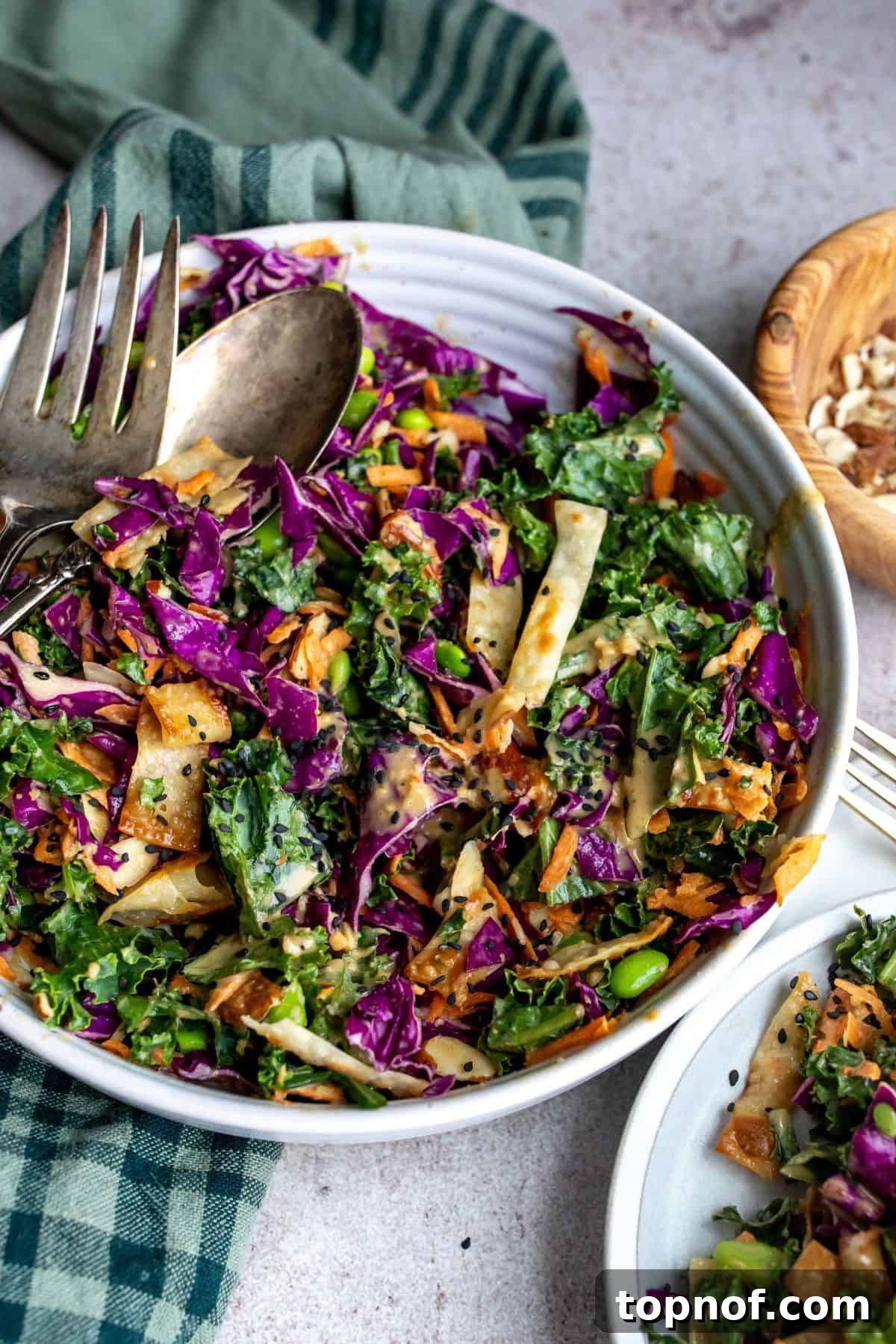
Table of Contents
- Why You’ll Love This Asian Cabbage Salad
- Essential Salad Ingredients
- Crafting the Perfect Peanut Ginger Dressing
- Step-by-Step Guide to Making Asian Cabbage Salad
- Recipe FAQs
- Expert Recipe Tips for Success
- Delicious Recipe Pairings
- Creative Recipe Variations
- Other Salads You Will Adore
- Asian Cabbage Salad Recipe Card
Why You’ll Love This Asian Cabbage Salad
This Asian-inspired cabbage salad is a celebration of fresh textures and bold flavors. It bursts with a delightful crunch from the vibrant red cabbage, creating a bright and beautiful dish that’s sure to impress anyone you serve it to. I was genuinely captivated by its appeal when I first made it for lunch! The addition of almonds provides an extra layer of satisfying texture and a nutty flavor that elevates the entire experience.
At the heart of this recipe is the exceptional peanut ginger dressing, which acts as the magical binder, weaving together all the diverse ingredients with its perfectly balanced sweet, tangy, and savory notes. It’s an unforgettable flavor profile that keeps you coming back for more.
One of the best aspects of this Asian cabbage salad is its incredible ease of preparation. You can whip it up in approximately 10 to 15 minutes, and it requires virtually no cooking, unless you opt to make the crispy pan-fried wonton strips for an extra touch of gourmet crunch. This makes it an ideal choice for busy weeknights, last-minute gatherings, or when you simply want a delicious and healthy meal without spending hours in the kitchen.
Furthermore, this salad is exceptionally suited for meal prepping. The robust nature of cabbage and kale ensures that the salad remains delightfully crunchy for days, even after being dressed. This means you can enjoy fresh, vibrant leftovers without worrying about them becoming soggy. For a more complete and satisfying meal, consider serving it alongside your favorite protein, such as my Sweet Chili Shrimp, grilled chicken, or pan-seared tofu.
Beyond its convenience and amazing taste, this salad offers significant nutritional benefits. Red cabbage is packed with antioxidants, vitamins C and K, and fiber, contributing to overall well-being. Kale is a superfood rich in vitamins A, C, and K, as well as minerals. Edamame provides a plant-based protein boost, and the healthy fats from the peanut butter and almonds make this salad not just delicious, but incredibly nourishing.
Essential Salad Ingredients
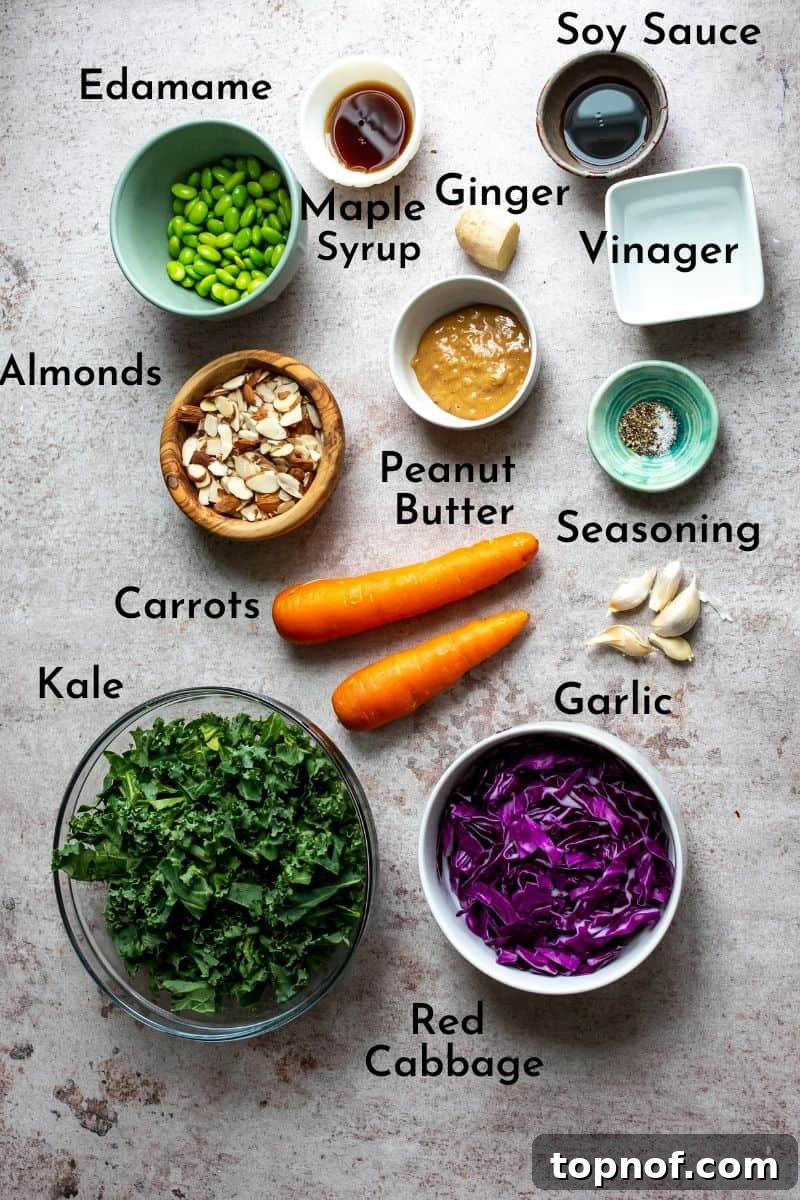
Crafting the perfect Asian Cabbage Salad begins with selecting the freshest and most flavorful ingredients. Each component plays a vital role in creating the vibrant taste and satisfying texture of this beloved dish:
- Red Cabbage: This nutrient-dense cruciferous vegetable is the star of our salad. Its striking purple hue adds visual appeal, while its firm texture provides an essential crunch. I highly recommend buying a whole head of red cabbage and slicing it yourself; the color and freshness are far superior to pre-cut packaged versions.
- Kale: A fantastic addition that complements the cabbage beautifully. Kale not only adds a vibrant pop of green but also contributes a hearty texture that holds up exceptionally well, ensuring your salad stays crisp even as leftovers. Opt for lacinato or curly kale, ensuring it’s destemmed and finely chopped.
- Carrots: Shredded or matchstick carrots introduce a lovely sweetness, an additional layer of crunch, and a bright orange color. Their subtle earthy flavor pairs wonderfully with the rich peanut ginger dressing.
- Edamame: My absolute favorite protein booster for this salad! I prefer buying them shelled and frozen, then simply thawing or quickly blanching them. Edamame adds a delicate, slightly sweet flavor and a satisfying chewiness, making the salad more substantial and filling.
- Shaved Almonds: These are crucial for that irresistible, satisfying crunch and a dose of healthy fats and protein. While optional, I strongly recommend including them for their texture and depth of flavor. You can lightly toast them for an enhanced nutty aroma.
- Wonton or Egg Roll Wrappers (Optional for Crispy Strips): For an authentic restaurant-style experience, consider pan-frying your own crispy wonton strips. You’ll typically find these wrappers in the produce section of your grocery store, often near the tofu. They add an incredible textural contrast and a savory, crispy element.
- Green Onions (Scallions): Thinly sliced green onions offer a mild, fresh onion flavor and a subtle bite that brightens the salad. They also add a final touch of green garnish.
- Black or White Sesame Seeds (Optional Garnish): A sprinkle of sesame seeds adds a delicate nutty flavor and a beautiful visual finish to the salad, enhancing its authentic Asian appeal.
Crafting the Perfect Peanut Ginger Dressing
The dressing is undeniably the soul of this Asian Cabbage Salad, transforming simple vegetables into an extraordinary culinary experience. This Peanut Ginger Dressing is creamy, tangy, sweet, and savory—a truly addictive combination. Here’s what you’ll need to create this flavor powerhouse:
- Peanut Butter: The creamy base of this irresistible dressing. While creamy peanut butter yields the smoothest consistency, crunchy peanut butter also works and adds a subtle textural element. For those with peanut allergies, almond butter or cashew butter are excellent substitutes that maintain the creamy richness.
- Soy Sauce: Provides the essential umami depth and savory foundation. I typically opt for low-sodium soy sauce to control the saltiness. If you’re gluten-intolerant or prefer alternative options, coconut aminos or tamari are fantastic replacements that offer a similar flavor profile.
- Rice Vinegar or White Vinegar: This ingredient introduces a crucial tangy brightness to the dressing. Rice vinegar is often slightly sweeter and less acidic than white vinegar, making it my preferred choice for a well-rounded Asian flavor. However, white vinegar can certainly be used in a pinch; just be prepared for a slightly sharper tang.
- Maple Syrup: Offers a natural, balanced sweetness that complements the nutty peanut butter and balances the acidity of the vinegar. You can also use honey or agave nectar as alternatives, adjusting the quantity to your preferred level of sweetness.
- Fresh Ginger: Finely minced fresh ginger is paramount to this dressing. Its pungent, spicy, and aromatic notes provide an invigorating warmth and authentic Asian character. You can typically find fresh ginger root in the produce aisle of most grocery stores. Grating it finely ensures its flavor is evenly distributed.
- Fresh Garlic: Minced fresh garlic cloves are a non-negotiable addition. Their pungent, savory essence deepens the complexity of the dressing, creating a harmonious blend with the ginger and peanut butter.
- Toasted Sesame Oil: A small dash of toasted sesame oil (not regular sesame oil) adds a profound nutty, savory aroma that is characteristic of many Asian dishes and enhances the overall dressing flavor profile.
- Water: You might need a tablespoon or two of water to thin the dressing to your desired consistency, as natural peanut butters can vary greatly in thickness. Add gradually until smooth and pourable.
Step-by-Step Guide to Making Asian Cabbage Salad
Creating this delicious Asian Cabbage Salad is straightforward and rewarding. Follow these simple steps to assemble your vibrant and flavorful dish:
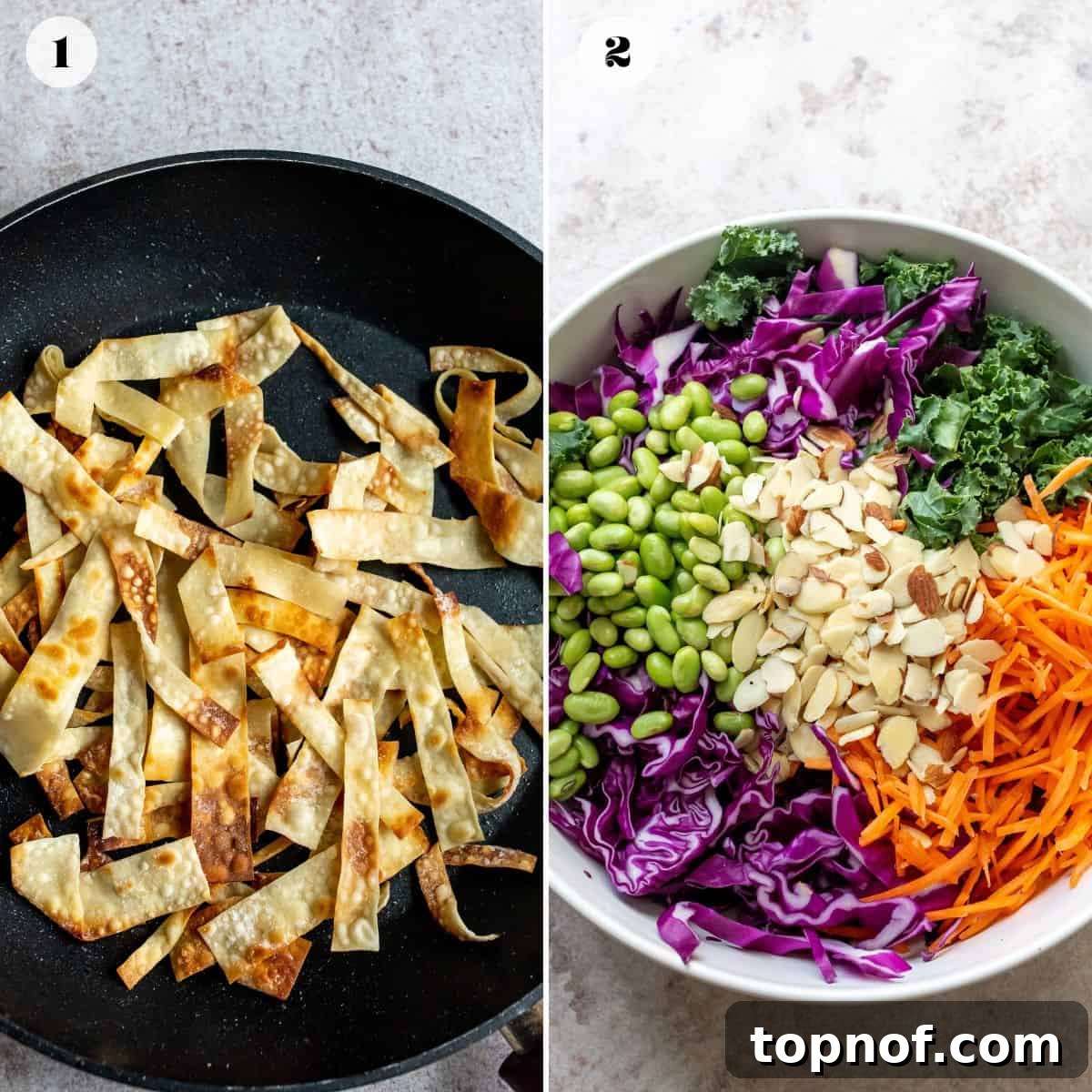
Step One: Prepare Your Vegetables. Begin by grating or shredding your carrots if they aren’t pre-cut into matchsticks. Next, take your red cabbage and thinly slice it using a sharp knife or a mandoline for uniform pieces. Destem and finely chop the kale. Combine the shredded carrots, sliced red cabbage, and chopped kale in a very large mixing bowl. This bowl needs to be spacious enough to comfortably toss all the ingredients once the dressing is added.
Step Two: Prepare Optional Crispy Wonton Strips. (If you’re making the optional wonton strips) Take your wonton or egg roll wrappers and slice them into thin strips, about ¼ to ½ inch wide. Heat one tablespoon of avocado or olive oil in a large skillet over medium-low heat. Add the sliced wonton strips to the oiled skillet. Sauté them, stirring frequently, until they become beautifully golden brown, puffed up, and crispy, which usually takes about 6 minutes. Keep a close eye on them to prevent burning. Once crispy, transfer them to a plate lined with paper towels to drain excess oil, and lightly sprinkle them with a pinch of salt. Set them aside until you are ready to serve the salad.
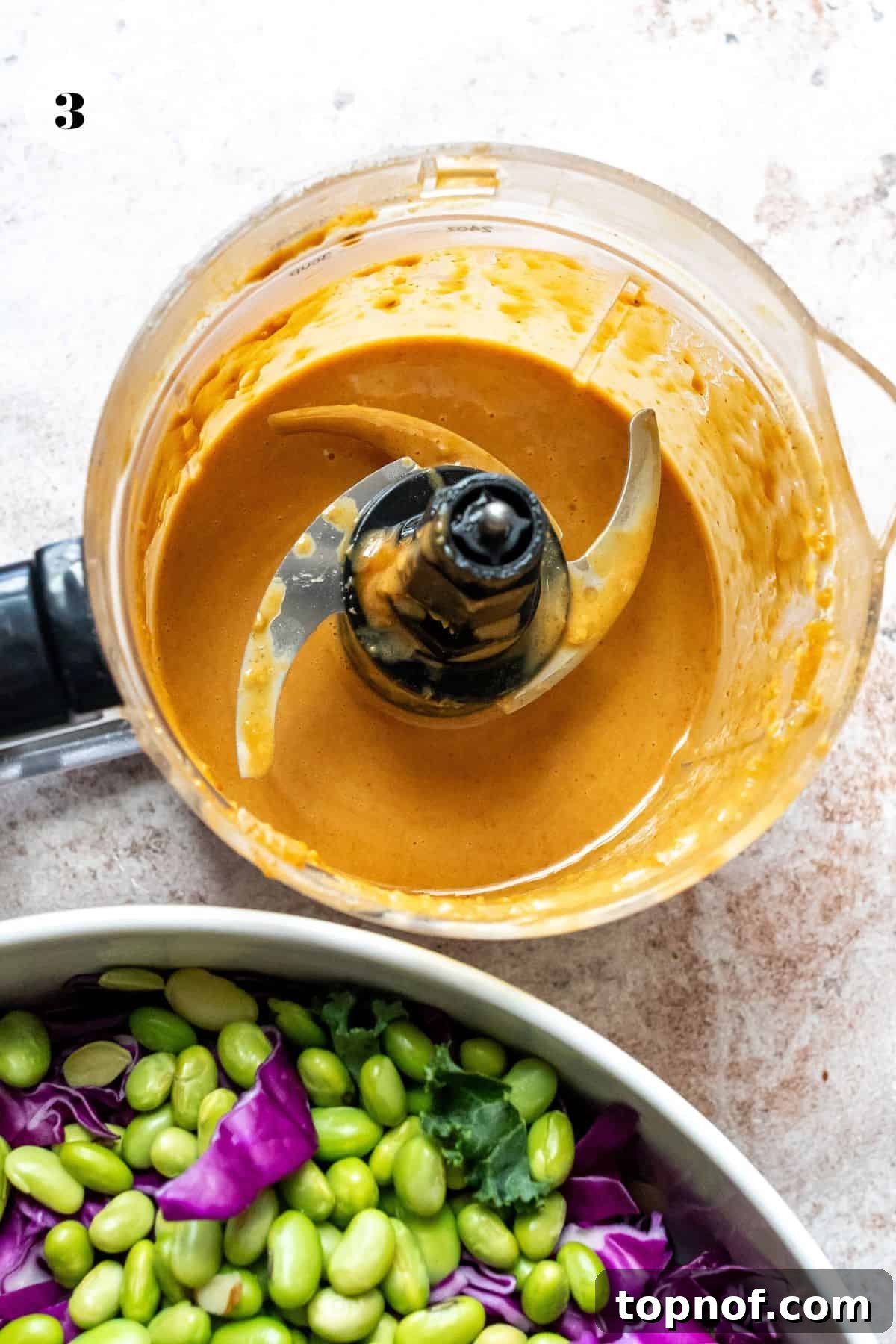
Step Three: Whisk Together the Peanut Ginger Dressing. Finely mince your fresh garlic cloves and grate or finely mince your fresh ginger. In a medium-sized bowl, combine all the dressing ingredients: creamy peanut butter, maple syrup, rice vinegar, low-sodium soy sauce, minced fresh ginger, minced fresh garlic, and salt and pepper to taste. For a perfectly smooth and creamy consistency, use a high-speed blender or an immersion blender to mix the dressing until it’s silky smooth. Peanut butters can vary in thickness, so you may need to add 1-2 tablespoons of water, gradually, to thin the sauce to a pourable, yet rich, consistency.
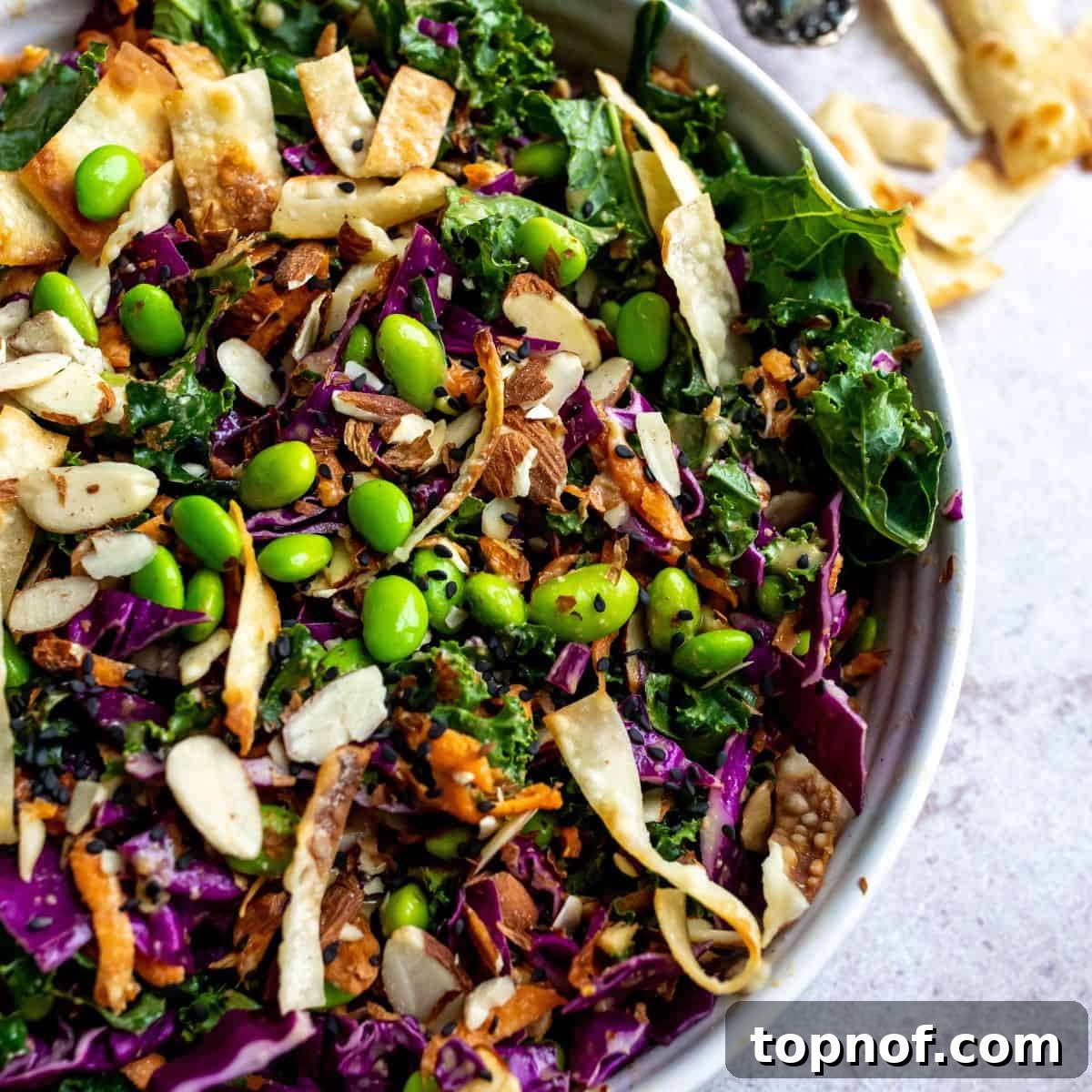
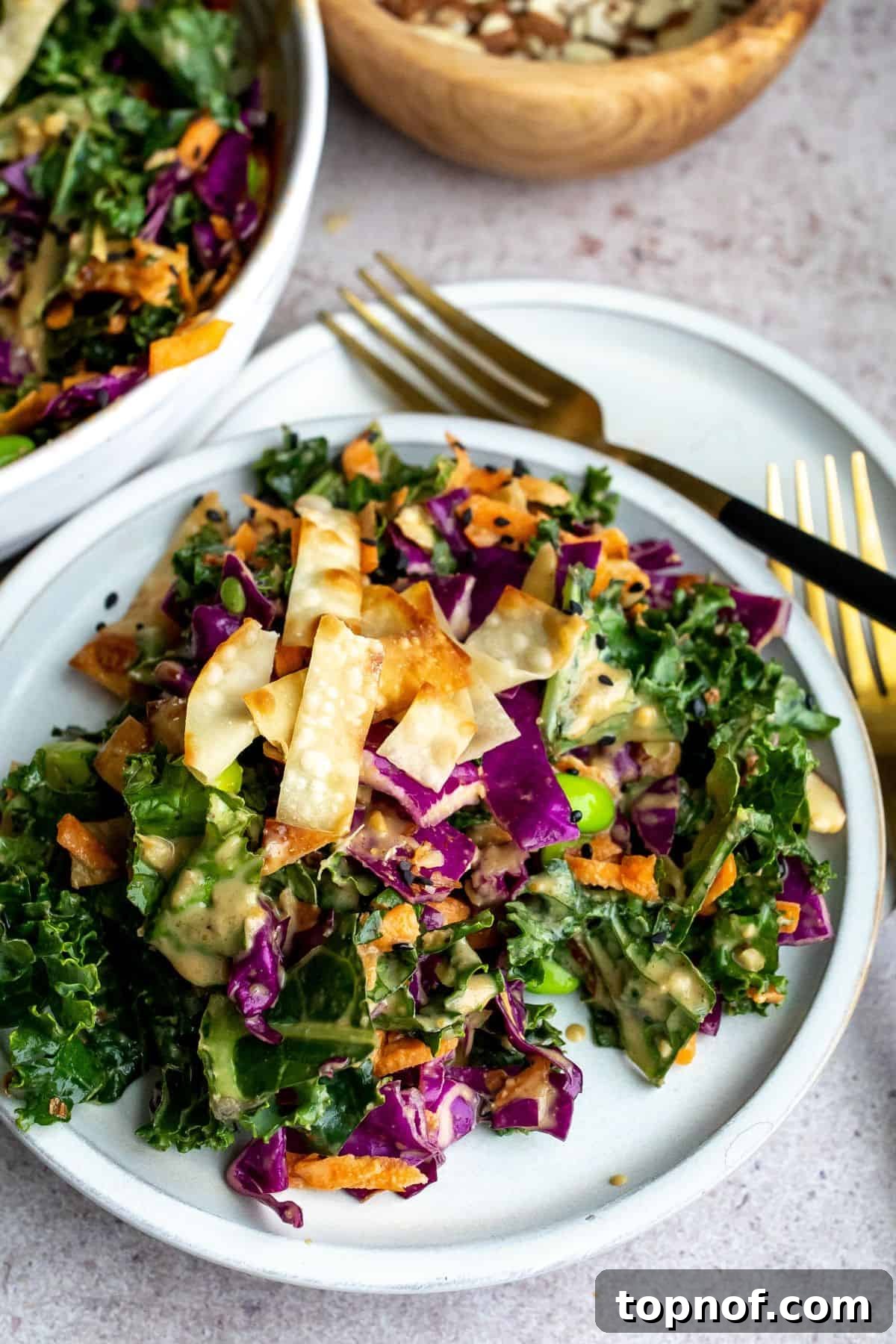
Step Four: Assemble and Serve. To the large bowl containing your prepared cabbage, kale, and carrots, add the thawed/cooked shelled edamame and the sliced almonds. Pour the creamy peanut ginger dressing over the salad ingredients. Using salad tongs, toss everything together thoroughly, ensuring all the vegetables are evenly coated with the delicious dressing. Once you are ready to serve, gently fold in the crispy wonton strips (if using) just before serving to maintain their crunch. Garnish with a sprinkle of black sesame seeds, additional chopped green onions, or even slices of fresh avocado for extra richness and presentation. Serve immediately and enjoy!
Recipe FAQ’s
Absolutely! While red cabbage adds beautiful color and a slightly different flavor profile, green cabbage can be used in addition to or in place of red cabbage if that’s what you have on hand or prefer. The taste and crunch will still be excellent.
Yes, this recipe is essentially a vibrant and flavorful Asian-style slaw. It shares the characteristic freshness, crisp vegetables, and a rich, aromatic dressing infused with garlic and ginger, much like a traditional slaw. The main difference might be the inclusion of ingredients like edamame or kale, which elevate it beyond a simple slaw.
Red cabbage has a distinct, mildly sweet, and earthy flavor that is slightly more peppery than green cabbage. Its firm texture provides an incredible crunch, which is a major highlight in salads. Beyond its taste, its stunning deep purple color adds significant visual appeal to any dish.
Yes, this Asian Cabbage Salad is naturally vegan! All the ingredients, including the peanut ginger dressing, are plant-based. Ensure your maple syrup is pure and no animal products are used in any optional additions you might consider.
Thanks to the hearty nature of cabbage and kale, this salad holds up incredibly well. When stored in an airtight container in the refrigerator, it will stay fresh and crunchy for up to 4 days, even when dressed. This makes it an excellent option for meal prepping throughout the week.
Expert Recipe Tips for Success
Achieve perfection with your Asian Cabbage Salad every time by following these expert tips:
- Make the Dressing Ahead of Time: The peanut ginger dressing is fantastic when prepared in advance. Making it a few hours or even a day before allows the flavors to meld and deepen, resulting in an even more delicious dressing. Store it in an airtight container in the refrigerator, and give it a good whisk or shake before using.
- Taste as You Go! This is perhaps the most crucial tip for any recipe. Always taste the dressing and the assembled salad before serving. You might find you prefer a touch more maple syrup for sweetness, an extra splash of rice vinegar for tang, or a bit more salt and pepper to perfectly balance the flavors to your palate.
- Customize to Your Liking: This salad is wonderfully versatile. Feel free to add more vegetables like thinly sliced bell peppers (red, yellow, or orange for color), chopped jalapeño for a little heat, or even thinly sliced cucumber for extra freshness. To boost the protein content, consider adding grilled chicken, pan-seared shrimp (like my Sweet Chili Shrimp), crispy tofu, or flaked salmon.
- Proper Cabbage Shredding: For the best texture, aim for thinly sliced cabbage. A sharp chef’s knife or a mandoline slicer (with caution!) will help you achieve uniform, fine shreds that are easier to eat and absorb the dressing better.
- Don’t Skip the Fresh Ginger and Garlic: While powders can be used in a pinch, fresh ginger and garlic are absolutely essential for the vibrant, authentic flavor of the dressing. They provide a depth and zest that simply can’t be replicated by dried alternatives.
- Wonton Strips Freshness: If you’re making the optional crispy wonton strips, ensure you add them to the salad just before serving. This prevents them from becoming soggy and guarantees maximum crunch. You can store leftover crispy wonton strips in an airtight container at room temperature for a day or two.
Delicious Recipe Pairings
This versatile Asian Cabbage Salad is truly exceptional on its own as a light meal, but it also shines as a vibrant side dish or a base for a more substantial meal. Here are some fantastic pairing suggestions to create a well-rounded and delicious culinary experience:
- Grilled or Pan-Seared Proteins: For an easy protein boost, top your salad with slices of grilled chicken breast, pan-seared shrimp (my Sweet Chili Shrimp is an ideal match!), or seared tofu. The savory proteins provide a wonderful contrast to the fresh, tangy salad.
- Salmon: Flaky salmon is a natural pairing. Consider serving it with Firecracker Salmon for an explosion of complementary flavors. The rich, fatty salmon balances beautifully with the crisp freshness of the salad.
- Spring Rolls or Egg Rolls: Serve alongside homemade egg rolls (whether vegetarian or pork-filled) for a complete Asian-inspired meal. The warm, crispy rolls offer a delightful textural contrast.
- Burgers: Surprisingly, this salad makes a fantastic and refreshing side to virtually any kind of burger – beef, turkey, or veggie. It’s a lighter, more vibrant alternative to traditional fries or potato salad.
- Asian Noodles or Rice Dishes: If you’re looking for a heartier meal, enjoy this salad as a refreshing side to a savory noodle stir-fry, a simple bowl of steamed rice, or even a flavorful fried rice dish.
- Potstickers or Dumplings: The crunchy texture of the salad makes it a perfect counterpoint to soft, savory potstickers or steamed dumplings.
Creative Recipe Variations
Feel free to get creative with this Asian Cabbage Salad recipe. Here are some variations to suit different tastes and dietary needs:
- Kale Substitution: If kale isn’t your favorite, you can easily substitute it with additional green cabbage, crisp romaine lettuce, or tender spinach. Each will offer a slightly different texture and flavor profile.
- Carrot Alternatives: Carrots can be skipped if you’re not a fan, or you can swap them for more green cabbage or even julienned jicama for a different kind of crunch and subtle sweetness.
- Nut Swaps: Instead of shaved almonds, experiment with other nuts like roasted peanuts, toasted cashews, or even pine nuts. Sunflower or pumpkin seeds can also provide a nut-free crunchy option.
- Peanut Butter Alternatives: For those with peanut allergies, almond butter or cashew butter are excellent creamy substitutes for the peanut butter in the dressing, maintaining its rich texture and nutty flavor. SunButter (sunflower seed butter) is another great option for a completely nut-free version.
- Soy Sauce Alternatives: Coconut aminos or tamari are perfect gluten-free and soy-free substitutes for soy sauce, offering a similar umami depth to the dressing.
- Add More Veggies: Boost the nutritional content and visual appeal by incorporating thinly sliced red, yellow, or orange bell peppers, crisp cucumber ribbons, or a handful of fresh cilantro for a burst of herbaceous flavor.
- Spice It Up: If you enjoy a bit of heat, add a pinch of red pepper flakes to the dressing, or finely mince a small jalapeño and mix it into the salad. A drizzle of sriracha in the dressing can also add a pleasant kick.
- Fruit Inclusion: For a touch of fruity sweetness, consider adding a handful of mandarin orange segments or diced mango to the salad. Their juiciness provides a refreshing contrast.
All other essential ingredients and precise measurements can be found in the comprehensive recipe card located towards the bottom of this post.
Other Salads You Will Adore
More Refreshing Salad Inspirations
Salads
Spicy Southwest Salad
A zesty and flavorful salad packed with fresh ingredients and a spicy kick, perfect for a vibrant lunch or dinner.
Salads
Fall Greens & Farro Salad
Embrace the flavors of autumn with this hearty salad, combining seasonal greens, chewy farro, and a delightful dressing.
Salads
Kale Salad With Roasted Red Pepper Dressing
Experience the goodness of kale perfectly complemented by a rich and flavorful roasted red pepper dressing, a truly unique take on healthy eating.
Salads
Salmon Buddha Bowl
A balanced and nourishing Buddha bowl featuring tender salmon and a medley of vibrant vegetables, perfect for a healthy and satisfying meal.
If you’ve enjoyed making and savoring this delightful Asian Cabbage Salad, please consider leaving a comment below and sharing your thoughts! I love hearing from you. Also, be sure to follow me on Instagram & Pinterest for even more creative and feel-good recipes designed to nourish you from the inside out. Thank you for visiting and happy cooking!
Asian Cabbage Salad
Bailey Rhatigan
15
4
4
Rate Recipe
Print Recipe
Equipment
- high speed blender or immersion blender
Ingredients
- 4 cups sliced red cabbage, about one small head of cabbage
- 4 cups chopped kale
- 1½ cup frozen shelled edamame , thawed/cooked
- ¼ cup sliced almonds
- 1½ cup carrots, shredded or matchstick
- 5 wonton papers, thinly sliced, *optional to make wonton strips
- 1 tbsp avocado or olive oil, to make wonton strips
Peanut Ginger Dressing
- ⅓ cup creamy peanut butter, *see notes
- 2 tbsp maple syrup
- ¼ cup rice vinegar
- 3 tbsp low sodium soy sauce
- 1 tbsp minced fresh ginger
- ½ tbsp minced fresh garlic
- ¼ tsp salt & peper
Instructions
-
Grate/shred the carrots if not already. Thinly slice up the cabbage and stem and chop the kale. Add all three to a large bowl.
-
If you are making wonton strips, slice them into thin strips and add them to an oiled skillet on medium/low heat. Sauté them, stirring often, until they get bubbled and browned on each side about 6 minutes. Sprinkle with salt and set them aside until ready to serve.
-
Finely chop the garlic and ginger. Mix up all dressing ingredients in a bowl. Use a high-speed blender or Immersion blenderto mix the dressing and get it nice and creamy. Add 1-2 Tbsp of water to thin sauce, if needed, peanut butters vary so it may be too thick!
-
Add dressing, edamame, chopped almonds to salad and mix well. Once you are ready to serve, add the optional wonton strips to the top of the salad and serve. Feel free to add black sesame seeds and avocado for garnish or leave as is.
Notes
*Add a little water at a time to dressing as needed to thin it out, please note all peanut butters will vary in consistency.
Store leftovers in an airtight container in the fridge for up to 4 days!
Nutrition
Calories: 396kcal |
Carbohydrates: 41g |
Protein: 17g |
Fat: 21g |
Saturated Fat: 3g |
Polyunsaturated Fat: 4g |
Monounsaturated Fat: 10g |
Cholesterol: 1mg |
Sodium: 672mg |
Potassium: 1097mg |
Fiber: 10g |
Sugar: 16g |
Vitamin A: 15707IU |
Vitamin C: 116mg |
Calcium: 318mg |
Iron: 5mg
Nutrition information is automatically calculated, so should only be used as an approximation.
Additional Info
Enjoyed this recipe? Share your experience in the comments below!